Chris Watson

Birding Central Australia #70

Chris Watson

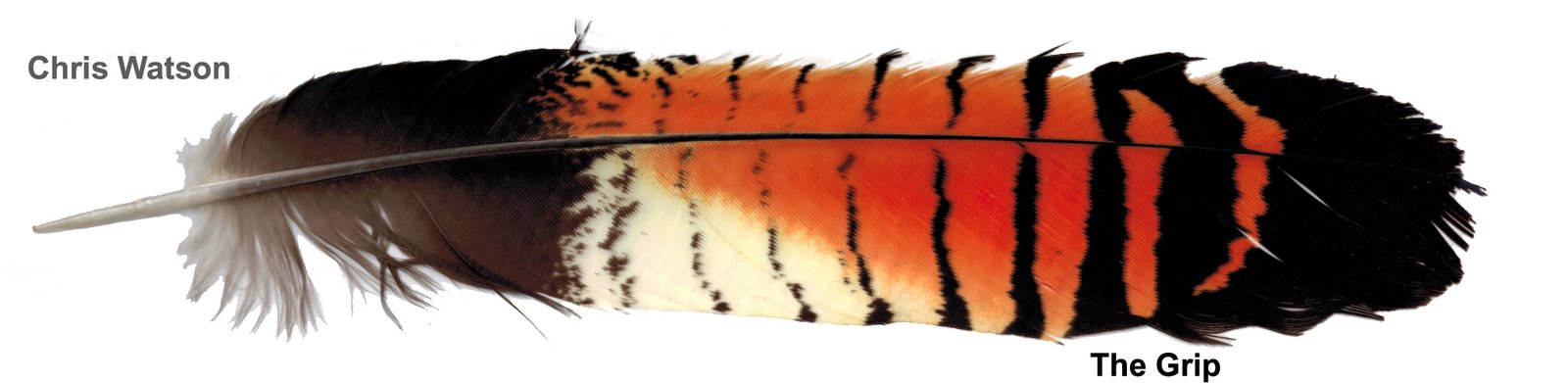
Magpie-lark Grallina cyanoleuca

Superstars of the dinosaurs

Not all birds can be superstars and exotic rarities. There are certainly few birds less exotic than our bird this week, the humble Magpie-lark. Depending where you’re from, you might also know this bird as a pee-wee, a Piping Shrike, a Murray Magpie or a Mud Lark. Whatever your name for it, it is the same bird right around the country, and is even found in PNG and Timor.

For some, this is an annoying bird with its strident calls and bold manners. The frequently-heard calls are part of the success of this species though; they are very effective communicators. But even with its two tone plumage, its car-alarm of a voice, and its common backyard status, there is something to marvel at here, for it seems likely that this is a miniature dinosaur.

Fossil finds in the last couple of decades have seen ornithologists and palaeontologists piecing together an increasingly complete version of the origin of birds and it is a remarkable picture. The evidence strongly suggests that birds evolved from small theropod dinosaurs (imagine a Tyrannosaurus the size of a chicken). The implications of this are immense – it means that all the dinosaurs didn’t really die off in a worldwide cataclysm 65 million years ago as we have conventionally thought. Some of them survived this event and have evolved into all of the many different types of birds that we see around us every day.

So next time the Magpie-larks have left droppings all over your car, take a moment to think about the remarkable origins of the noisy, territorial little buggers – and perhaps be grateful that they aren’t Tyrannosaurs anymore.

Happy birding!

Birding Central Australia #68 - Variegated Fairy-wren

Chris Watson

Variegated Fairy-wren Malurus lamberti

Sitting still on the branch of a bush plum, the Variegated Fairy-wren could be mistaken for a coloured berry itself. Fortunately, sitting still is not something the fairy-wrens are known for. They are usually flitting about the scrub at a feverish pace and calling energetically, making them much easier to detect.

The bird in this picture is the brilliantly coloured male. If you ever encounter these birds on a walk you might be able to get a better look at them by employing the archane birder’s art of pishing.  This is an onomatopoeia describing the act of making short, high-pitched, squeaking or kissing noises in order to arouse the curiosity of territorial bush birds. It can work to a greater or lesser degree on a variety of species, but is particularly effective on the fairy-wrens; they are strongly territorial little birds. Any such squeaky noises nearby will arouse enough suspicion to get a small party of birds hurrying over to investigate, allowing the surreptitious pisher (try saying that 3 times quickly!) a few moments of close views.

The reports have been coming in from all directions this week. Spotted Harriers have been observed by numerous birders out on the Plenty Highway and along the Ross Highway, near Corroboree Rock. Also in the Eastern Macs, Black-chinned Honeyeaters were reported on the weekend at Benstead Creek and Jessie Gap. Two birders have had success finding the scarce Grey Honeyeater in mallee woodlands along Namatjira Drive recently.

Spotlighting along the Plenty and Sandover Highways yielded dozens of sightings of Spotted Nightjars for Jesse Carpenter, including some in groups of 3 birds. Waterfowl numbers are slightly down at the sewage ponds following recent rain, but the local corellas seem to be doing well with the resident flock approaching 40 birds.

Happy birding.

Birding Central Australia #66 - Spiny-cheeked Honeyeater

Chris Watson

Spiny-cheeked Honeyeater Acanthagenys rufogularis

The Spiny-cheeked Honeyeater is one of the characteristic sounds of the arid zone. Its melodic, piping call is an ever-present component of the Alice Springs dawn chorus. This nectar lover is common in gardens across Central Australia, but the name is a puzzle to many. On closer inspection though, the fine white spines below the eye become obvious.

There’s been some respite from the heat this week with a bit of rain bringing lots of birdlife out to play. Bill Low and Holger Woyt did well on a trip out to Palm Valley this week when they came within one species of seeing all the Centralian pigeon species; Common Bronzewing, Spinifex Pigeon, Crested Pigeon and Diamond Dove, only missing out on a Peaceful Dove for the full house.

A lone Pelican has been hanging about the sewage ponds and has now been in residence for a couple of weeks. There probably isn’t too much for this bird to be eating around here, so I’d expect him to be moving off shortly.

Farther afield the big news in national birding has been a Hudsonian Godwit which has been identified by several birders at Lake Joondalup in Western Australia. This species, a North American native, has managed to go seriously wayward during its southern migration. From northern Canada and Alaska, it has ended up coming down through Asia rather than following its traditional course down the coast of North America and across the Panama Isthmus to disperse through South America.

During the current spate of stormy weather it is an excellent time to keep checking the storm fronts for Fork-tailed Swifts; an uncommon species around these parts which are occasionally seen surfing the strong winds pushed along by low pressure systems.

Happy birding!