Chris Watson

birding

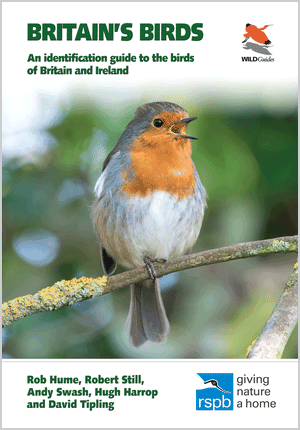
Britain's Birds: An identification guide to the birds of Britain and Ireland

Review, BirdingChris Watson

by Rob Hume, Robert Still, Andy Swash, Hugh Harrop and David Tipling

Princeton University Press, August 2016

Paperback AU$78.00

This new field guide arrived, fortuitously, only a few hours before I departed for a four week stint in the British Isles. As such, it has received a more thorough road-test than some field guides I’ve reviewed. I was also able to meet the authors at the British Birdfair and speak to a number of British birdwatchers there to gauge the early reception Britain’s Birds has received from locals. The overwhelming impression from my snap-poll? A resounding 'thumbs up'.

In total, Britain’s Birds was knocking about in my glovebox or backpack for a shade over 2200 kilometres of a trip that took in parts of England around Oxford and Rutland Water; southern Scotland around Glasgow; and islands of the Inner Hebrides including Mull, Islay and Arran in the Firth of Clyde. These are all areas that I have birded intermittently over the last 15 years, apart from Mull and Islay, to which this was my first visit. After a brutal dip on a vagrant Long-tailed Duck at Rutland Water, my only lifer from four weeks of birding was Red-billed Chough on Islay. But despite all other species being familiar to me already, Britain’s Birds taught me much more about them all and I referred to it constantly.

That first glimpse of a lifer; is there anything like it?! My picture here isn't a patch on the images you'll find in Britain's Birds but we were rapt to eventually have great views of close to 40 birds. Islay is one of very few places in Scotland this rare species still occurs. Britain's Birds informs us there are fewer than 3500 birds across Britain and Ireland with as few as 300 individuals remaining in Scotland.

Completeness is the inescapable first impression Britain’s Birds makes. It includes accounts for just shy of 650 species. With the usual list of resident birds and annual migrants to Britain barely topping 200 species, the fact that the official British list has grown to such a size is testament partly to its geographic location being favourable to avian vagrancy, but mainly to the fervour, size and skill of its birdwatching community. (For comparison, the vaunted Collins guide to all the birds of Europe treats 713 species, has 100 fewer pages and is about two thirds the weight.) As the inevitable result of being so comprehensive, Britain’s Birds is heftier than any other British field guide I’ve used, coming in at 1190g, just a fraction lighter than my ‘go to’ guide to Australia’s 700+ birds, Pizzey & Knight.
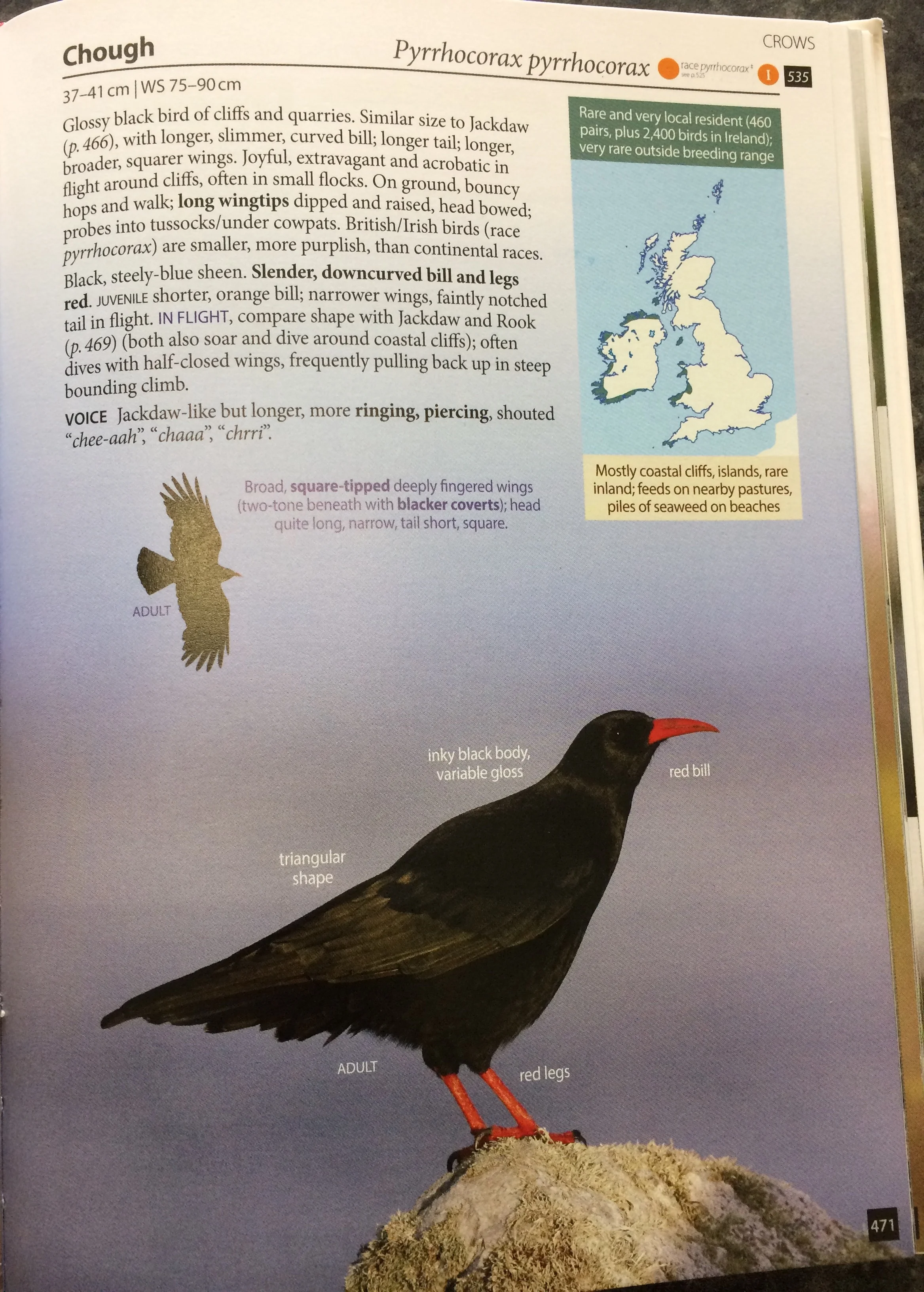
The species account for (Red-billed) Chough. The text is concise but more than sufficient. This is one of the more straightforward species to identify.

But if size is the only criticism I can make of Britain’s Birds, it is also a piddling one. It still fits comfortably in the glovebox or day pack, if not quite a jacket pocket. I happily carried mine in the Scopac across many miles of forests, moors and peaks during my visit. It’s printed on robust stock with a low-gloss finish and the solid cover is made of a splash-proof plasticised card which was sufficient to withstand the drizzliest days the Hebridean weather could throw at us.

My antipathy toward photographic field guides has been gradually dissolving since the release of Birds of Australia by Campbell, Woods & Leseberg; Britain’s Birds has banished my reservations about the form entirely. The images are uniformly brightly-lit, well-chosen, frequently breathtaking and carefully arranged without crowding the pages.

The authors have adopted an approach that will be familiar to users of the Crossley ID guides, with a few innovations of their own. Birds are set against a typical background with a number of other birds of the same species super-imposed around them for comparison. The collection of photographs they have collected in Britain’s Birds is staggering. Unlike Australian photographic guides which remain frustratingly bereft of images of Buff-breasted Button-quail (and Night Parrot although photos, happily, are now available for this species), every species is depicted. Not only that, but each species is shown in almost every plumage variation, in comparable light, in near identical poses, in flight and at rest. For a country in which a newb can easily become befuddled by the profusion of gulls (not to mention hybrid ducks!), the inclusion of additional comparison pages for difficult groups is particularly handy. Where vagrants are pictured, the authors have even gone to the trouble of sourcing photographs of an actual individual from its occurrence in British territory. Sub-species are also detailed in most cases; the best example of this may be the species account for Wren Troglodytes troglodytes, which has a dedicated page picturing all six races which occur.
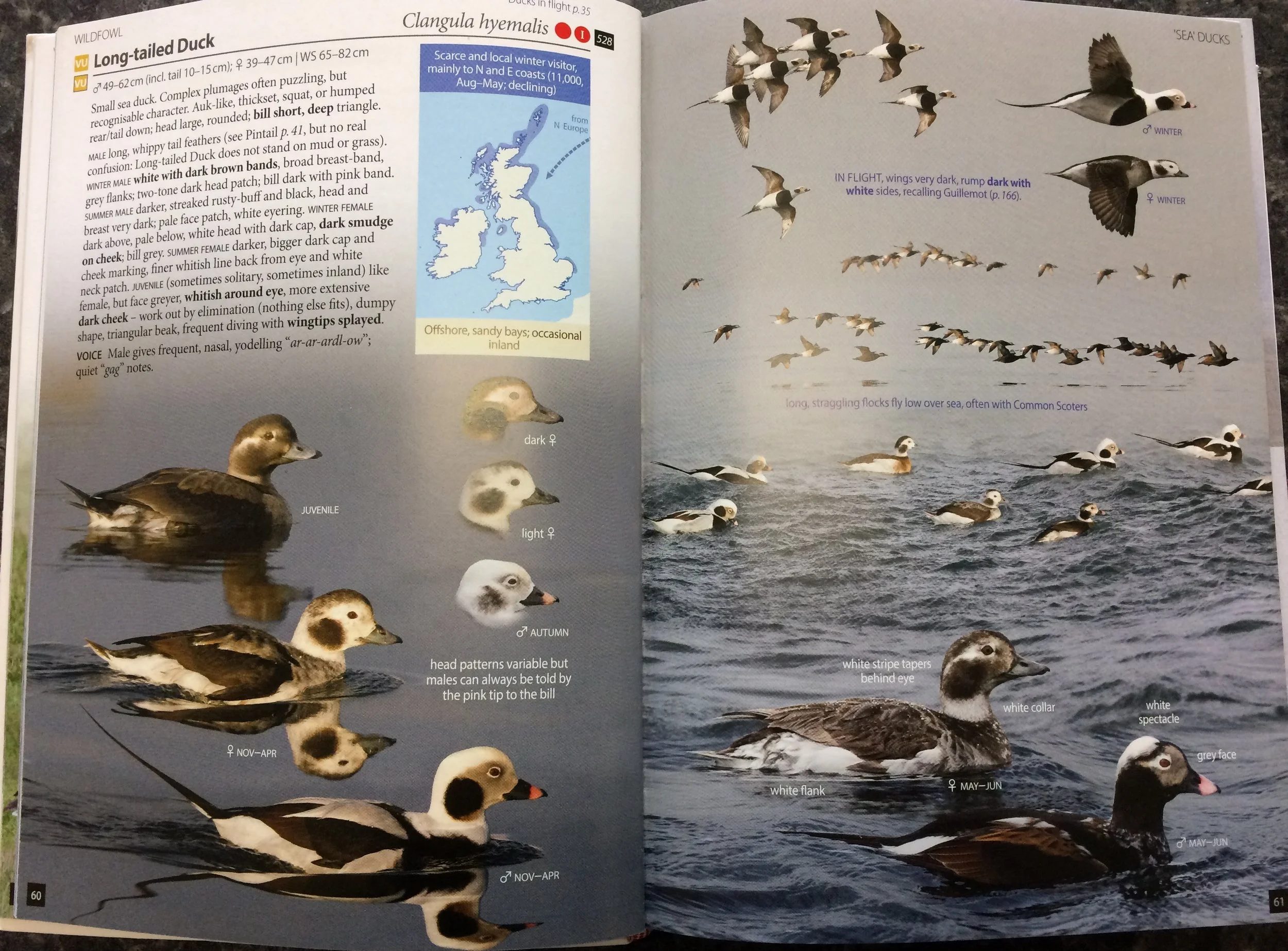
For potentially problematic species you get the Full Monty: a double page spread here for the bogey bird of my trip, Long-tailed Duck. Flight shots, head shots, different moults, behavioural notes, other species it is likely to associate with... all in beautifully comparable, well-lit, photos.

Another highlight is the size and detail of the maps. This is a common stumbling block for many guides so I was stoked to see these produced at a size that allows for fine-grain geographic detail. Each map also has a caption giving movement information, a summary of habitat use and an estimate of British population size.

Also a welcome addition for many will be the ‘educational’ pages at the start of some sections for bird groups that might be difficult for newer birders or birders new to the region. These include helpful pages on the field identification of swans and geese, ducks, waders, gulls, skuas, auks and many others. These pages summarise the field marks to look for in separating the species and give useful behavioural details, moult cycles, confusion species, etc. Certain species accounts also carry a “Rare Beware” inset beside the title. This is a great innovation which immediately alerts you to the possibility of rare birds that might be confused with the species you’re looking at and lists the page numbers to check for those confusion species.

The order is roughly taxonomic with a twist; species are grouped into general categories like water birds, wetland birds, birds of prey, night birds, game birds, etc. To be honest, I’d be happier with a more strictly taxonomic order but the order presented doesn’t affect the usability of the guide in the slightest.

For me, Britain’s Birds has finally eliminated any reticence toward photographic field guides. Photographic and production technology has clearly reached a point at which a guide like this can be the equal of any hand-illustrated version. With the gobsmacking growth in popularity of wildlife photography in recent years who knows? Perhaps one day photo field guides could even become the preferred format.

Britain’s Birds will now be my first pick of field guides to pack when visiting the UK. It’s on the heavier side, but not impractically so. For the extra size you get a field guide which is beautiful, comprehensive, highly usable, as up-to-date as a book in print is able to be and will be a valuable reference on the species it describes, wherever they happen to be found.

CBW

Buy it from Andrew Isles

Journey to the center of the (birding) world

BirdingChris Watson

“This is an annual event held over three days and represents the biggest bird jamboree in the world. It takes place at the nature reserve of Rutland Water, but seeing birds is not a high priority.” – Birders: Tales of a Tribe by Mark Cocker (p.27)

You never know who you'll bump into! Moppers with the great champion of British natural history, Bill Oddie.

For most of the year, Egleton, in the East Midlands of England, is a sleepy village with a population that is yet to creep over a hundred. But if census data was ever taken in mid-August that population figure would change. Drastically.

Egleton lies on the western shore of the Rutland Water Reservoir; a large man-made body of water that supplies much of the water to surrounding areas. And each year in August, The Rutland Water Nature Reserve hosts the British Birdwatching Fair, often known simply as Birdfair. As Mark Cocker’s description makes clear this is the single largest gathering of birders, twitchers, birdwatchers, frog freaks, bug-trappers, wildlife enthusiasts and naturalists of all ilks on Earth. Over three days it regularly attracts between 20,000-30,000 attendees with as much as two thirds of those attending in a single day. To say it’s an extraordinary event sells the experience massively short. It’s variously touted as the wildlife event of the year and the Glastonbury of Birdwatching; neither of which is an exaggeration.  

Need a ludicrous bird box for the back yard? You'll find it at Birdfair.

In the humid late summer weather there are dozens of marquees set up by folks from all industries related to wildlife and conservation from over 100 countries around the globe. Australia’s Northern Territory stands side-by-side with Ugandan operators peddling trips to track the Mountain Gorillas in the Bwindi Impenetrable Forest Reserve. The Falkland Islands stand boasts pictures of steamer ducks and penguins while tour operators from the Orkneys tout trips to see their northern counterparts (and they always have a dram of the local produce under the table for friendly faces). There are prominent authors conducting book signings (dear god the BOOKS!) and interviews throughout the day and as you meander through the marquees you stand a good chance of rubbing shoulders with natural history luminaries like Sir David Attenborough, Bill Oddie, Chris Packham, Mick Jerram and Mark Carter. They’re all regular attendees.

...no, seriously these are all fully-functional bird nesting boxes.

Then there are the numerous opportunities to learn. The entire weekend has lectures running concurrently across three marquees from leaders and experts from every part of the world. You can spend your entire day going from lecture to lecture and the diversity of subject matter is too dazzlingly to cover here. When you tire of the throng, the reserve has numerous feeder gardens, world-class hides and mile after mile of trails and ponds to search with Common Kingfisher, nesting Western Osprey and a variety of other interesting birds often around. (I’m told they have a Long-tailed Duck there at the moment and I’m hoping the bastard stays put until I can get there.)

Ludicrous. 

Then there are the gear stands. We all know birders like gear and Birdfair is probably the only opportunity on Earth to compare all the gear in a single location, side-by-side. Canon, Zeiss, Swarovski, Bushnell, Leica, Nikon… you name it. Pretty much every brand of optics from the budget to the budget-blowing has its entire product range on display, on tripods, on the shores of the nature reserve for you to get your grubby mitts on. It’s easy for most birders to disappear for half a day in the optics marquees alone.

And there’s always the beer tent if it all becomes too much.

On top of all this, the British Birdwatching Fair is a major fundraiser for conservation causes around the world. Last year it raised, through auctions and direct donations, £320,000 in a single weekend. Since 1989 it has raised a total of £3,996,152, so it’s is safe to say that it will have contributed well clear of £4 million to conservation programs around the world by the time Birdfair 2016 wraps up this Sunday.

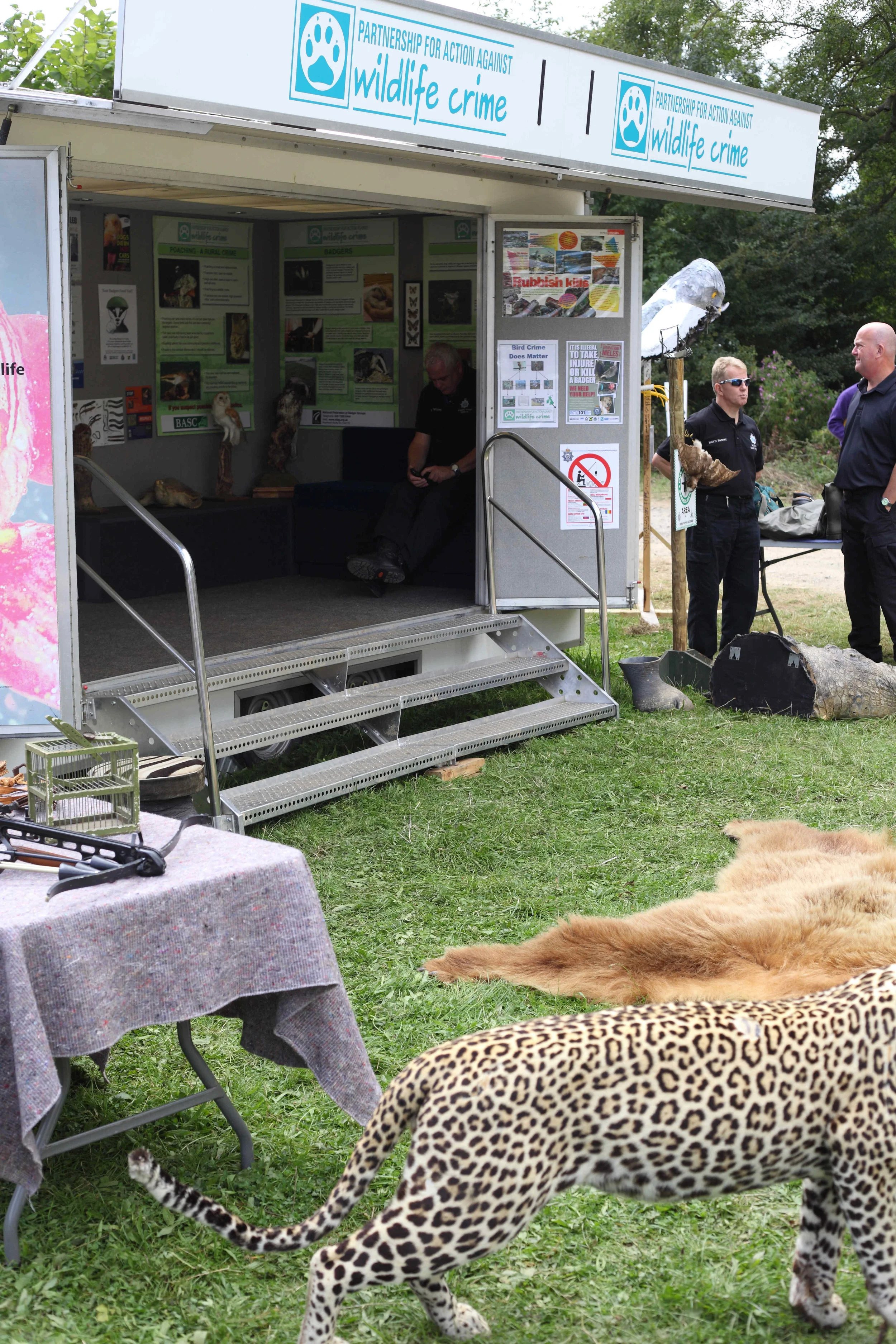
Just a Leopard wandering past the wildlife crime stand. The UK has a dedicated police unit for the prevention and prosecution of wildlife crime. We have a long way to go in Australia.

The first time I visited I found it an almost overwhelming onslaught of information and new friendships to be made. More than any other event I've attended it gave me a profound sense that birders everywhere are part of a massive global community. We might sometimes feel remote from this community as we go about our birding activities on our own patch, but at least once a year it is good to be reminded that you're a member of this extraordinary tribe. This year will be my fourth visit to Birdfair, my first non-“work” trip, and I’m as excited as ever. A friend living in Oxford has kindly planned her wedding for the weekend following Birdfair providing the perfect excuse to combine the two.

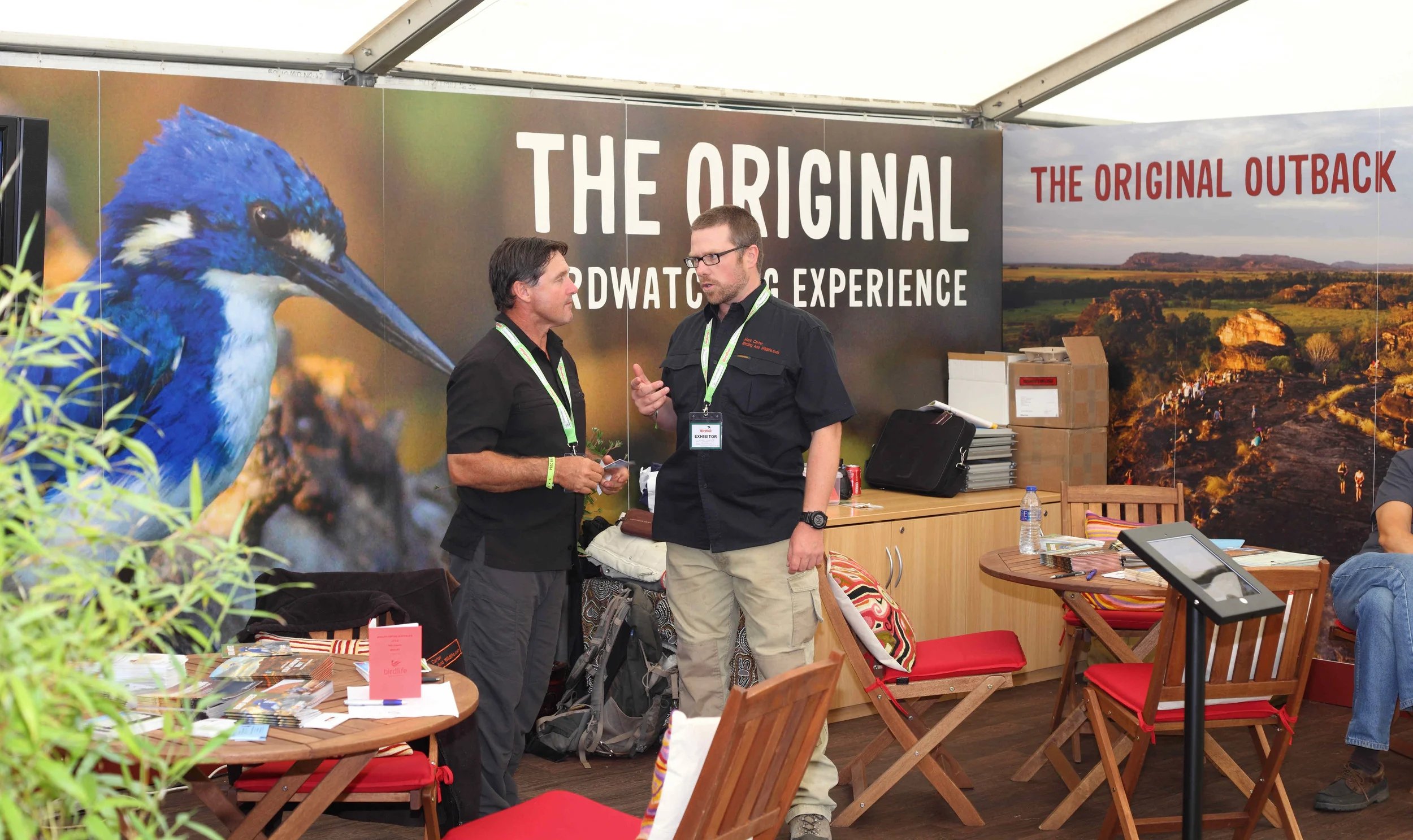
If you want to talk turkey with the Outback experts you have to drop in on the NT stand. There's free stuff and prizes!

So, friends I’ve met at Birdfair in years past, I hope to catch up with you again. And for those of you who haven’t yet been, it’s high time you made plans to get over for this unique event and mingle with your tribe.

See you there!

Support The Grip

Grasswren Grand Slam in Record Time

Birding, TourismChris Watson

There’s a well-known saying among birders, particularly among those who live near the coast: seabirders are real birders. Anyone who has spent a day on the blue paddock trying to compare the bill dimensions of prions while dodging the sluicing chunder from birders of more delicate constitution as the floor rolls under your feet and the salt spray mists your binocular lenses will understand that it’s a claim not without some justification.

In Australia though, it’s arguable that there is one other type of extreme birding that may lay claim to also being the domain of “real” birders: grasswrenning. That’s a word now.

I’ve heard it said that any old duffer can notch up a list of a few hundred species in Australia if they simply do some pretty basic birding and visit a handful of different regions. International birding tours sometimes rack up Australian bird lists of 400 or even 500 species in just a few weeks of busy birding and a few internal flights. But a good measure of an Australian bird list, and of the true birding grit of the list-owner, is the number of grasswrens on the list.

The grasswrens in the genus Amytornis are a group of birds which are fascinating and frustrating in equal measure. They’re among those bird species which can look drab or boring in a field guide but which routinely knock your socks off in the field when they are up close. If you’re lucky enough to get a prolonged look at any species of grasswren in the open, their plumage reveals all sorts of subtleties that you won’t have anticipated.

Dusky Grasswren Amytornis purnelli, adult female.

There are anywhere between 10 and 14 species recognised, depending which taxonomy you follow. None of them live in particularly accessible places and most live in decidedly remote and difficult terrain. Most of them favour the shin-ruining spinifex grasses; a group of plants with the distinction of being both figuratively and literally, a complete prick. The ones that don’t live in spinifex, live in clumps of similarly dense and unfriendly vegetation. They range from some of the hottest and driest deserts to the humid and monsoonal tropics. They’re mostly furtive, shy, and able to disappear from view in their chosen habitat leaving a birder feeling completely gormless in the infuriating knowledge that the birds are all around, at close range, but completely hidden from view and unlikely to reveal themselves.

A few species favour rocky slopes with either loose scree underfoot or large boulders that only a rock wallaby, and the grasswrens themselves, can safely negotiate. Some are endangered and disappearing from their already restricted ranges as a result of fire, feral cats, land clearing, or combinations of all three.

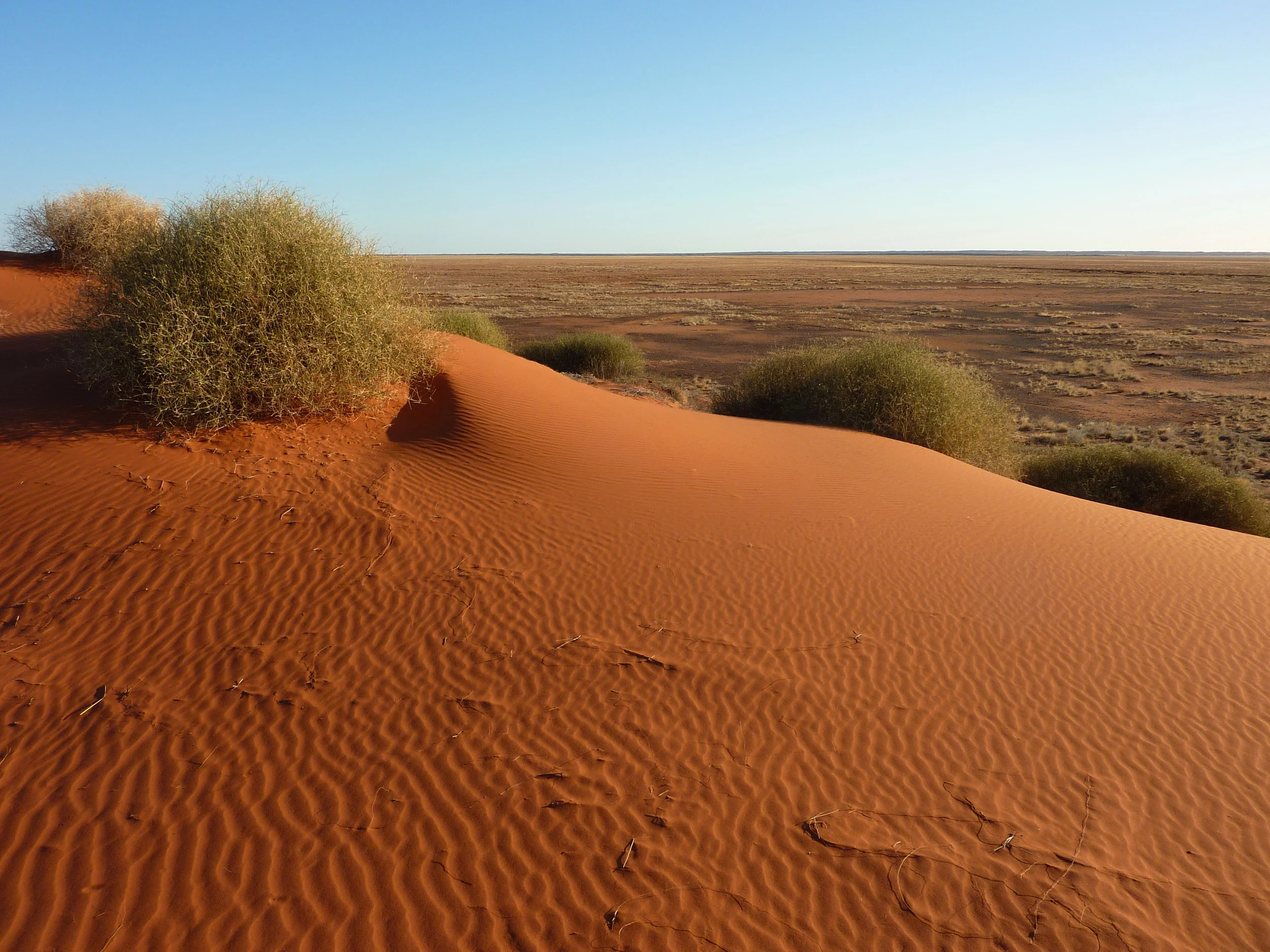
Grasswren habitat: harsh, beautiful and remote. Cane grass on dunes of the Simpson Desert is home to the Eyrean Grasswren A. goyderi.

So in summary: they’re small, rare, fast, furtive, superbly cryptic, hard to get to, hard to find, and hard to see if you do find them. And this is their charm. They’re a real birder’s bird.

Well-known South Australian ornithologist and tour leader Peter Waanders recently hatched a plan with two of my Northern Territory off-siders. It was a plan that was nothing if not ambitious and, frankly, had some questioning Peter’s sanity – to see all species of grasswren in a single tour. It’s audacious. If ever a leader was going to be able to pull-off such a feat of birding brilliance, Peter’s name would be near the top of the list. His guiding outfit, Bellbird Tours, is already best-known for running the regular 6- and 9-grasswren tours which plough through the dry interior of the country each year and only rarely miss any of their targets. His dry country tours also have an enviable strike rate with other highly-sought desert delicacies like Grey Falcon and Letter-winged Kite.

To cut a very long story short – they did it.

In an achievement which must be a historic first for Australian birding, Bellbird’s Great Grasswren Air Safari saw all 11 of the currently (widely-accepted) species of grasswren in just 14 days [and I think they may have seen one of the proposed splits as well which would take their total to 12 species by Clements taxonomy]. In fact, the news of their final tick, White-throated Grasswren Amytornis woodwardi, came through the day before the tour ended so they actually saw every grasswren species in 13 days.

For anyone familiar with traveling in outback Australia, you’ll understand what an extraordinary achievement this is. By car, aircraft (both fixed-wing and helicopter), and finally on foot, the intrepid band crossed the entire continent. With crucial assistance from Red Centre expert Mark Carter and Top End bird-finder and River God, Mick Jerram, they nailed the tricky central and northern species.

In under a fortnight, they found and saw an entire endemic genus; a genus of our most infamously challenging birds. I’d be surprised if there is anyone else who has ever completed this coveted full house in less than a month. Well done one and all and congratulations Peter, Mark and Mick – only other tour leaders will ever understand how nerve-wracking a tour like this can be.

A Short Digression

Amid all the back-slapping and the celebratory Darwin stubbies though, there’s another consideration. An important aspect of an initiative like this is that it demonstrates the productive symbiosis that can exist between research and tourism. This is a partnership which is well-established in numerous locations internationally but has yet to be widely-explored in Australia.

Some grasswren species are infrequently recorded and their distributions are imperfectly known. Many of the species which are seen each year are recorded at the same sites; well-known sites where public access is granted and the birds are known to be present. Tours like this don’t just provide an opportunity for birders to get difficult species on their lists. They also provide the means for experts (and all of the leaders on this tour are certainly that), to visit different areas, both during the tour and on reconnaissance visits during preparation. During these visits, birds are sometimes found at new sites. Breeding activity is sometimes noted. Previously occupied sites might be discovered to have been abandoned or habitat destroyed. Non-target species are also noted and atlas surveys are completed. All of this is crucial observational data which is coming from country rarely accessed by researchers from professional research organisations because visiting is prohibitively expensive.

Research and data collection of this nature being funded, directly or indirectly, by tourism is something we really ought to discuss more often and support wholeheartedly.

Well done again to all involved and particular congratulations to Peter, Mark, Mick and the team at Bellbird Tours for pulling off the grip of the year.

CBW

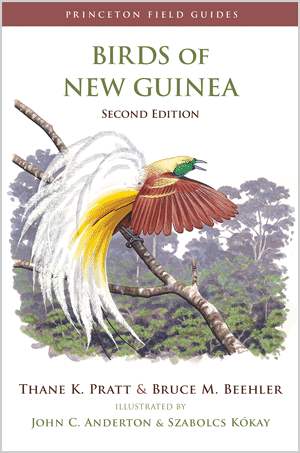
Review: Birds of New Guinea (2nd Edition)

ReviewChris Watson

Birds of New Guinea 2nd Edition by Thane K. Pratt and Bruce M. Beehler.

“New Guinea is central to this story: the island is not so much a neighbour of Australia as a core part of it, biologically speaking. To include Tasmania but not New Guinea is to let nationalism distort ecological thinking. Whenever sea levels have fallen New Guinea has joined the mainland for longer than Tasmania has, because the water that separates it is shallower. The line between northern Australian savanna and rainforest is more limiting to birds than is the Torres Strait. New Guinea’s birds are part of the Australian bird fauna.” Tim Low in Where Song Began: Australia's birds and how they changed the world, Chapter 4 - New Guinea: Australia's Northern Province.

New Guinea is weird - so close but so distant.

A perfunctory scan through a list of its fauna reveals tree kangaroos and hare-wallabies, dasyurids and monotremes: all the sorts of animals that are most obviously associated with Australia. The little Rakali Hydromys chrysogaster, can be found from Tasmania right up through Australia's mainland and through all but the highest parts of New Guinea. Even New Guinea’s most iconic animals, the birds-of-paradise, are also represented in Australia by four species: three riflebirds and the Trumpet Manucode.

As birders, we’re used to drawing arbitrary lines on maps for the purposes of delineating our lists but, at least from a biological perspective, none of these lines is more arbitrary than the separation of New Guinea’s fauna from Australia’s. This is perhaps one of the major themes of Tim Low’s sweeping assessment of song bird evolution in Where Song Began.

Like many birders, New Guinea is high on my list of places I yearn to visit. Also, I suspect, like many Australian birders, I barely gave New Guinea a moment’s thought before reading Low’s book. Despite being so close to Australia – I’ve flown over it countless times on my way to near-antipodal destinations – New Guinea is, by most accounts, still a challenging place to visit.

Gradually though, this reputation is changing and books like this 2nd edition of Birds of New Guinea are an important part of the process. Papua New Guinea, and even parts of Indonesian-occupied West Papua, is now a fixture on the itineraries of most of the major wildlife touring outfits. There is a string of reputable wildlife lodges across some of the more important habitat areas. As well as infrastructure and services though, the availability of accurate field guides is an important step in making wildlife tourism more attractive. And, as we’ve seen in many other developing parts of the world, when tourism revenue is tied to biodiversity it can result in benefits for research, conservation, local economies and, ultimately, greatly improve our understanding of the birds of that region.

For an area with such a famously diverse avifauna, New Guinea has been served by a limited, though quite high-quality, range of books on the topic. Before the release of this 2nd edition, the 1st edition of Birds of New Guinea was thirty years old and Birds of New Guinea and the Bismarck Archipelago by Coates and Peckover, while an impressive achievement as a photograph record of such a diverse and often secretive bird fauna, was a long way short of comprehensive (it covers 444 species).

Birds of New Guinea 2nd edition covers all 780 bird species for the first time and includes full-colour plates for all (some plates in the 1st edition were black and white). For a book treating such a number of species the layout is smart. The plates fill the first 260 pages and are accompanied by brief species accounts and range maps on the facing page. Maps were critically lacking in the 1st edition. The remaining half of the book is taken up with more detailed family and species accounts including range, habitat and appearance notes as well as quite detailed commentary on the vocalisations including, for selected species, stylised spectrograms giving a visual aid to the cadence and pitch variation of the bird’s song.

The plates are a bit of a mixed bag. They range from superb to serviceable but are competently executed throughout. They’ve been supplied by four different artists so there is bound to be some variation and, unsurprisingly, the plates depicting the birds-of-paradise are probably the finest in the book.

Considering the close affinities between Australian and New Guinean birds, Birds of New Guinea 2nd edition is a useful reference for Australian birders to have available. For northern Australian birders ever-hopeful for vagrant birds visiting from our northern neighbour, it’ll be indispensable.  For the introductory sections alone, describing the natural history and geography of the island, it is worth the asking price; there is so much to learn here.

We can hope that it won’t be so long before another revision, but with this edition being so expertly finished, Birds of New Guinea 2nd edition looks capable of seeing us through another 30 years if necessary.

CBW

Buy it from Andrew Isles.

If you enjoy reading The Grip, click HERE or look for the button in the right sidebar to become a supporter.

The Night Parrot: A bird in the hand but how many left in the bush?

Opinion, Citizen Science, ResearchChris Watson

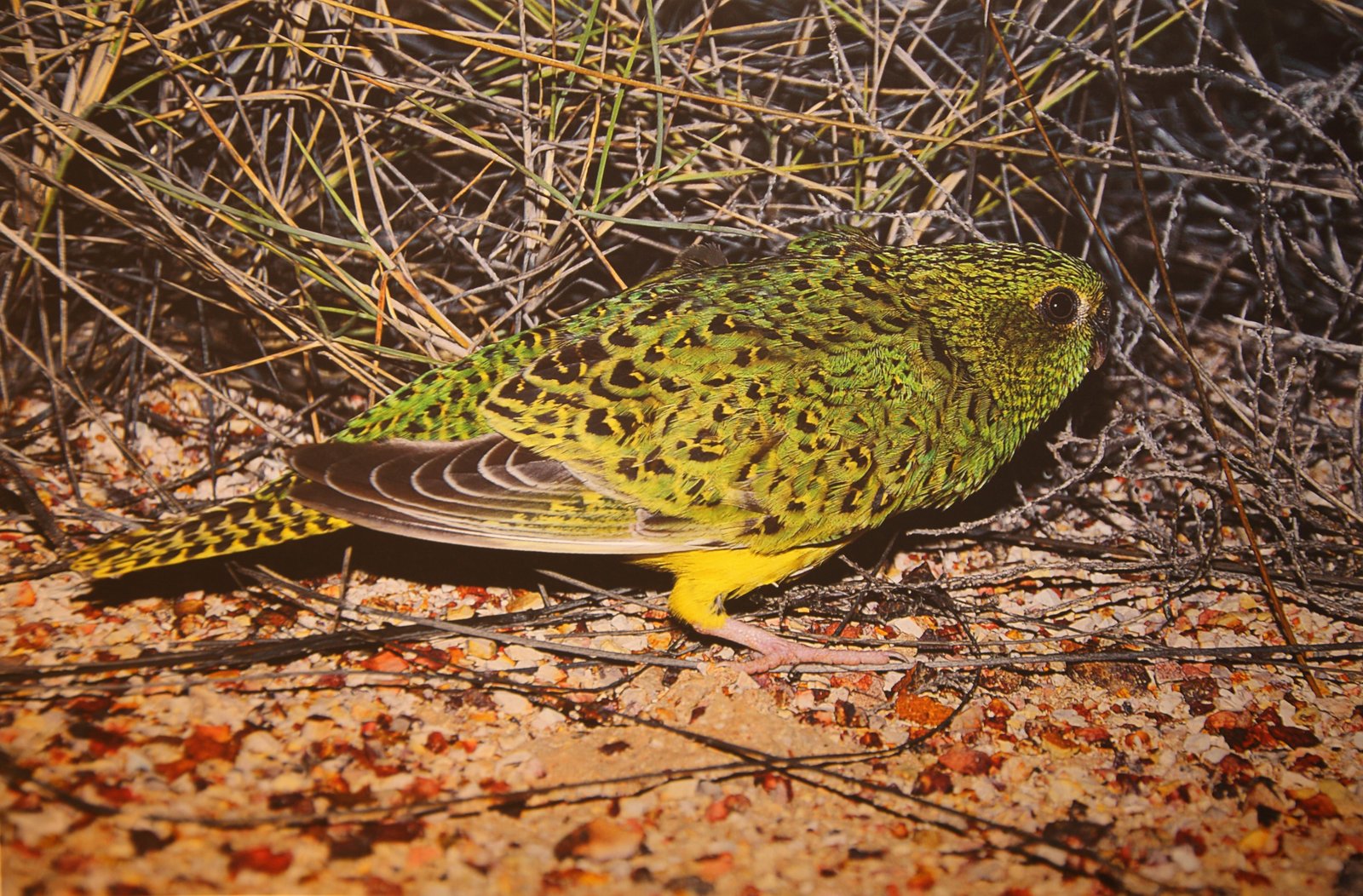
Night Parrot Pezoporus occidentalis. by kind permission John Young

In 2005 the Cornell Laboratory of Ornithology published its report of the rediscovery of the iconic Ivory-billed Woodpecker Campephilus principalis, rightful claimant to the title of Grail Bird in US ornithology, and presumed extinct since the 1940s. Exhaustive searches of the Cache and White River systems ultimately produced no further evidence and the "rediscovery" is now widely discredited. The similarly elusive Pink-headed Duck Rhodonessa caryophyllacea, may have been sighted in 1988 on the banks of the Brahmaputra (north-eastern India), by Rory Nugent and Shankar Barua - but we can't be sure. The only known photographs of this species alive are from 1925, and the last specimen was shot in India, in 1935. That much of its habitat lies in remote and poorly surveyed parts of Myanmar is a cause for some optimism and its official classification is Critically Endangered, rather than Extinct. But despite a few reports in the last decade, no evidence of its continued existence has ever been produced. In Australia there still remains one living species that, despite being seen and identified by a few determined birders in its difficult north Queensland home in most years, no photographs of a live specimen have ever been produced* - the Buff-breasted Button-quail Turnix olivii.


The world of birds offers many tantalising mysteries to the intrepid adventurer, but pre-eminent among these has always been the Night Parrot Pezoporus occidentalis - a bird tailor-made for controversy and a species which eluded some of the best field ornithologists in the land for a century. A fair dinkum enigma.


The Night Parrot has laboured under many unfortunate monikers; The Loch Ness Monster of birds, The Tasmanian Tiger of birds, The Holy Grail of Birding, The Fat Budgie, or simply, The Ex-Parrot. If you have been following this story however, you will understand that none of these epithets is fitting, if indeed they ever were. While it will almost certainly remain the Holy Grail for some birdos, some of the mystery surrounding the species was banished forever on Big Wednesday. On the 3rd of July 2013, Australian naturalist John Young revealed at an exclusive, invitation only, private function at the Queensland Museum, irrefutable evidence of the species' continued existence at an undisclosed site in the southwest of the state. Marking the culmination of many years of fieldwork and study including 17000 hours at the one site, John Young, with his mate John Stewart holding the torch, managed to capture high quality digital photographs and 17 seconds of video footage of the species, very much alive, in its native habitat of thick spinifex. Only a few photographs were displayed at the strict no-cameras and no-recorders event, and only 6 seconds of the video footage, but the images have been studied around the world and there is no doubt that they're the real deal. John’s stunning images graced the cover of our national bird magazine, Australian Birdlife, and one of them now graces my wall.


A more demure and heavily-watermarked image appeared on the front page of The Weekend Australian accompanying an article by Tony Koch on June 29th 2013. The online edition of that story can be found here.


Since this first appearance in the media, John’s story has done the rounds and an online search will take you to any number of articles that have summarised the find with wildly varying degrees of accuracy. Among the coverage that has been less burdened by truth, rectitude, and research, I got a particular chuckle out of the following that claims the species can be "commonly found" while still being one of the "world's most mysterious birds" in the same sentence. It also credits the discovery to a "Mr John King", (there's been a second discovery?) and accompanies the news with a stolen picture of a Ground Parrot Pezoporus wallicus, here.


Suffice to say that the coverage in the media has been patchy at best, and is a nice reflection of a conversation that is gaining momentum across the country about the loss of good science journalists. Other reports unnecessarily perpetuated some old myths and even started up a few new ones. Chief among these is the fallacy that the species was presumed extinct. Very few, if any, people with any interest in the subject thought that the species had already gone extinct. This would be a difficult assumption to maintain in the face of much evidence to the contrary. Although the last specimen was actively acquired in 1912, two dead specimens were found more recently within 200 kilometres of each other in western Queensland; one in 1990 and the second in 2006. Dead birds have to come from living populations. 


Other news reports claimed this to be the first time the bird was seen alive in over 100 years. This is another clear exaggeration - the excitement in the ornithological community was over the first photographs of a live specimen, ever. It would be unusual for more than a few years to pass without one or two reports emanating from the outback of observations of the species. While many of these reports have common and questionable characteristics (they occur in poor light, observers had fleeting glimpses, observers were not bird experts or even practised bird-watchers) and are rightly treated with some skepticism, not all of them are likely to be apocryphal or mistaken. Some observations have been by highly respected, experienced field ornithologists, and some have been well-documented and ratified by peer review as recently as 2005 in Western Australia.  Add to this the fact that anyone seeking or claiming to have seen the Night Parrot has often been treated to raised eyebrows and some level of derision with labels like "Yowie Hunter" sometimes thrown around. In such an atmosphere it's easy to understand that there are probably other sightings that have gone unreported due to the fear of ridicule or the loss of professional credibility. Furthermore, if we look at other examples of species whose former range covered much of the continent inside the 280 millimetre isohyet, Greater Bilby Macrotis lagotis, say, it's possible that there remain remnant populations at widely separated locations - it's unlikely that John discovered the last of the Night Parrots. He just happened to be the only one with the talent and the grit, and let’s be fair perhaps a bit of good luck, to find them. At the time of writing he remains the only living person to have found a population of Night Parrots.

John’s photographs are spectacular, and provide satisfying evidence of the bird's continuing existence, but they don't really provide any advantage to other people looking for the species; we already know what the bird looks like and we have 24 museum specimens to study at close quarters.


Make no mistake - it is a recording of the Night Parrot's call that professional ecologists have been really excited about. This will provide an immeasurable advantage in any attempts to locate populations of this bird elsewhere. As, by John's own accounts, the bird is so difficult to observe, knowing what it sounds like will be the crucial tool for professional scientists hoping to identify remnant populations in other locations, and prevent the destruction or disturbance of their habitat. For professional ecologists working on the site of a development, the key to halting or modifying the extent of habitat disturbance or destruction comes down to proving the presence of listed species. So seen through the eyes of an ecologist conducting pre-clearance surveys in remote areas with undisturbed tracts of potential Night Parrot habitat about to be flattened, the importance of this recording is difficult to overstate. As it stands, field ecologists have Buckley's chance of actually observing a bird, and even less chance of being able to authenticate the sighting unless they also manage to photograph the bird. However, if they know what to listen for, or better yet, have an automated recording device allowing them to screen both audibly and visually for the bird's vocalisation after several weeks or months of constant recording, the chance of verifying the species' presence, and stopping land clearing, heads into the realms of practicality.


Withholding such a crucial tool for establishing the species’ presence hampers attempts to locate the birds in other locations. John kept his recordings of the bird’s call to himself in the weeks and months following his announcement and I was too hasty to be critical of him for this at the time. I’ve since got to know John quite well and have come to understand the immense pressure that he must have been under at the time. He had a lot of different interests competing for his attention and his response, and in hindsight perhaps the best thing he could have done, was to keep the welfare of the bird in the front of his mind and keep the recordings under wraps. Once the dust had settled he had the unenviable task of trying to work out what to do next and the rest, to coin a phrase, is history.

I know nothing of the supposed acrimony surrounding John’s parting of company with the current research team at Pullen Pullen Reserve so there is no point engaging in baseless speculation. But the availability of acoustic data remains a pertinent and pressing question three years on. Why can’t it be released? Bush Heritage, or people operating on their property, are in possession of an unprecedented library of calls. Just a few call recordings is all it would take for ecologists operating in potential Night Parrot habitat elsewhere to positively confirm the species’ presence. The species range once took in most of inland Australia so they might not necessarily occur in habitat identical to that at Pullen Pullen Reserve; we should be looking and listening far and wide. Just a few individuals and organisations have been in possession of this critical piece of knowledge for some years now, while potential Night Parrot habitat has been going under the dozer blade for developments of all types across the outback. Bush Heritage and the team they have researching the Night Parrot at Pullen Pullen deserve full credit for the work that they are doing. It will be a landmark publication when the findings of their study finally see the light of day but we have no way of knowing how far off that publication will be. Their lack of engagement has some in the conservation community pessimistic that the call will ever be released.

Courtesy: social media commentators


A common cry from supporters of the current status quo, in rebuttal to those requesting the release of call recordings has been, "go and record it yourself". Apart from being the sort of argument I'd expect from a petulant eight year old, this demonstrates a particular backwardness and a deep misapprehension of the process of scientific investigation. I'm not going to be so naive as to suggest that the scientific community is free from spats, rifts, and schisms - there are even a few famous examples of what might be termed long-running feuds. By and large though, these are intellectually driven and rarely internecine. Scientific competition and rivalries drive opposing teams to greater rigour in their experimentation and investigation to disprove the counter position - thereby driving the process of understanding. We all benefit from the hard graft of our predecessors, hence the much-quoted saying attributed to Sir Isaac Newton of those who achieve greatness doing so only by, "standing on the shoulders of giants".

The time has well and truly come, for those in possession of Night Parrot call recordings and findings about the species’ ecology to put their cards on the table, hoist any critics to their shoulders and let them see what else they can see. 


At the time of John Young’s initial rediscovery of the Pullen Pullen population, the one thing that there was little disagreement on, across the board, was that it would probably be best if the location of the population remained tightly controlled. There was sound reasoning for allowing a small team of researchers in to commence a detailed study. Beyond that though, even hardcore twitchers, rabid birders, and fanatical photographers were in rare, if slightly grudging agreement - the site should remain protected for as long as possible. This, despite the fact that it's arguable the site was adequately protected already. If it was anywhere within any sensible interpretation of John's description of "southwest Queensland" then it had the benefit of being remote, probably not accessible on sealed roads, and probably difficult to get to from any major centre with anything less than a fairly costly field expedition. In an area as remote as that, any such expedition could be fairly sure of attracting attention before they'd got within a stone's throw of the site. 


Once again though, the long-standing fallacy of the "twitching hordes" was wheeled out for another tired lap around the forums and social media sites. It’s a myth; albeit a persistent one. Of all the numerous threats facing Night Parrots, the occasional unethical happy-snapper is the least of them. The slightest acquaintance with other cases where the binocular-wielding bogeymen of the twitching hordes have been invoked, shows it to be pure fantasy.

Courtesy: social media commentators

The excitement of Princess Parrots Polytelis alexandrae, present west of Alice Springs in 2010, attracted fewer than 150 people to travel out to see them. Of these, more than half were the families and friends of locals connected to authorities charged with the protection of the site - mostly not birders, just curious locals going for a gawk because they could. Sure there were a few car-loads of interstate twitchers, and a few knobs who did the wrong thing by going out there without permission too, but what are we talking about? 5 people? Maybe 10? Remember there were hundreds of Princess Parrots, probably with the Night Parrot, the most sought-after species on the Australian List. Admittedly, there was one confirmed report of sinister activity from a prominent aviculturist during this event (let's just call him "Ladder Boy"), but twitching hordes? Hardly. 


Then Princess Parrots turned up again in 2012. This time they were on publicly accessible land, just a short drive from Alice Springs at the Australian Wildlife Conservancy's (AWC) Newhaven Sanctuary. You could leave Alice Springs after breakfast and be on-site by lunchtime. This has a well-serviced and beautifully set up campsite too - hot showers even. AWC had volunteer wardens guiding people to see the birds every morning and afternoon. Again, there were flocks of over a hundred birds, super reliable every day for close to a month! How many of the horde, twitching or otherwise, came to see them? Fewer than a hundred is my information from AWC's managers. Again, a good portion of these were locals. I went out there twice; the first time the only other visitors were a few members of the Alice Springs Field Naturalists Club, and four people from the nearby community of Nyirripi who didn't even have binoculars! On my second visit I shared the campground with only two other people.

Courtesy: social media commentators


What about a situation perfect for the terrorisation of a bird by unethical birders and photographers? A first for the Australian mainland list in a suburban garden. When a Forest Wagtail Dendronanthus indicus, appeared in Alice Springs in April 2013, many prognosticated the end of the town as we knew it. The hordes were saddling up and galloping to the Red Centre to swamp us; supermarkets were emptied of baked beans and cockroach spray and locals hunkered down in their panic rooms. Sure enough though, a few birders came for a dekko, but again, the greatest visitation was by locals. The total number of people who have this bird on their list eventually, and in a very polite and convivial atmosphere, crept north of 100 during the bird’s almost three month occupancy of the Cormacks’ back lawn. In a garden. With chairs, and shady trees, and cups of tea, scones, toilets. Around the corner there are cafes, and shops, and fuel stations, and hotels. If this twitch was too arduous for the twitching hordes, what’s the likelihood of them going after a bird that foxed one of the greatest bushmen in the country for 5 years? In a fly-blown, spinifex-covered gravel-pit in western Queensland?


No, the whole myth of the twitching hordes, while it might be a concern in similar situations in the UK, is just a red herring in an Australian setting. More than alerting us to the dangers of over-zealous birdwatchers it raises the valid question of why those who perpetuate the myth, continue to do so.

Bulldozers: an actual threat to bird conservation

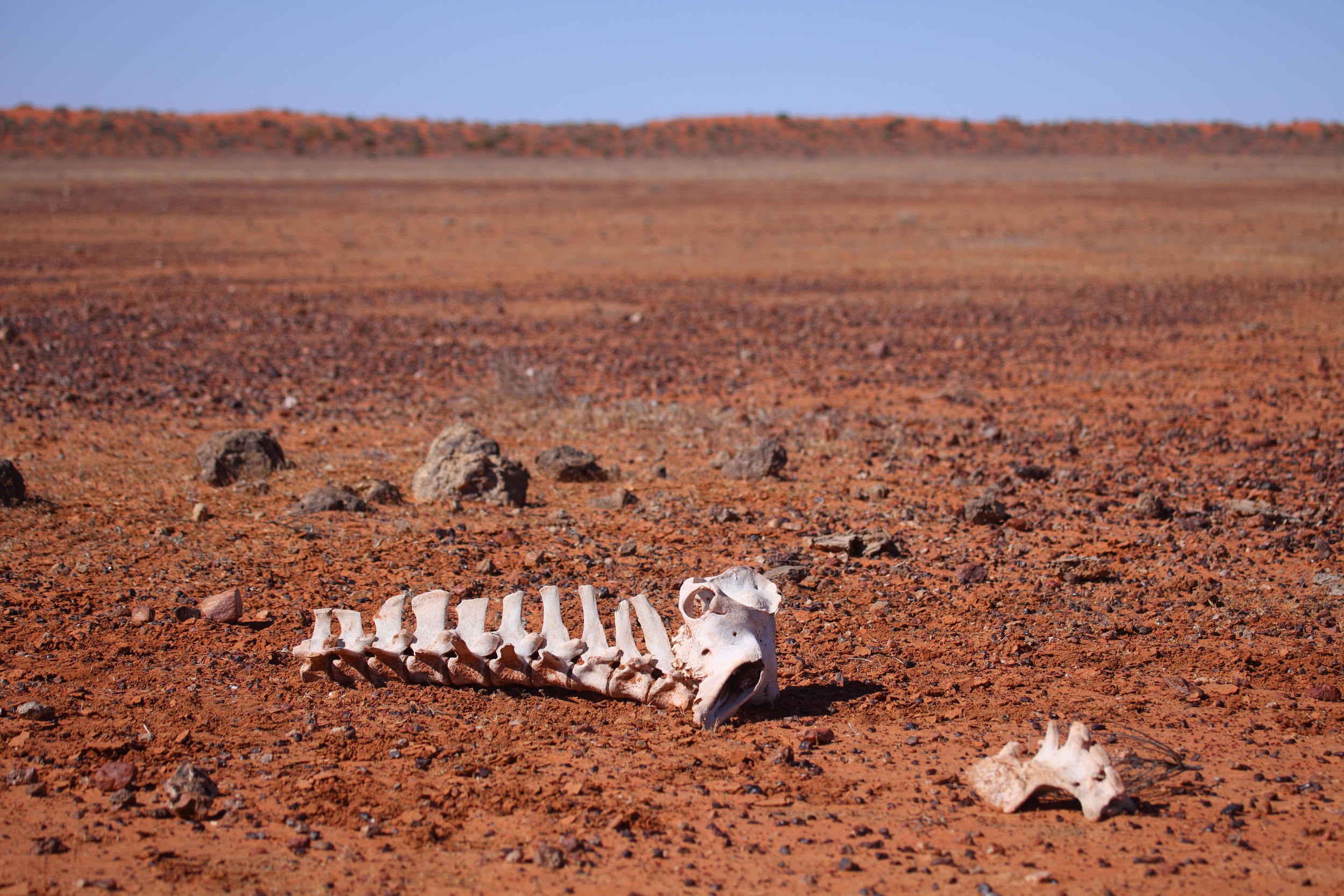
In contrast, I have stood in broad daylight with not a twitcher in sight, in very remote parts of Queensland, the Northern Territory, and Western Australia and watched people, fully sanctioned by Australian law, driving 49 tonne bulldozers through hundreds of kilometres of pristine, potential Night Parrot habitat. I often feel like the reality of this land clearance is elusive to the majority of Australians with little experience of the outback, but land clearing has been identified by numerous bodies as one of the greatest threats to Australian ecosystems and the primary cause of species extinctions on the mainland. The outback can seem so big and indomitable that a few cuts of a dozer blade might seem inconsequential in the vast scale of things. If you’re at all uncertain of what a serious threat this is to our environment, just do a Google search for “reflection seismology” and have a read of what you find. This is a common practice in mineral exploration in Australia and it is cutting lines right across the outback every single day. At present, the only thing likely to stop this is professional ecologists confirming presence of Night Parrot (or other listed species) on exploration tenements. Again, this brings us back to the urgency for a survey methodology informed by acoustic data.


The protection of the location of Bush Heritage’s Pullen Pullen Reserve, while condoned by most in the Australian conservation community, is certainly less critical than the search for other populations in potential Night Parrot habitat under imminent threat of such clearing. Considering the number of journalists that Bush Heritage have been flying in and out of the site, how long can the site remain a secret anyway?  


In fact, it turns out, the site is now all but common knowledge. In The Weekend Australian published yesterday, Greg Roberts reveals that the cattle property John Young found the birds on is Brighton Downs Station, from whom Bush Heritage recently negotiated the purchase of the 56,000ha Pullen Pullen Reserve. With Google Earth and SatNav, even Blind Freddy can find Pullen Pullen Reserve now. Not that it really matters though. This still makes not a jot of difference to the likelihood of the site receiving any unwanted visitors, be they birdwatchers, egg-collectors, Jehovah’s Witnesses or otherwise. The site is under 24-hour surveillance, with intensive coverage of camera traps and listening devices and… it’s still a bloody long way from anywhere.

The Outback: if you think it's going to be an easy twitch.... you're wrong

In the mess that this story has now become, birdwatchers are still being touted as among the top threats to the well-being of the Night Parrot and Bush Heritage’s efforts to protect it. This is so far beyond ludicrous that I’m genuinely surprised at the readiness with which the birding community has been prepared to sit back and wear it. By far the biggest threats to the conservation of the species now are the mishandling of public interest and goodwill, the clearing of potential Night Parrot habitat elsewhere, feral cats and foxes, uncontrolled fires and the continued and inexplicable hoarding of acoustic data that should be informing pricked ears and automated recorders right across the outback rather than just taking up space on a hard drive somewhere.

Courtesy: social media commentators

In the three years since John Young’s historic find, the site, to the best of our knowledge, has received no unwanted visitors. Nil. It’s time to dispense with the twitching hordes bullshit. It just doesn’t add up and any further attempts to perpetuate it should be seen as a deliberate attempt to deflect attention and a pointless attack on a group who continue to make a valuable contribution to conservation and our understanding of birds in this country.

It’s also an interesting measure of the mishandling of both the media attention and the overwhelming goodwill of the birding community toward this project that, in the wake of Greg Roberts’ revelatory article, the internet was comparatively silent on the matter.

People have finally got Night Parrot fatigue, something I wouldn’t have thought possible. A bird that once set the birdwatching forums, blogs and chat rooms alight with spirited conversation and debate barely rated a few short threads on Facebook and a few fairly pedestrian posts on Birding-Aus. Bush Heritage may well be protecting the Night Parrot to the best of their ability but their media team seem to have killed the bulk of the public interest in it stone dead. The scientifically incompatible use of secrecy as a marketing tool and the drip-feed of same-old same-old titbits masquerading as news updates, clearly isn’t working.

As it stands, there are probably a few individuals out there who have become infinitely more knowledgeable about the ways of the Night Parrot than anyone else in history. This is some consolation. Publication is a slow process at the best of times and anyone can understand the need for researchers to guard their work until after publication. We can assume they’ll share this knowledge one day, but time is getting on. There are almost certainly populations of Night Parrot elsewhere in the outback that don’t enjoy the same level of habitat protection afforded to the birds at Pullen Pullen Reserve. As long as we don’t have a widely available acoustic survey methodology, every other population of Night Parrot is in imminent danger of being bulldozed into oblivion even before we know where they are.

Another source of great consolation is that John Young now has the full backing of AWC and is back out bush where he belongs. AWC, working with Queensland National Parks and Wildlife (QPWS), have committed to building one of the largest feral predator-proof enclosures in the country at the Diamantina and Astrebla Downs properties in western Queensland. This is in the middle of prime Night Parrot and Greater Bilby country and it’s not revealing any secret at all to state that these properties are right next door to Brighton Downs. So with the only man with a proven track record for finding Night Parrots spearheading their operation, you’d have to say that it’s a pretty safe bet that, in due course, AWC will be sitting on Night Parrots too and that can only be a good thing.

And besides, it’s fitting that John Young continues to be the Night Parrot man. That’s a title he never asked for and actively shuns. At every public occasion he has stated repeatedly that he wants the story to be about the bird and not about him. But you can’t always get what you want. The name of John Young is now irretrievably linked with the Night Parrot whether he likes it or not. If it weren’t for John Young I wouldn’t be writing this, we wouldn’t be having this conversation, and the internet would be even more silent (on this topic anyway) than it has been in recent days.

For this, we all owe John our thanks.

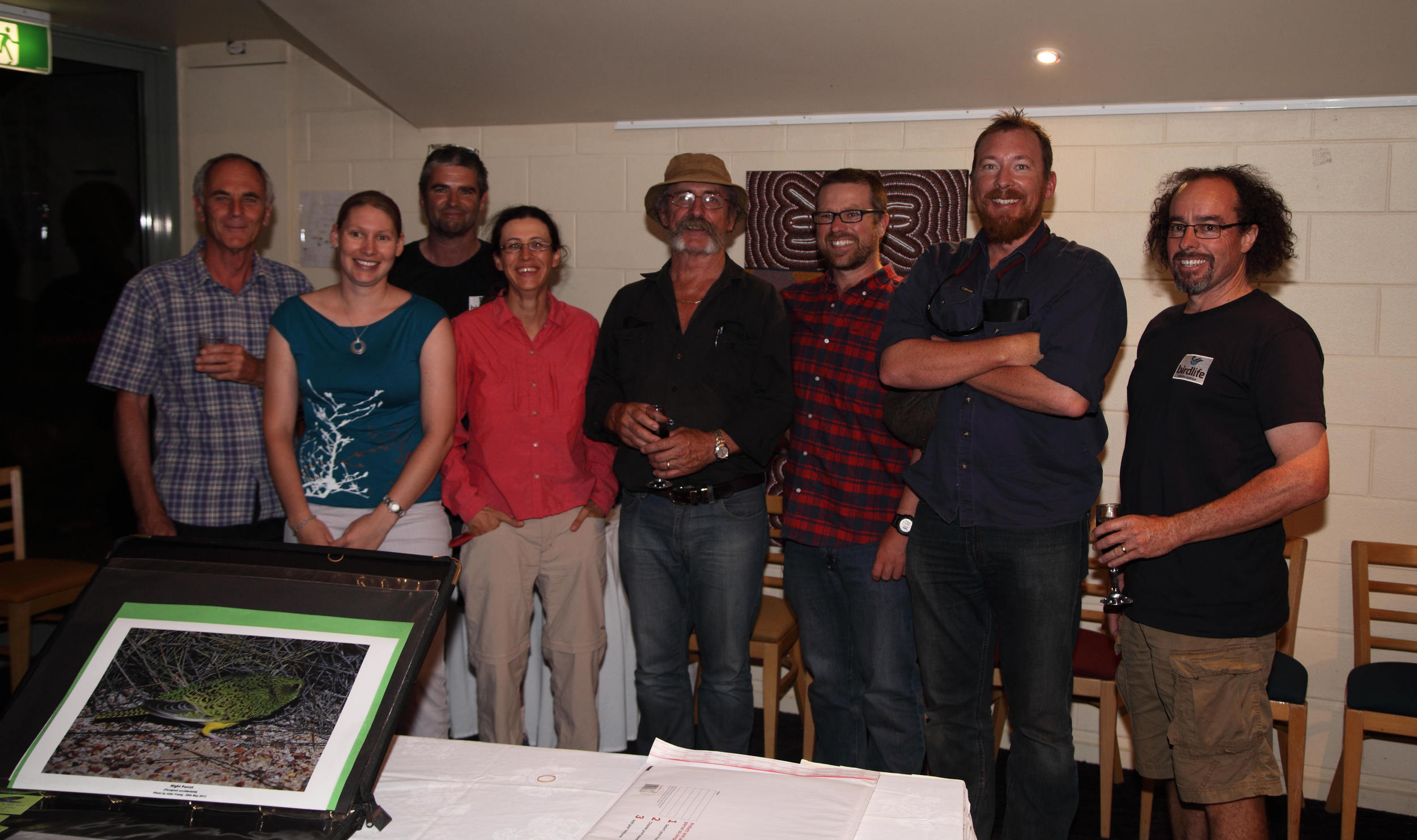
Good times in The Alice with John Young (centre) and the committee of Birdlife Central Australia

Postscript

This is an instructive conversation to be having at any time but perhaps particularly so in the lead-up to another federal election. We’ve watched science and conservation funding whittled away by successive governments and officially sanctioned environmental vandalism and negligence on an unprecedented scale in recent years. With the fair dinkum work of conservation increasingly being left to private organisations like Australian Wildlife Conservancy, Birdlife Australia and Bush Heritage, such groups need all the support they can get.

If it seems like I’m unfairly or overly critical of any organisations or individuals it is only because I care about the iconic landscapes and animals in Australia’s outback which I often suspect of being consistently overlooked by those who make the decisions about what is worth preserving and what research is worth funding. I can only write with the information that I am privy to, but if there are any errors of any kind, feel free to get in touch and I’ll straighten them out.

NB: *There have been persistent rumours in recent weeks that we should expect some big news regarding this last holy grail in Australian ornithology. We can only wait for more information.