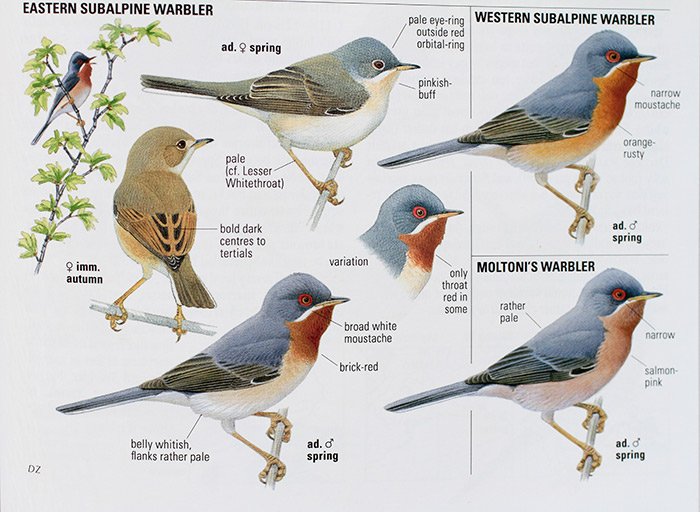
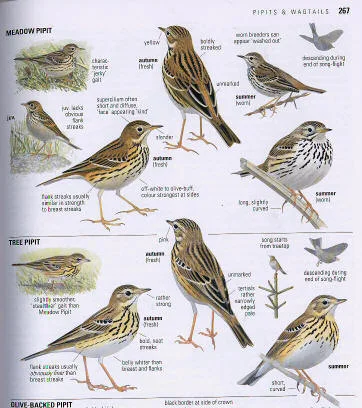
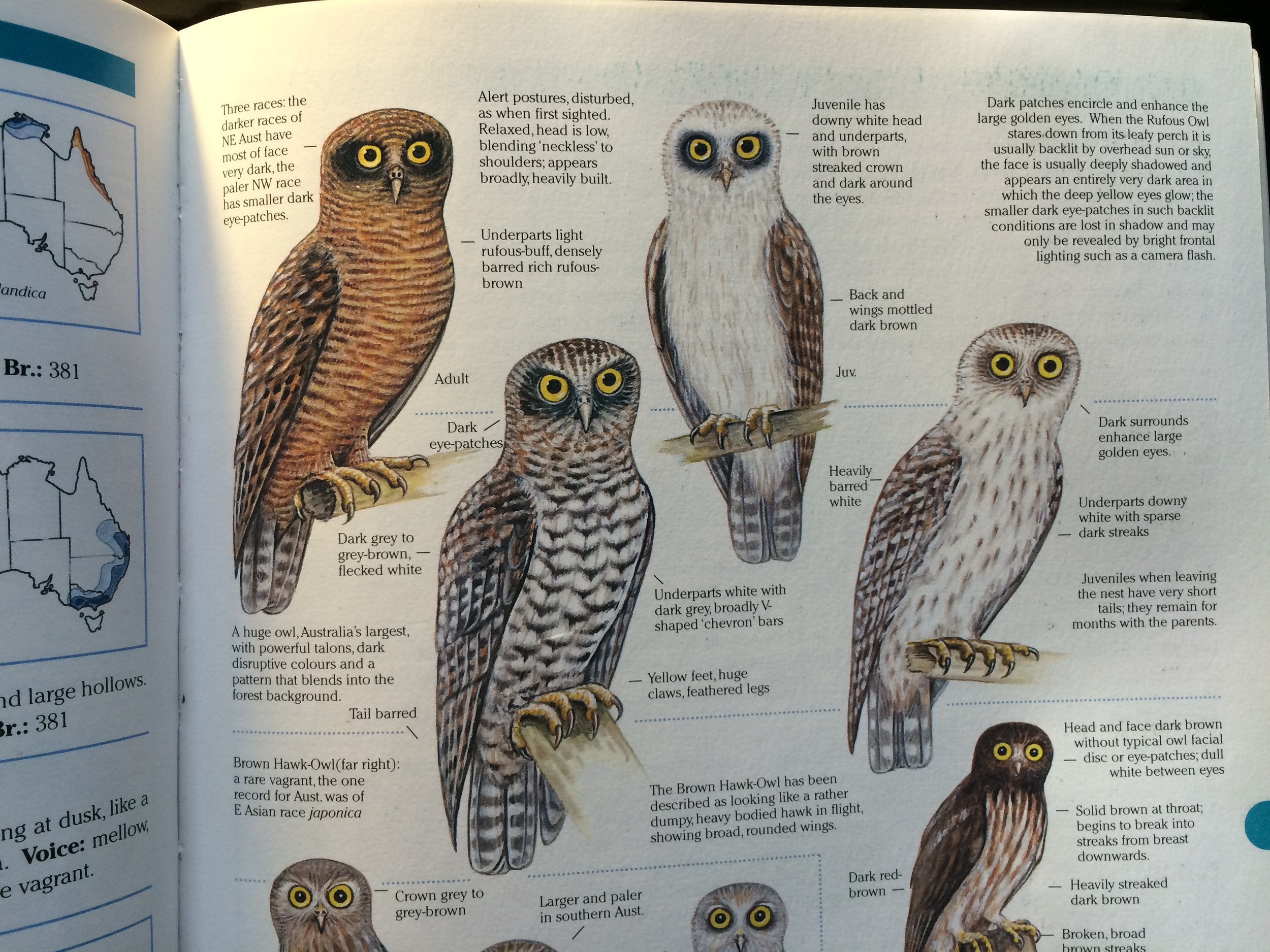
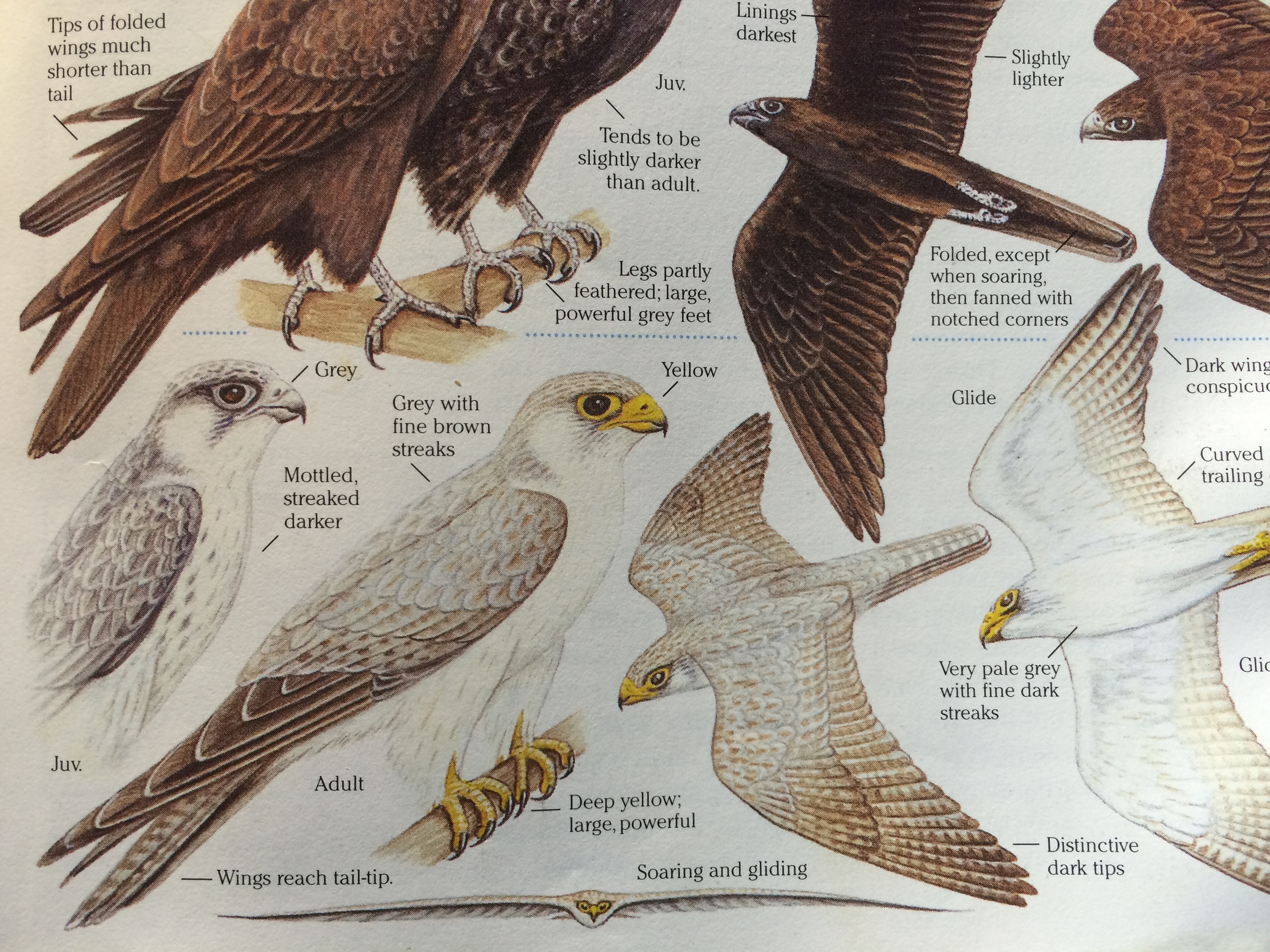
For those who enjoy wallowing in the artwork of such books it is also available in quarto format weighing 2073g which, unless you’re training for SAS selection, is definitely one for the coffee table, not the rucksack. As with almost all good field guides now, there is also a companion smartphone app available which marries all the best aspects of the book with multimedia content including recordings of the calls of all species, photographs and video content. This app continues the tradition of excellence set by its paper predecessor – it’s the best bird app I’ve used by a long shot. (But field guide apps will be a topic for another post altogether.)
If it has any weak points I’ve not yet demanded enough of the book to expose them. Try as I might I have not yet found any errors – factual or typographical. Although, even as I type this I’m sure someone will be emailing me with a list of them.
In the challenging endeavour of wildlife field guide production, the book simply known as The Collins, is the four-minute mile. It’s the benchmark; the yardstick by which we can gauge all other attempts.
Which brings us to Australian field guides. Despite birdwatching having far fewer adherents here than in the UK and the US, antipodeans are well-served for bird books. There are numerous regional and local guides and more than a few How to Find… or Where to Look…. type books of greater and lesser renown. But, ignoring the historically significant but antiquated What Bird Is That? by Neville Cayley, there are presently five fairly current contenders in the class of pure field guides that treat all of Australia’s birds: Simpson & Day, Pizzey & Knight, Morcombe, Slater and Campbell (the only photographic guide in the bunch).
While it’s fair to say that none quite stack up against The Collins, everyone has their favourite and the field guides available to those seeking Australian birds are of a consistently high standard. Some have obvious, even infamous, shortcomings, but these are usually balanced by other innovations or points-of-difference.
Below, I take a look in as balanced a fashion as possible at the five main field guides to Australian birds. Inevitably, it will be coloured by my own preferences but I’ve tried to be as empirical as possible.
It’s worth mentioning at this point, that the impetus for this review has come from the imminent release of a sixth Australian field guide that we’ve been hearing about for at least a couple of years now. This is being worked on by a number of prominent authors who will be familiar names to most in Australian ornithology, and is slated for release by CSIRO Publishing later in 2016. Rumour has it that this new field guide has been inspired, if not modelled upon, The Collins discussed above. If this is the case, our expectations can hardly be anything but stratospheric but until its arrival it’s worthwhile to have a look at what’s been achieved in Australian field guides to this point.
Simpson & Day
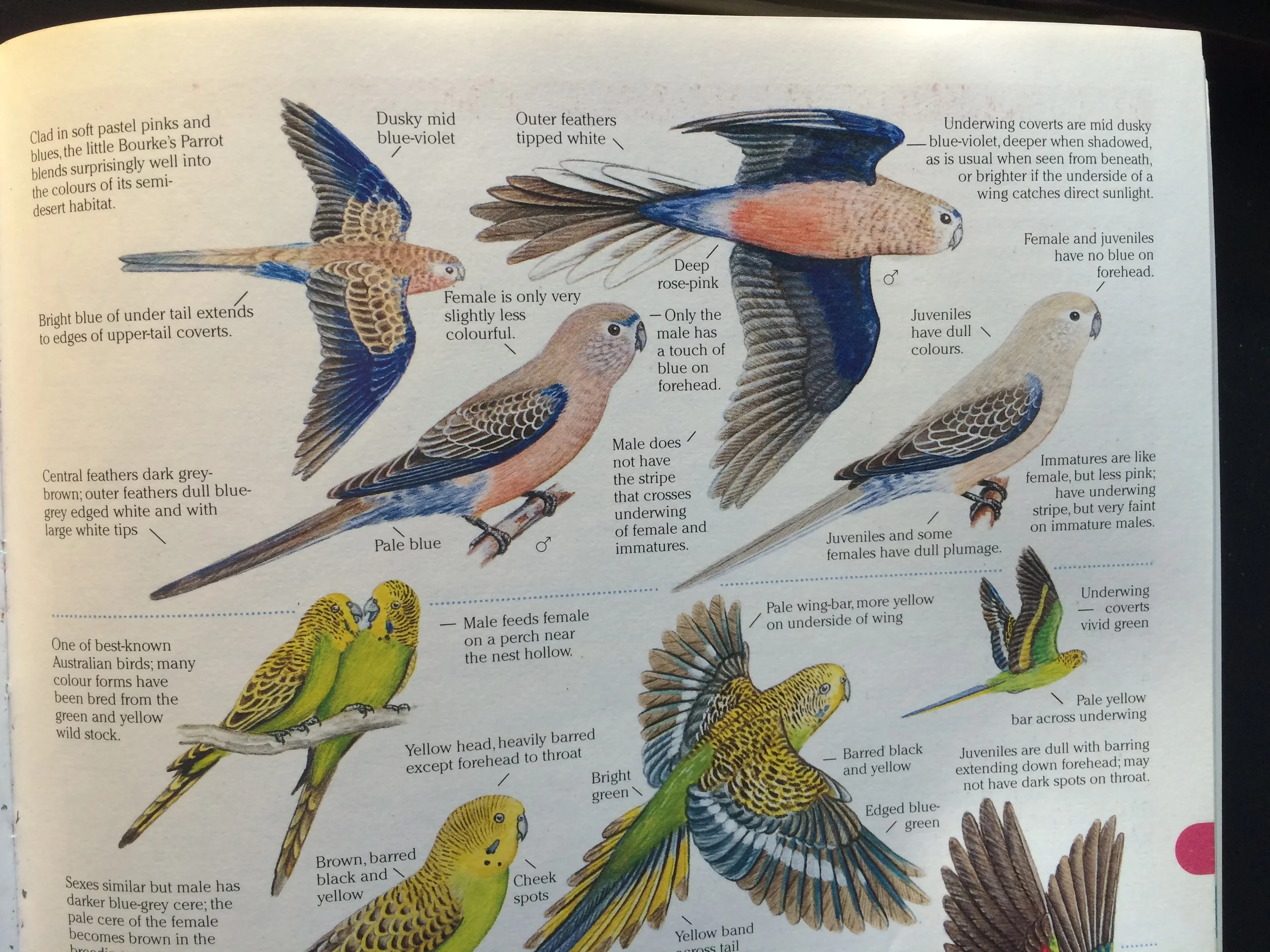
Field Guide to the Birds of Australia: the most comprehensive one-volume book of identification
Editor – Ken Simpson
Illustrator – Nicolas Day
Art Director – Peter Trusler
Weight – 743g
Currency – 8th edition published in 2010