Chris Watson

birding

Birds of the Darwin Region by Niven McCrie and Richard Noske

Review, birdingChris Watson

While it seems another El Niño is looming, the flow of good Australian natural history books is far from drying up. This is perhaps most true for books about our birds. In recent years we’ve welcomed Dolby and Clarke’s Finding Australian Birds, Fraser and Gray’s Australian Bird Names and the re-release of Alec Chisholm’s classic Mateship with Birds to name just a few. All of these are exciting examples of passionate advocates for Australia’s birds, putting their heads together and sharing accumulated knowledge with an eager audience.

This recent release from CSIRO Publishing, is no exception; it’s astonishing. It’s the sort of book that makes you excited about being a naturalist. For the many who are already familiar with the authors’ other work, this will come as no surprise. McCrie is perhaps best known as the author, with James Watson (no relation), of that other beloved Top End treatise, Finding Birds in Darwin, Kakadu & the Top End. A founder of the prime online reference for Top End birders, the NT Birds newsgroup, he has also been a well-loved tour leader for visitors to the Top End over many years. Richard Noske’s prolific scholarship of birds in northern Australia, Southeast Asia and the Pacific is well established. He was senior lecturer in biology at CDU for some 26 years, authored, with Graham Brennan, another work of great interest to northern birders, 2002‘s Birds of Groote Eylandt, and is the current chief editor of the journal of Indonesian ornithology, Kukila.

Laurie Ross' eye-catching Rainbow Pitta adorns the cover. One of the easier to see of this typically elusive family, and still relatively easily found around Darwin.

Happily, it’s a fairly common practice in Australia for local experts to work up a guide to the birds of their town, region, or patch. Such experts are, typically, deeply knowledgeable long-term residents, enthusiastic about recording for posterity all of the vagrant records, seasonal movements, and breeding ecology of the birds of their locality. You don’t have to look far to find self-published guides to this town or that shire. Sometimes these are simply brief pamphlets produced under the photo-copying budget of the town council, but range to more elaborate spiral-bound affairs produced with funding from local field naturalists’ clubs or Landcare groups. McCrie & Noske’s Birds of the Darwin Region, seems likely to become the yardstick by which such guides are measured.

The executive summary for this collaboration? If you’re a birder, ecologist, or you’re at all interested in the natural history of Australia’s north, you’ll want this book.

Birds of the Darwin Region is clearly a labour of love from two long-term residents of the region. Indeed, a book of this kind is only made possible by authors with the intimate knowledge of an area that comes from living in it year round. There are some noteworthy absences from the species list, which serve to remind you of the limited geographic scope of the book. No Variegated Fairy-wren (the treated area doesn’t extend as far as the sandstone country); no Chestnut-backed Button-quail; no Masked Owl; no Dusky Moorhen. Maybe some of these occur in the vicinity of Darwin but clearly none have been confirmed within the treatment area.

The species accounts are accompanied by seasonality charts, and distribution maps. The region is divided into a grid of 64 cells with explanatory notes at the front of the book detailing the number of surveys providing data for each cell.  

The research the authors have done in confirming or discounting records is, no doubt, all but exhaustive. There is an ‘unconfirmed species’ section toward the back for those few birds lacking sufficient substantiation for their occurrence to be admitted without question. Otherwise, the records in the list can be considered ‘gold standard’; thoroughly referenced… and what references. For keen NT listers the references pages of this book alone will be a crucial reference.

McCrie & Noske have done an extraordinary service to Australian ornithology, in compiling, organising, and vetting the observations and publications of the many naturalists who have studied Darwin’s birds in the past. To this end, there’s also a ‘history of ornithology’ section in the front of Birds of the Darwin Region, giving deserved acknowledgement to those who went boldly (recklessly?) before onto the mangals and mudflats, before the days of that great ruiner of lenses, Bushman’s Plus™ tropical strength insect repellent.

The species accounts are wonderfully in-depth without being academically soporific; authoritative while managing to be almost conversational in style. Each account is highly readable. Birds of the Darwin Region is clearly focused on the birds of this one defined area, but as many of these species occur across northern Australia, and even farther afield in some cases, it will have relevance far beyond the bounds of Darwin as well.

Without even going past the waterfowl there are numerous examples of what makes this such a valuable and readable reference. The species account for one of the Top End’s iconic species, Magpie Goose, runs over four pages. It not only contains the expected information about its life cycle and habits around Darwin, but some interesting insights into how local policy and community attitudes can affect a species. Recreational hunters, indigenous hunters and mango growers all influence the movements and site use of this species which, in turn, can influence the health of areas used by the birds.

NT waterfowl hunting season: Anger over 34 geese carcasses dumped near rural property

Still among the waterfowl, what about that most infuriating of ducks – Garganey? This ‘Artful Dodger’ of ducks has certainly eluded my Australian list as skilfully as the Dickensian urchin. I first lived full-time in the NT from 2006. In the 26 years preceding 2006, Garganey was recorded in 20 of them, including a staggering 125 birds at Leanyer in 1991. From 2006 to 2014 (the cut-off for entries in this book) it was seen by… no-one. Well, not quite. No-one except for my arch-rival in NT listing, Mick Jerram, who spotted 3 of the birds on the Katherine River in 2008. The perfect grip.    

Birds of the Darwin Region with some other familiar volumes for size comparison. There is a lot in this book. 

Birds of the Darwin Region boasts many truly enlightening factoids; things I’d never read anywhere else before. Take this sterling opening sentence to a species account for example: “Although among the smallest of the world’s swans, the Black Swan’s neck is proportionately longer than in any other, giving it a uniquely elegant silhouette.” My favourite though, is at the other end of the book, in the species account for Canary White-eye: “It has the ability to prise open small flowers… by inserting its somewhat wedge-shaped bill into the floral tube, then gaping, behaviour known as zirkelning.” In the landmark textbook of our pursuit, Ornithology (3rd edition), the author Frank B. Gill lists only four entries in the index under the letter Z: Z sex chromosomes; zeitgebers; zugunruhe; and zygodactyl. Zirkelning? Nowhere to be found. For this alone McCrie and Noske have my admiration.

Finally, Birds of the Darwin Region draws on records from a number of databases; the NT Fauna Atlas, Eremaea Birds (and latterly Eremaea eBird) and the Darwin Bird Atlas project among others. I suspect it’s highly likely that anyone reading this will have contributed observations to one or many such databases, and you can be justifiably proud in pointing to this book as the fruit which is ultimately borne by such citizen science projects.

Darwin is deservedly renowned as one of the top birding destinations in Australia, which places it high in the running worldwide. With Birds of the Darwin Region, Niven McCrie and Richard Noske have cemented their place in any future history of Top End ornithology to be written, and provided an indispensable reference for visitors and researchers for many years to come.

CBW

Buy it from Andrew Isles.

Review: Birds & Animals of Australia's Top End - Darwin, Kakadu, Katherine and Kununurra by Nick Leseberg & Iain Campbell

ReviewChris Watson

Here at the Box Hill Laboratory of Ornithology we love books and we love getting mail. This being the case, there is no more welcome kind of mail than fresh-from-the-press bird books. So it was a wonderful augment to a slightly overcast Wednesday to find this new book in the mail box.

Straight off the bat, it’s worth noting the technical redundancy in the title. This guide covers birds AND animals of the Top End. This has attracted comment elsewhere along predictable lines so I should deal with this before moving on – yes, birds ARE animals. Thanks professor. Seriously though, this is a redundancy that many of us have difficulty avoiding. Just do a search for tour operators offering birding AND wildlife tours and you’ll get an idea of the magnitude of the problem.

To describe yourself as a birder, birdwatcher, or ornithologist, at each level glosses over a good portion of your other interests and skills. Many birders also keep lists of mammals, reptiles, butterflies and moths. It would be a rare birdwatcher that didn’t derive as much pleasure from an encounter with a possum or goanna as the birds that share the same habitat. Any qualified ornithologist will almost certainly have passed through training in general zoology before specialising, so has skills and interests beyond the world of feathered things. So we often feel compelled to explicitly state that our interests and skills extend to furred, scaled and even spineless things also. As I’m known to say perhaps too often, birds are a ‘gateway drug’.

So yes, the title is somewhat redundant, but it points to something you’ll enjoy; there’s a good deal more than birds within.  

Just one of the glorious frog plates.

Nick and Iain (who together produced the recent Birds of Australia: A Photographic Guide with Sam Woods covered here) have gathered around them a ‘who’s who’ (or should it be ‘whom’s whom?’ – I can never work it out) of esteemed wildlife photographers to deliver this new guide. Up front, it is acknowledged that this is a guide targeted specifically at beginners. The experienced birder will find a fragmented and incomplete account of the region’s birdlife here, but the authors state as much in many parts of the book. The novice will find plenty within its pages to keep them busy and set the hook for further explorations, but if you’re looking for a comprehensive treatment of Top End fauna, other more complete books are readily available and, if you’re that way inclined, you probably already know what they are.

With that out of the way though, there is still plenty within this guide to recommend it to more experienced birders. The introductory section gives a good grounding in the geology, climate and habitats of the Top End. There is also a brief guide to some of the more popular wildlife-watching sites.

The layout of the images is up there with the best I’ve seen and, for a few tricky confusion pairs, it provides some neat comparisons. (If you’ve never sat on the beach at Lee Point, beset by sandflies, sweat lashing off you, trying to convincingly separate Greater and Lesser Sand Plover, then you have yet to truly earn your Top End birding stripes. In December it can feel like even your fingernails are sweating.) For novices, the plates for herons and egrets will be handy too, as will the section covering terns in breeding and non-breeding plumage, at rest and in flight. The notorious LBJs of the tropical mangroves (Green-backed, Mangrove and Large-billed Gerygone) would be intimidating to the new-comer but they are beautifully compared on the one page allowing quick assessment of the salient field marks. Again, though obviously handy for the beginner, there will be experienced birders breathing a sigh of relief quietly to themselves. These species don’t always appear together so neatly to offer clean comparisons when you’re ankle-deep in black mud out the back of Palmerston sewage works! This is a great reference.

One of the finch pages: flawless images with simple, beautiful presentation.

The layout of the images has been done with great care and the result is effective and very easy on the eye. Multiple species from similar habitats are blended into the one scene to allow easy comparison. There is only one drawback with this approach – when the same care isn’t applied to the scale of images. There are a couple of obvious examples, neither drastic, where this might cause some difficulty for a novice birder. In one example I think the size of the Australasian Grebe is too close to the Green Pygmy-Goose it is depicted beside. This is not a great problem as they are distinctly different-looking birds. A greater challenge for an inexperienced observer is that Great-billed Heron, a monster among wetland species, is depicted beside the dainty White-faced Heron with their sizes being far too similar on the page to suggest the significant difference in bulk that will greet the observer in the field. Putting the massive size difference to one side, these two species look similar enough that a first time observer might easily be confused. But this is the only potentially negative aspect of this approach that is otherwise user-friendly, accurate and beautiful.

Mostly the scale of the images is spot on as in this page of Top End doves.

So what of the other animals sections? The book reflects the fact that when we go in search of wildlife, it is mostly birds that we see. Birds fill the first three quarters of the book, with other fauna treated at the back. All of the pictures are of a similar high quality to the bird section. The difficulty of finding mammals is reflected in the slim coverage but this is fair enough. Again, this book is targeted at the novice and probably at the international visitor, so identifying the many different macropods is a priority over mice, rats and dunnarts. Even the ardent and trained observer will be lucky to see these animals at all, let alone well. But there is much more than just kangaroos and wallabies for the fur-lovers. I’m particularly glad that there are a few microbats treated, as I always see these charismatic little creatures as the unsung heroes among mammals. They make up almost a quarter of our mammal list but are often relegated to the too hard basket by recreational wildlife seekers; this needn’t be the case. Acoustic detection gear is now quite affordable and user-friendly for the amateur enthusiast and the Top End offers many locations for observing bats leaving and returning from roosts; a situation where they are quite identifiable to species level with a bit of practice.

Herpers too will be satisfied with the tremendous imagery of frogs. There are more than enough confusion species among Top End frogs to trip up even a practised observer. I was emphatically reminded of this fact during a recent stint on the Arnhem Land Plateau. But having the likely candidates laid on a single plate in gloriously sharp colour is a great help. Sadly, the snakes and lizards of the Top End have fared pretty badly since the arrival of the Cane Toad, with many species noticeably more difficult to find now than they were even 5-10 years ago. The obvious snake species are covered, a few of the agamids, skinks and happily, a good variety of the geckos; once again, with some excellent comparison plates presented.

There is only one major typographical error that got past the editors and I suspect the authors will have been mortified as soon as the book was in print and they found it. It’s nothing that can’t be fixed with a sharpened HB pencil. On page 225, both accounts for the two turtle species presented are headed “Northern Long-necked Turtle Chelodina rugosa”, despite the images and the body of the text depicting different animals. A quick check of the Australian Reptile Online Database (AROD) website, which is actually the source for one of the photos here, quickly clears up any confusion: the bottom species is Northern Long-necked Turtle Chelodina rugosa. The top species is Northern Yellow-faced Turtle Emydura tanybaraga. No problem.

The only other puzzling references I found are as likely to result from my ignorance as actual errors. I’ve never heard of Intermediate Egret referred to as “Plumed Egret Ardea plumifera”. I understood plumifera to be a subspecies of Intermediate Egret Ardea intermedia. Similarly, I’ve never heard of Pacific Emerald Dove being referred to as “Brown-capped Emerald Dove”. But this could just be the authors singing from a taxonomic songbook that I’m unfamiliar with. While we’re being pedantic, sharp-eyed birdos will spot on page 113 that the scientific binomial of Little Shrikethrush is incorrectly given as Colluricincla harmonica, which is actually Grey Shrikethrush – just a typo.

All in all, this is another high quality production from these authors. As with Birds of Australia: A Photographic Guide, the images are a testament to the dedication of the talented photographers who have contributed their work.

This will be a tremendous introduction to wildlife-watching in the Top End for first time visitors – authoritative, clear, attractive and small enough to go in a camera bag or day-pack. Although this is openly targeted at novice wildlife seekers, I’d suggest that there will still be many experienced naturalists and locals out there who will find this a useful reference.

The essentials:

Soft cover, 272 pages

Published by Princeton University Press

Price varies between sellers from around $18 up to $50

Happy reading.

CBW

Support a local and buy it from Andrew Isles.

The birds and other wildlife of the Top End won’t watch themselves; it’s time to start planning your trip.

The NT is blessed with numerous experts who can assist with the planning and execution of your ultimate Top End birding trip. Get in touch:

Mick Jerram in Katherine at Gecko Canoeing and Trekking

Mike Jarvis in Darwin at Experience The Wild

Luke Paterson in Darwin at NT Bird Specialist

Night Parrot – a possible sight record from the Northern Territory

Twitching, ResearchChris Watson

Sunset over the Wakaya Desert, Northern Territory in the vicinity of the report. A varied landscape.

The phone went off early the other morning (12 Feb) with the new email tone. Only the subject line of the email was visible on the screen but it was enough to take me from bleary-eyed and recently woken, to bolt upright and running, screaming downstairs to the office.

Probable Sighting of Night Parrot Pezoporus Occidentalis [sic] Qld-NT border.

The mainframe of the Moonee Ponds Laboratory of Ornithology slowly came to life and the email continued (excluding salutations and other niceties):

Driving West on the Barkly Highway near Kiama Creek, at approximately 07.00 hrs N.T. time with sun rising behind me, I saw, what at first I identified as a Ground Parrot scuttle out of thick 30cm high growth on the edge of the bitumen, stopping 40 cm onto bitumen. I was able to swerve onto centre of road avoiding the parrot.

It is only now as I log my sighting that I realise that there is every chance that I saw a Night Parrot Pezoporus Occidentalis [sic]. Sighting was perfectly clear, brightly lit by full morning light.

I processed the information and its possible import. Then I sought permission to post it straight to Birdlines and Facebook groups to get the report as widely known as possible. (My next thought was to contact Taxonomy Hulk to smash the mortal who doesnt always use lowercase for species name, but I let it go.)

The report went out on the various social media and Birdlines and some busy threads of discussion rapidly got going. These mostly fell into one of two categories that will be entirely predictable for anyone familiar with birding groups on Facebook: a) over-the-top congratulations, or b) forensic analysis. Theres often not much grey area in these instances. There is a third category which may be described as c) oh-yes-I-used-to-see-those-all-the-time-and-have-an-extensive-video-collection-of-them-at-my-bird-bath-here-would-you-like-to-see-them-oh-it-seems-that-I-cant-find-them-just-now-but-I-will-look-them-out-and-get-back-to-you. Its not quite a grip-off; I like to call it the crank-off.

The Night Parrot is a bird that is held up to exceptionally, and uniquely, high evidentiary standards. Beyond a certain level of diligence this can be counterproductive. Sight records of Buff-breasted Button-quail are regularly accepted despite not a single photograph of this species existing. But if you see a Night Parrot, youd better be ready for a grilling; just ask John Young and he had photos.

The Wakaya Desert is a landscape of extensive native grasslands with immense fire scars, ephemeral swamps, chenopod, and gibber. 

The observer in this case, Steve McKenna, is unknown to me. The email he sent came via the organisational account for BirdLife Central Australia rather than directly to my personal email. Steve would later join the Australian Twitchers Facebook group and contribute several further comments to the discussion. It seems safe to assume from the tone of many comments, that no-one involved in the thread knew the observer either.

To the original details in the email report above, the observer added the following details during the Facebook conversation:

Further to my possible sighting of Night Parrot. The terrain was flat and poor soil with dense herb growth of samphire and or saltbush growing to about 40cm high. Herbs grew to very edge of bitumen. The road was a straight stretch on a heading of 255 degrees. I suspect the bird was chasing a grasshopper when it can only be described as scurried out from under cover. With its plump body and head low to the ground, stopping as if it was surprised to have a run into the clear. Even giving a comic had turn in my direction. Fortunately it did not attempt to fly. The N. Day illustration is very accurate with my specimen having more distinct mottling on the cheek clear in the bright morning light. Definitely a Pezoporus. If not night parrot must be ground parrot. Pale dusty green with distinct mottling, no other colouration. Size about 1.5 times the size of a budgy. provided here exactly as written including errors.

So there you have it; a fairly confident claim.

As usual, the Facebook audience offered everything from outright dismissal to high pronouncements of congratulations and everything in between. The communitys response also offers an instructive example of how, I think, our responses to reports of this species have gone wrong in the past and how they might improve.

The Wakaya is exceptionally flat with local relief changing only a few meters over hundreds of kilometres. Periodic rains can flood extensive areas for weeks at a time.

We know next-to-nothing about the observer. In another post, Steve felt the need to explain that he is a trained investigator, but without any other details to suggest what sort of training he has had. Its unclear whether Steve has birded this part of the outback before, or even if he is a regular birder. One thing that we have some basis to assume about the observer is that he is probably not a keen twitcher. He doesnt appear among the rankings on Tony Pallisers birders totals page, nor does he seem, prior to this report, to have been active on any of the national or state-based Facebook groups devoted to birding or twitching despite being active on Facebook for some time. Perhaps most importantly, he saw what he describes as definitely a Pezoporus on the Barkly Highway and didnt think it worthwhile stopping for a closer look. Any bird from the genus Pezoporus in this part of the country is almost equally extraordinary, albeit for very different reasons.

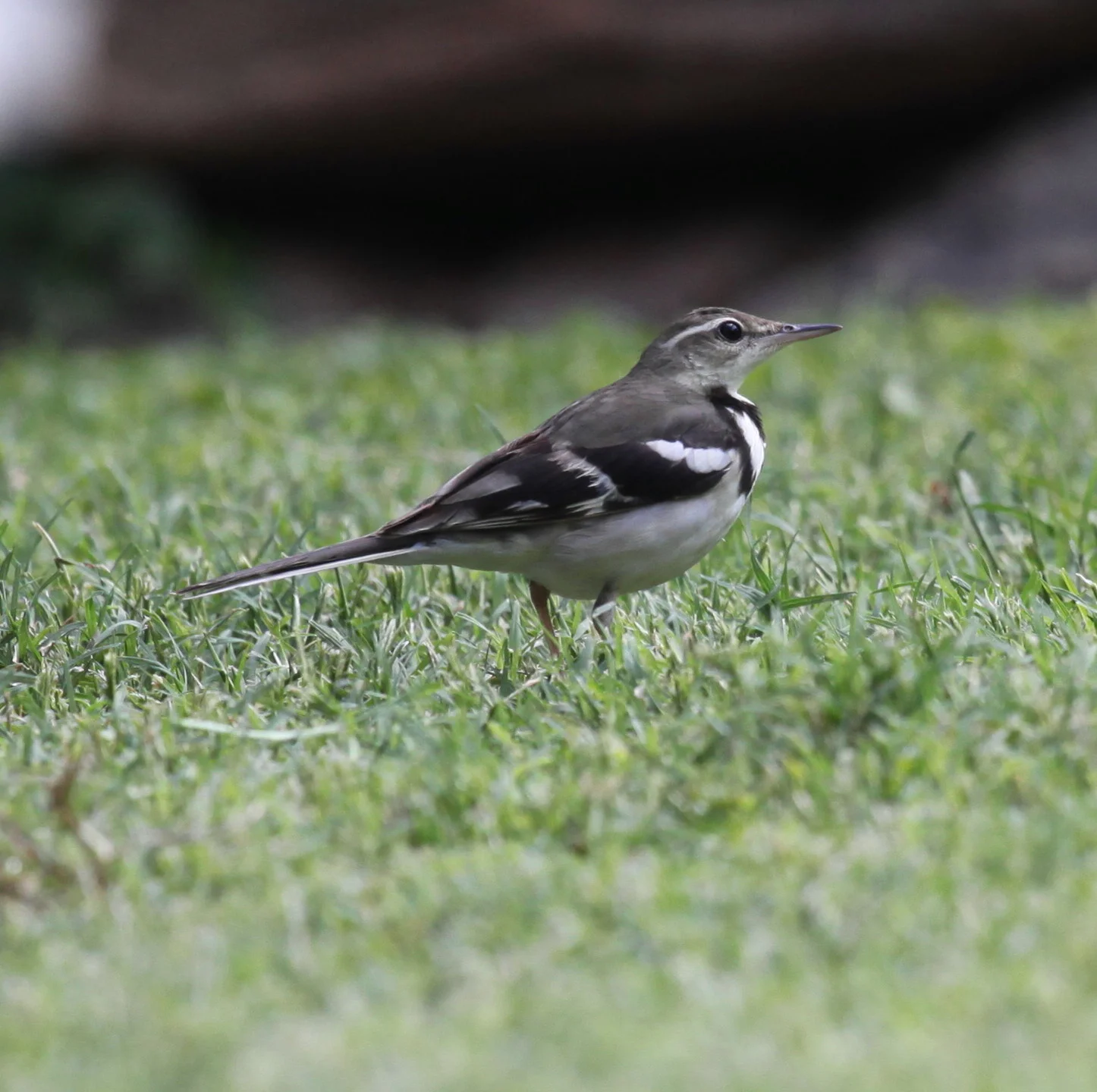
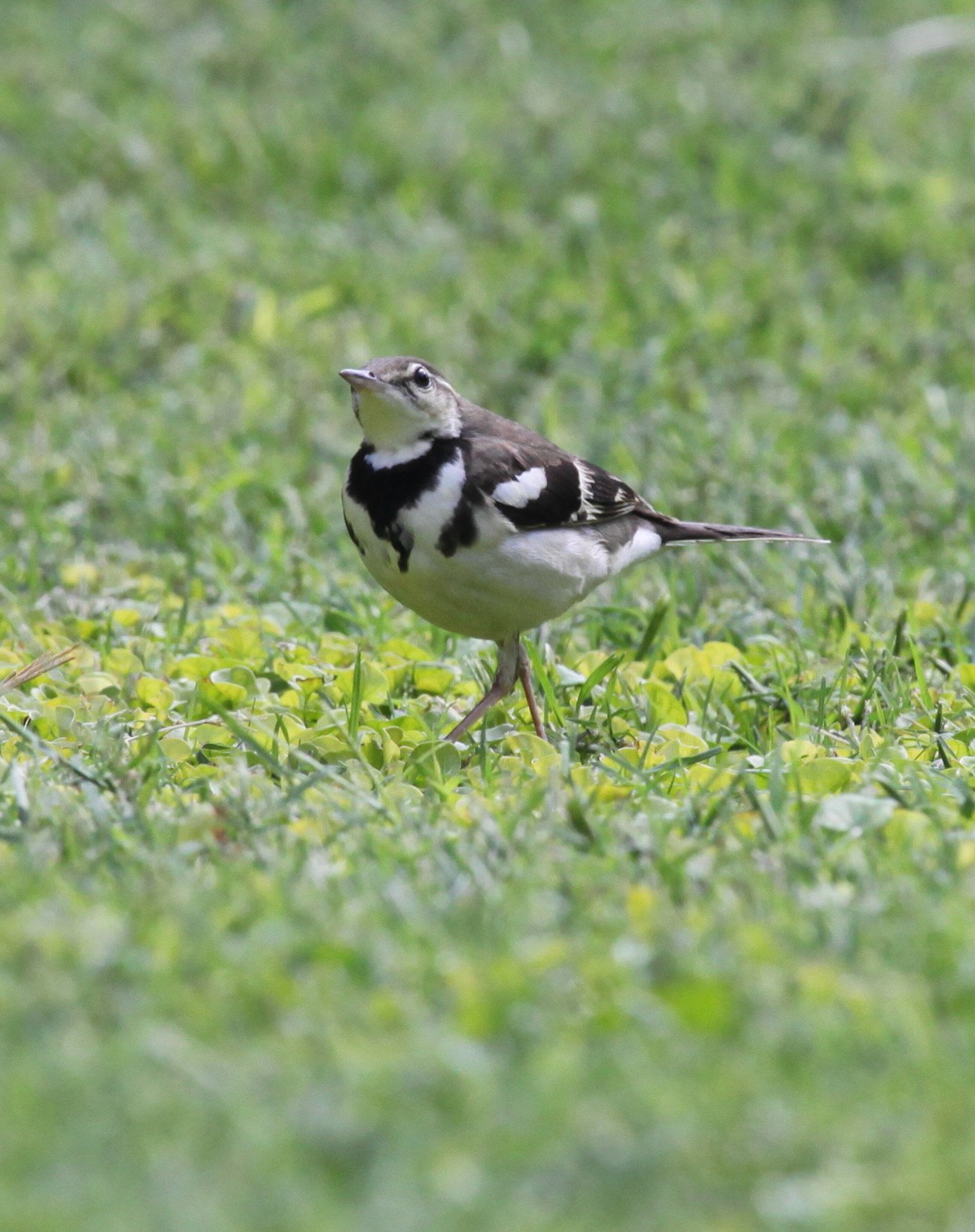
Despite all birders understanding that vagrancy is a very real phenomenon, we all know that it has its limits as well. A Forest Wagtail in Alice Springs, while extraordinary, is conceivable in the sense that it is a migratory species that routinely covers long distances. If such a bird encounters extraordinary weather its plausible that it might end up somewhere unusual, and by a further, ridiculous stroke of luck, it might be found and identified by a birder. But for an Eastern or Western Ground Parrot to appear at Kiama Creek NT, a minimum of 2100km from the nearest known population requires a complete re-assessment of the species habits, habitat requirements, movements, and distribution. Considering that there are known populations of Night Parrot only a few hundred kilometres from Kiama Creek, this seems the more likely possibility, if it was indeed a Pezoporus species.

Which brings us to confusion species. There are a number of contenders, but knowing very little of the observers experience and skill level renders this activity entirely speculative and not very helpful. We can spend all day tossing up whether the observer had the skill to discern the difference in size between a Budgerigar and a Night Parrot, but it doesnt really contribute much to the assessment of the sighting.

The little we do know about the Night Parrot, suggests a readjustment of the standards of evidence for reports of the species. John Youngs search for the bird shows that even a highly-skilled naturalist can be foxed for many years before successful detection. Johns story also demonstrates that even once the presence of the bird is confirmed at a particular site, it is still highly unlikely that you will be able to observe it in the open. The possibility of obtaining photographic evidence of a sighting, especially a chance sighting while driving, is so remote that it neednt even be considered.

The outback remains one of the world's largest and most pristine wilderness areas. Helicopter and even camel are sometimes an ecologist's only hope of getting to surveys sites. 

The outback maintains its sense of mystery and remoteness. But despite this, it is now comparatively well-travelled and regularly birded by tourists, very few of whom dont carry camera equipment. Indeed Steve McKenna had a dash-mounted camera recording his journey through the windscreen for posterity but it stopped recording (it is not clear whether he turned it off or it ran out of batteries) before he saw this bird; a salutary lesson for all those driving outback routes with dashcams and GoPros. If Night Parrots were regularly out and about we would have more photos of them.

Now that we have proof that Night Parrot persist in at least a few pockets of the outback, it is time to start mapping its contemporary distribution. This will only be possible if we lower the bar slightly and encourage people to come forward with their reports. This doesnt mean opening the floodgates to every crank report and throwing aside all diligence, but it might mean recognizing that this is no longer a yowie were chasing. We need to be cautious of treating people like bunyip-hunters or Nessie researchers when they might have seen one. Its a real bird, its really out there and, thanks to John Young, we may soon have the survey methodologies to detect their presence much more effectively. We know the bird exists, we know something about the habitat it prefers, and we know that its habits make it very hard to observe. Sight reports in recent years have come from as widely scattered localities as western Queensland, north-western Victoria, the Pilbara in WA and now the NT.

If we only accept, and follow up on, reports by expert observers accompanied by photographs then I suspect we will be waiting a very long time before someone finds another population.

 CBW

NB: If youre interested in hearing about the Night Parrot from the man who knows it best (and seeing the only photographs and moving footage of a live bird ever produced), John Young will shortly be visiting Melbourne to deliver a talk about his historic 2013 re-discovery of the Night Parrot. This event is at 6:45pm on Sunday the 1st of March at the Deakin Edge auditorium at Federation Square. Tickets are $40 and are available at the shop page of this website or you can simply click this link.

John Young presents: Rediscovering the Night Parrot. Get your tickets while they last.


Nhulunbuy (NT) Black-headed Gull Makes Headlines

Chris Watson

Black-headed Gull (back) with Silver Gull on the shore at Nhulunbuy (NT). Image with kind permission of Karen Rose.

Australia’s ninth Black-headed Gull Chroicocephalus ridibundus, has been re-found near the remote East Arnhem Land town of Nhulunbuy.

First reported by Chris Wiley on the 2nd of February around the old alumina refinery’s export conveyor, this got everyone’s attention. This is a bird still absent from some of our top twitchers’ lists. Sadly Chris didn’t manage any photographs of the bird and failed to re-find it the following day. At a remote locality like this a report with no pictures just doesn’t cut the mustard to get most twitchers booking flights.

So it was all the more exciting on the 11th of February when Karen Rose poked her head above the virtual parapet to post a distant phone-through-scope photo of the bird. Distant and grainy though the shot was, it was sufficient to establish a good identification of the bird which (STBA*) will be our ninth record of the species. Both Birdline reports can be viewed here.

Black-headed Gull preening. Image with kind permission from Karen Rose.

Even better news was that Karen had first noticed the bird on the 9th of February, so it seems to be at least briefly site-faithful most days, apparently at low tide. This is a fairly out-of-the-way spot so the question that remains now is… who’s going to twitch it?

PS: ABC weren’t slow to pick up the story and you can read James Purtill's article here. Before anyone jumps in, Sean Dooley (@twitchathon) was quick to correct himself on Twitter; it was a Javan Pond Heron, not a Chinese.

*Subject To BARC Approval – a phrase this writer employs so often it warrants the abbreviation. 

Forest Wagtail - BARC Submission for an Australian Mainland First

TwitchingChris Watson

This post is a result of a few requests that I've had about producing a rare or vagrant bird report for submission to the BirdLife Australia Rarities Committee (BARC).

In fact, I've only had cause to make a single submission to BARC and that was in the fairly celebrated case of the Forest Wagtail that was present in Alice Springs during 2013. There have probably been few, if any, other BARC submissions that have been so straightforward. Leaving aside for a moment that many of the members of the committee had actually travelled to Alice Springs to see the bird themselves, it was a long staying bird which was very site-faithful and was an outstanding photographic subject. After a few months of being viewed by dozens of birders, with who-knows-how-many-thousands of photographs taken, there was no doubt as to its identity and this submission was really just a formality to get the observation on the official record. 

As such, this report is perhaps less detailed than one that you might produce for a bird which is less straightforward to ID (a Lesser Black-backed Gull say), but if you ever have occasion to write such a report, you might find that the research, and the process of consulting with experts is part of the enjoyment of the exercise.

The BARC website has all of the resources and instructions that you might need to guide you through the process and I've always found the members of the committee to be approachable. If you are fortunate enough to find a vagrant species, or a rarity listed on the BARC review list, I'd urge you to take the time to produce a report, however brief, to ensure that our national list is as accurate and up to date as it can be.

So for the interest of those who have requested it, below is the original submission in its entirety. I've copied it over with just a few minor formatting changes but otherwise intact. The original photographs that were included with the report can be found at the bottom of the text.

Forest Wagtail Dendronanthus indicus at Alice Springs, Northern Territory, April - September 2013

 Submission to BirdLife Australia Rarities Committee, 16 February 2014

  CHRISTOPHER WATSON(1), WILLIAM CORMACK(2) & ANNE CORMACK   

 Preface 

A Forest Wagtail Dendronanthus indicus, was identified at a private residence on Cromwell Drive, Alice Springs, Northern Territory on 4 May 2013. The bird was reported to have been present (noted as unusual but otherwise unidentified) since 29 April 2013, but had not been noticed before this date. It was present in the area, and observed at this site by at least 52 visiting birdwatchers from all states of Australia (Will Cormack pers. comm.), and was last seen on 1 September 2013. This is an account of the occurrence, which is believed to be the first record of the species for mainland Australia, following a single photographed record from Christmas Island, 17 May 2009.       

Habitat 

Well-watered private garden with thick lawn at the rear of the house and terraced garden sloping up sharply to the rear of the property with a variety of flowering bushes and a large Date Palm Phoenix dactylifera, shading the eastern side of the garden. The neighbouring properties on either side had less well-watered and vegetated gardens with extensive paved areas. The back of the property is joined with crown land consisting of low acacia scrub containing buffel grass Cenchrus ciliaris, Witchetty Bush Acacia kempeana, and a variety of native grasses (Aristida spp.) on a rocky knoll. North-east of the crown land, roughly 100m from where the bird was observed, is the seventh fairway of the Alice Springs Golf Club providing extensive areas of open, well-watered grass. 300m to the south-west of the property, is the tenth fairway of the course, which has a 250m long water trap. 500m to the south-west is the golf club’s main water feature, an artificial lake approximately 120m at its widest, which is frequented by numerous cormorants, herons, coots, ducks, and other waterbirds.

Sighting conditions

The day that the bird was first positively identified was a fine, still morning, with clear skies and approximately 27°C. The sun was getting high, providing fairly good viewing from all directions. As the bird continued to be observed in following months, it was viewed during a range of climatic conditions, typical of central Australia for the time of year. Temperatures ranged from overnight lows of 2.6°C to daily maximums as high as 35.1°C. Approximately 15mm of rain fell during 12 and 13 May, with a further 47.2mm falling by the time of the final record of the bird. 

Optical aids used

8 x 42 binoculars and a Canon 5DII camera with a 100-400mm f5.6 lens.

Additional Observers

Will Cormack and Anne Cormack, the residents at the property who first noted the bird’s presence, were both present at the time of identification and had seen the bird the previous day as well. They both agreed with the identification of the bird. Before the possibility of Forest Wagtail was presented, they had already rejected the possibility of any of the vagrant species of wagtail (Motacilla sp.) known to have already occurred on mainland Australia and depicted in the Pizzey & Knight field guide, based on lengthy clear views of the bird on this date and the previous day. All three observers are 100% confident of the identity of this bird.

Will and Anne Cormack can be contacted on their home phone: XX XXXX XXXX

Physical Description of Bird

1)    A single live bird was present. 

2)    None of the observers have sufficient experience with the species to accurately estimate age and sex, but in comparison to field guide images it appeared to be a sub-adult bird, due to a less pronounced second white bar on each wing. No sexual dimorphism is suggested or depicted in the available field guides (Robson 2002, Robson 2005, Svensson et al 2009). 

3)    In both size and general shape the bird appeared to be broadly similar to wagtails of the genus Motacilla that WC and CW have observed on numerous occasions in Alice Springs, Zimbabwe, The Netherlands, and the United Kingdom. 

4)    We were unable to determine any details of moult due largely to a paucity of reference material. The crown of the head was a dull grey-brown which continued down across the scapulars and on to the upper back. The upper portion of the folded wings had some of the same grey-brown colouration of the upper back, but the remainder of the wing was a dark black colour with strongly contrasting white markings visible at two points while the wing was folded. The upper tail appeared to be a similar grey-brown but the underside of the tail was pale – almost pure white. 

The belly and sides were a similar clean white. The breast was also a clean white colour but with two strongly contrasting black bands – the lower of the two incomplete (coming part way across the breast but not meeting in the middle.) Above the upper black breast band, the throat was a clean white. There was a clear, broad supercilium that joined the upper portion of the bill and extended back well past the eye. There was a strong grey-brown line passing through the middle of the eye and the ear coverts were a very slightly buff, off-white colour. 

5)    The upper mandible was dark grey and the lower mandible was a pale, perhaps slightly fleshy colour. The iris appeared to be a very dark brown colour. The legs and feet were a very pale fleshy pink.

6)    The bird was not heard to call at all during the initial observations. It was later heard to call very occasionally by WC and other observers and was described as sounding vaguely similar in character to the call of Mistletoebird Dicaeum hirundinaceum (Will Cormack and Rohan Clarke pers. comm.).

7)    The bird was predominantly terrestrial in its habits but was twice seen to perch in the lower branches of acacia shrubs. The first time the bird flew up to perch approximately 100cm from ground level in the branches of a Witchetty Bush, where it stayed for approximately 2 minutes. The second time, it flew in to perch in the branches of a different bush of the same species about 30cm from the ground in the neighbouring yard, but still visible through a chain-mesh (cyclone) fence. 

The remainder of the time the bird walked slowly around the garden except for one flight from the western to the eastern side of the garden (approximately 25m). Only the flush was seen of this flight as the flight path was obscured by terraced garden beds, but the bird was relocated in the opposite corner of the garden. The bird was not heard to call in flight.

When the bird was stationary it swayed its tail constantly from side to side in quite a gentle, but continuous, motion – not at all as vigorous as a Willie Wagtail Rhipidura leucophrys or a Grey Fantail R. albiscapa, with which all observers are familiar. It occasionally picked something from the ground, and it once picked at some low seeds hanging from a grass stalk, but it did not appear to eat anything and did not persist in these behaviours. 

The only other birds detected in the garden during the period of the observations was a Mistletoebird, heard in a nearby tree but not seen, and 3 Australian Ringneck Barnardius zonarius, which flew through the garden calling at a height of some 10m above the ground level at the rear of the house. None of these birds appeared to disturb the subject.

Potentially Confusing Species

This bird could conceivably be confused with any of the Motacilla wagtail species were it not for the distinctive breast markings, strongly contrasting black and white wing markings, and the constant lateral tail motion. 

If this bird was seen briefly or in flight, on shape and size alone it might be easy to confuse with any of the Motacilla wagtail species. However, having viewed this bird through binoculars at ranges as close as 7m, with the bird walking slowly on the ground and at times stationary, for approximately 50 minutes, we are confident that the characters described above can safely eliminate all of the Motacilla wagtail species.

Documentation

This description was written from memory while consulting the 407 photographs taken during the observation period. Three sequences of high-definition video footage were also taken with the same camera, totalling 1min 51secs of footage, which amply depicts the behaviour and tail motion of the subject. Five photographs have been attached to this submission, which we believe provide sufficient material for a positive identification, but further photographs and video footage can be provided on request.

A brief clip of HD video footage of the bird can be viewed here.

Acknowledgements

Mark Carter, Tim Bawden, and David Stowe each assisted with identification of early images of the bird posted to social media. Mike Carter and Samantha Hopley provided helpful comments on a draft of this submission.

References

Pizzey, G., & Knight, F. (2012). The Field Guide To The Birds Of Australia. Sydney: Harper Collins.

Robson, C. (2002). Birds Of Thailand. London: Princeton University Press.

Robson, C. (2005). Birds of Southeast Asia. New Jersey: Princeton University Press.

Svensson, L., Mullarney, K., & Zetterstrom, D. (2009). Collins Bird Guide: The Most Complete Guide To The Birds Of Britain And Europe. London: Harper Collins.