Chris Watson

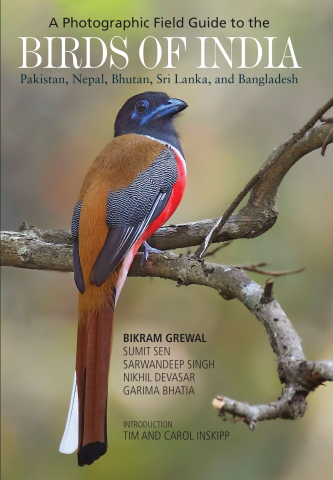
A Photographic Field Guide to the Birds of India, Pakistan, Nepal, Bhutan, Sri Lanka, and Bangladesh

ReviewChris Watson

By Bikram Grewal, Sumit Sen, Sarwandeep Singh, Nikhil Devasar and Garima Bhatia

792 pages, soft cover

Princeton University Press

As exciting and well-executed as this book is, it is definitely another field guide falling into the category of ‘leave-at-home-and-go-birding-with-the-app”. There are some good smartphone apps covering this region, but if you’re heading over to bird the Subcontinent this book will bring you up to speed and provide you with most of the information needed to plan your trip.

To be clear, it’s not a bad book; far from it. It’s outstanding. Merely assembling a photographic collection of the entire avifauna of such a large and diverse region is an achievement in itself. Fitting such a collection into a single book which remains fairly portable is nothing short of a marvel of modern publishing. But in cramming coverage of 1375 species into a single 1450g volume the same size as the Australian Bird Guide (only 927 species and 1400g), there have to be some sacrifices.

In the case of Birds of India etc, that sacrifice has been the richness of the imagery and the quality and quantity of text. Most species are depicted well. Occasional species are given a double page spread with multiple images. But the majority of species accounts are only allowed a quarter page and feature only one or two images at most. This seriously limits the book’s portrayal of plumage variations and gender and age differences. Not a fatal flaw, certainly, but it will limit the visiting birder’s ability to clinch difficult identification challenges involving immature or female individuals of a lot of species.

Another sacrifice which has been necessary is the quality and size of the distribution maps. Many species don’t get a map at all with their distribution described in the text. For species with tiny restricted ranges the maps are not much help; the scale does not zoom in to permit finer resolution. The maps are one-size-fits-all and display the entire region treated by the book. There is different coloured shading to denote resident species and seasonal visitors but no such shading to show different regional forms or subspecies. Movements and migrations also are described in the text but not pictured on the maps.

The text is sometimes imprecise and not authoritative. The bullet points for each account are: size (I presume this refers to length but this is not defined further); voice; range; and habitat. Following this information is a brief paragraph containing other information but these passages don’t seem to conform to any discernible pattern. Sometimes there are notes relating to the naming of the bird, its behaviour, guides to field marks, conservation notes, dietary information, or specific site information for particularly rare species. It’s a bit like lucky dip. You might get some of that information, or none at all. Some of the accounts intone information with phrases like, “this bird is said to….”, and the like. This can come across as anecdotal or un-researched speculation and shouldn’t really have a place in a field guide.

The text is also littered with typographical errors. I don’t normally point these out as I haven’t yet read a book that doesn’t have some typos, and in a reference book they are rarely so bad or so numerous that they affect its usefulness. But it is infuriating how often a mysterious single letter has been erroneously inserted between the generic and specific names. Again, it’s not a disastrous error but it’s difficult to shake the feeling that it might be an indicator of the haste with which the book might have been proofread and edited. Another simple editing failure is the text running over background images. On a few accounts this has resulted in the text becoming difficult to make out against the photography. This is very easily avoided and should have been picked up before going to print. I’ve never birded the Subcontinent and have only a passing familiarity with the birds there but I’m reliably informed that there are a number of incorrectly assigned photographs – another error which should have been caught by careful proofreading.

One excellent feature of the book is the historical essay, Birds of the Indian Subcontinent by Carol and Tim Inskipp. This gives a good grounding in the history of ornithology across the region and a comprehensive overview of the birds themselves.

In summary, this is a beautiful book filled to overflowing with sumptuous imagery of the birds of the entire Indian Subcontinent. It is let down by substandard editing and text, but not to a disastrous extent. For anyone planning an extended trip taking in several different countries, this book will be a useful reference. There are better field guides to individual countries which are more detailed and more portable so birders should investigate these as well. There are also some good smartphone apps to the region which will be much more portable than this book. Ultimately, this is a good book which will find a welcome place among my references.

CBW

Buy it from Andrew Isles

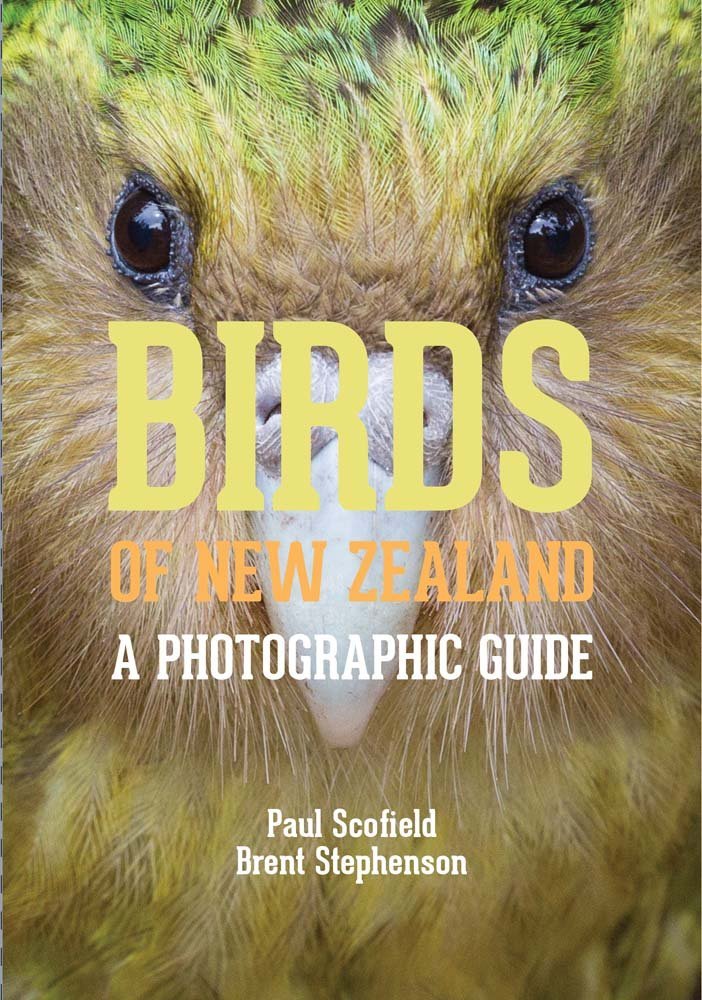
Birds of New Zealand: A Photographic Guide

ReviewChris Watson

With a cover image like this, you know good things will be within

By Paul Scofield and Brent Stephenson

545 pages, soft cover

Auckland University Press

Island gigantism is a well-studied phenomenon in biology. In New Zealand, a place with more than a few celebrated examples of island gigantism among its fauna, the phenomenon seems to have spread to its field guides too. Fear not though; it’s definitely not the drastic problem that it might seem on the surface.

Birds of New Zealand: a photographic guide, as the title suggests, was never intended as a field guide per se. It was released simultaneously with a companion smartphone app back in 2013. (I know; that’s how long it takes me to get around to reviews these days.) Smart birders will get both versions of this superb guide and leave the book in the car or hotel room. The app is all you’ll need while you’re out on the paddock and, of course, comes with the full compliment of recordings for use in training your ear or ethical playback. The book then provides the heavy artillery for resolving any really difficult ID quandaries and is perfect for poring over during evenings of tidying up lists and notebooks.

For a guide which only treats 365 species, Birds of New Zealand weighs in at a hefty 1240g; only 200g lighter than the Australian Bird Guide which treats 927 species! But even a quick flick through the pages will reveal where the book carries this weight: in addition to superb photography, it is dense with information. It verges on a full-blown handbook. Sacrificing the requirement for being a strictly portable field guide has allowed for the inclusion of much more detailed text than we’re accustomed to in most field guides. This has also given the authors freedom from the more common format of a plate of images facing a page of text. Birds of New Zealand gives full accounts for each species, in some instances running to three or four pages. The species accounts are preceded by a family summary and each account provides identification notes; vocalisations; separation from similar species; distribution; breeding biology; biometrics; and some quite detailed taxonomic notes. This latter section I found to be a particularly enjoyable and informative inclusion. It gives the history of the English and scientific names but also Māori names where they have been recorded. Indigenous names are starting to appear in some Australian bird books but it would be good to see more of it. The distribution maps are satisfyingly detailed and contain enough information to map out migration and sub-specific populations.

The authors will be well-known to any readers who have dipped a toe in the trans-Tasman birding scene. Stephenson is justly famed for his photography of antipodean fauna. That photographic archive is crucial to the success of Birds of New Zealand and is on full display throughout. I’d hope most Australian birders already have New Zealand high on their list of places to visit but there is another good reason why this book should find a place on most Australian birders’ shelves. Its treatment of seabirds is exceptional. The entire book contains 545 pages and fully 162 pages of these are devoted to seabirds. This is perhaps unsurprising given that one of the authors is Paul Scofield; a recognised authority and a name familiar to anyone who has perused the literature dealing with seabirds. A large proportion of these species also occur (or have been recorded as vagrants) in Australian waters but a few haven’t. The longer species accounts make for a superlative reference and any keen pelagic birders would be well-advised to keep a copy handy.

I’ve used both the app and the book while in New Zealand and recommend them highly. The app functions as well as any which I’ve encountered and is in the same league as the Collins Bird Guide app. The book, as well as being an information-packed reference, is a thing of beauty and will be of as much interest to Australian birders as their Kiwi counterparts.

CBW

Buy it from Andrew Isles

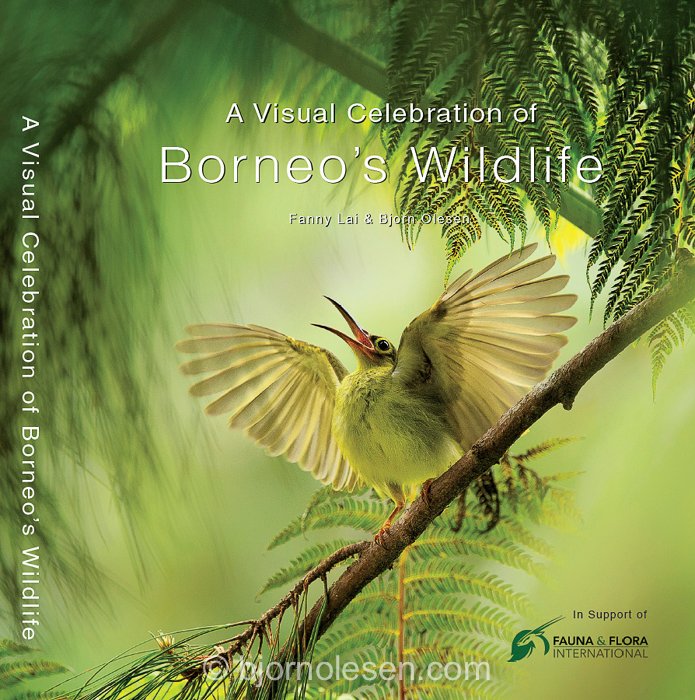
A Visual Celebration of Borneo's Wildlife

Review, Tourism, BirdingChris Watson

by Fanny Lai & Bjorn Olesen

Edited by Yong Ding Li

450 pages, $70 hardback

Published by Bjorn Olesen Wildlife Photography, Singapore

http://www.bjornolesen.com/

Fanny Lai and Bjorn Olesen started with Borneo the way many people do: the trek up to the summit of Mount Kinabalu. As Bjorn explained to me via email the other week:

After the climb we spent a few days at the Kinabatangan River in Sabah watching the incredible wildlife diversity there.  This was our first encounter with the Bornean Orangutan and the Bornean Pygmy Elephant; thus began our addiction to Borneo.  

That was in 1998 and it was enough to put the hook in them; they’ve been returning regularly ever since. A Visual Celebration of Borneo’s Wildlife is a photographic tribute to this captivating island and its unusual fauna. But it offers much more than a coffee-table experience of flicking through images. The photographs are accompanied by blocks of text providing more than mere captions; more than a visual celebration, there is genuine scholarship here too. There are chapters dedicated to the various habitats found around the island and specific destinations within them. Introductory pages pay tribute to the great naturalists of the region: Alfred Russel Wallace, John Whitehead, and Charles Hose. The depictions don’t focus only on the spectacular and celebrated animals of Borneo, but also direct attention toward the lesser-known. There are chapters covering marine fauna, invertebrates, amphibians, and the botanical wonders of Borneo as well.

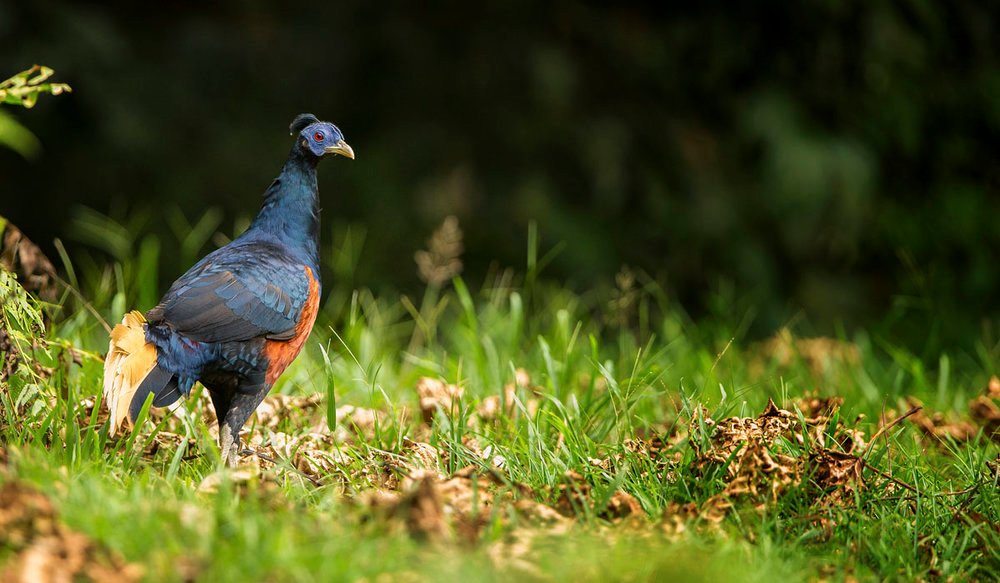
Bornean Crested Flameback. Bjorn Olesen. Used with kind permission.

The book has a heavy focus on conservation. Royalties from the sale of the book are being donated to Fauna & Flora International (FFI): an international organisation which has fostered an innovative approach to conservation since the early 1960s. Fanny and Bjorn’s connection with FFI goes back several years:

We have worked with Fauna & Flora International in Southeast Asia on a pro bono basis since 2013, and we are impressed with their conservation work in the field. FFI was founded in 1903 and is the world’s longest established international conservation body, working now in more than 40 countries around the globe, mostly in the developing world.

An important partner to conservation initiatives is ecotourism and it can be argued that the income provided by ecotourism is particularly important in developing nations. This happy marriage of conservation science and ecotourism is something I’ve seen at work in numerous countries and it seems that Borneo is no different. Bjorn goes further, suggesting that conservation in many areas of the island would be lost without it:

For conservation projects in Borneo to be successful, it is now recognised that the involvement and participation of local people and communities is integral. It is imperative to find ways to generate some form of economic benefit from the ecosystem and doing so in a sustainable manner. In other words, conservation needs to be linked to improving the standard of living of the local people, so that they have a personal incentive in sustaining those conservation actions. It is here that ecotourism has an indispensable role to play for the continued existence and well-being of the natural areas and their wildlife in Borneo.

In Sabah, Borneo eco-tourism has been particularly successful and is employing a substantial number of local people and attracting international investments.  However, it is a long battle as for instance the palm-oil companies in Borneo also have a significant influence.

In Borneo, ecotourism has tremendous potential with the natural attractions and rich cultural traditions of the resident communities. Ecotourism can offer alternative ways to generate sustainable employment opportunities and income for the local communities, and provide unique tourism experiences, while creating incentives to protect habitat. While many challenges lie ahead, the experience from other parts of Southeast Asia shows that it may be the best way forward.

True to its conservation focus, A Visual Celebration of Borneo’s Wildlife doesn’t shy from facing the numerous impediments to conservation. One in particular might be difficult for Australian readers to fully grasp. The illegal trade in wildlife is naturally clandestine in nature but it is underestimated here in Australia. In South East Asia it is more blatant and what regulations there are tend to be poorly enforced. The nature of the market increasingly targets animals the rarer they become. It’s a savage feedback loop that currently has numerous species on a trajectory toward extinction. Bjorn elaborates:

In Borneo, trade in animal products and parts have been going on for centuries with China. Highly priced products like horns from the Sumatran Rhino and edible birds’ nests are in exceptionally high demand. Illegal trade in pangolin parts has decimated the population, and the Sunda Pangolin is now classified as Endangered.

The latest example is the ‘ivory’ casque of the Helmeted Hornbill, which is directly carved on or cut into ornaments.  Based on reports of confiscations and Asian trading websites between 2012 and 2013, it has emerged that up to 500 Helmeted Hornbills were killed every month in the province of West Kalimantan, Indonesia alone. The heads of the Helmeted Hornbills were subsequently smuggled out via Sumatra and Java to Hong Kong, China and Taiwan.  For this reason the Helmeted Hornbill was classified as Critically Endangered in 2016.

To make a long story short, illegal trading in wildlife is still a big problem in Borneo and the rest of Asia.

There are some species in the book which will be a genuine treat for birders. The pittas, of course, are true “birders’ birds”; they’re both difficult to see and wonderfully coloured. The grip-off factor is dialled up to eleven here as all Bornean species are depicted and stunningly captured by Olesen. When you appreciate how hard it is merely to glimpse these birds, it is flabbergasting to see them photographed so beautifully. Another stand-out in this regard is the Bornean Ground-cuckoo. This species permitted only the most fleeting of glimpses when I visited the Kinabatangan wetlands in 2015 and I was grateful for that. Again though, Olesen has triumphed with some marvellous shots of the species.

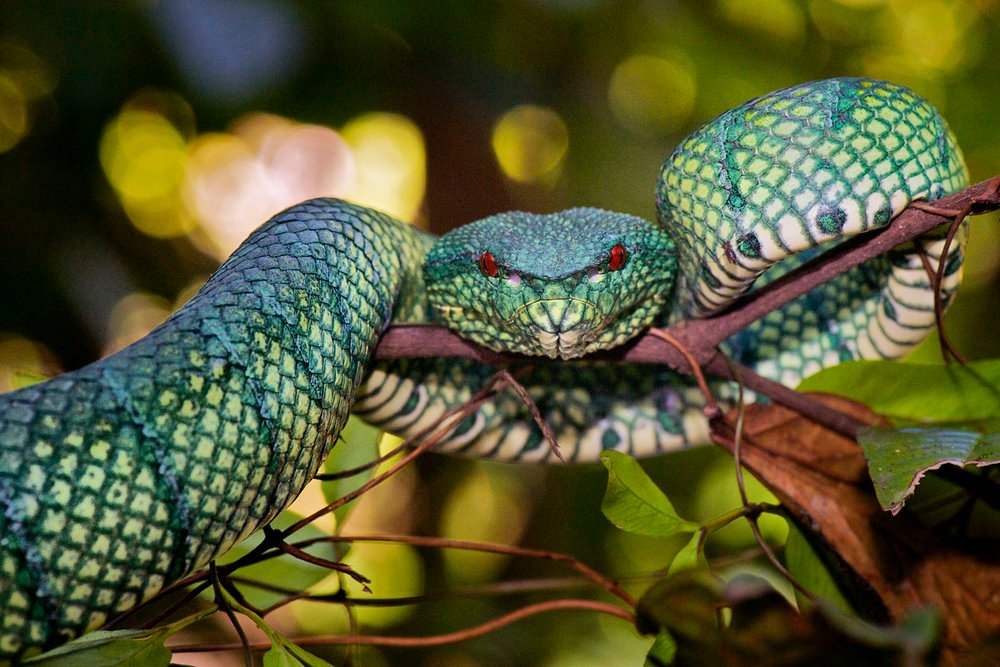
....and it's not all about the birds. Bornean Keeled Pit Viper. Bjorn Olesen. Used with kind permission.

For these birds alone, A Visual Celebration of Borneo’s Wildlife will be worth the asking price for most birders and there is much more besides to recommend it. Australian birders will find a thoroughly informative text providing an excellent foundation for birding trips in the region as well as information on all the other fauna and flora to be found on the island.

Fanny and Bjorn are already working on their next large-format publishing project which I am told has a working title of Asia’s Wildlife: A Journey to the Forests of Hope. The authors tell me it visits eight different ‘forests of hope’ in eight different Asian nations and is due for publication in mid-2018.

If the quality of A Visual Celebration of Borneo’s Wildlife is anything to go by the new book should be a lavish treatment of an even wider sample of Asia’s wildlife. I’ll be keeping my eyes peeled for it.

CBW

Buy it at Andrew Isles

Click here to become a patron