Chris Watson

Chris Watson

Review: Australian Wildlife After Dark

ReviewChris Watson

By Martyn Robinson and Bruce Thomson

Who among us doesn’t have a soft spot for owls? If you’re interested in looking for night birds and most of Australia’s other fauna, you’re eventually going to have to head out after dark. In fact, compared to most other places, Australia has an extremely high proportion of nocturnal fauna.

This book will be a good starting point for those who might be unfamiliar with spotlighting techniques and the ecology of the fauna that you’re likely to encounter. It deals not only with the more highly sought and charismatic species, like the owls, but with virtually every kind of animal that you might find in Australian habitats after dark: mammals, frogs, reptiles of various kinds and all manner of invertebrate are all treated in the one book.

Most of the chapters are organised according to the senses by which different animals navigate their world. This is a perceptive innovation and one that I think may help many to hone their field-craft and more successfully find their target species.

Australian Wildlife After Dark will be most suitable for the relative newcomer to spotlighting but will certainly have something to teach even experienced practitioners.

This review was first published in Australian Birdlife magazine Vol. 5 No. 1, March 2016.

Buy it from Andrew Isles 

Scaly-breasted Lorikeet: a wild hybrid

birdingChris Watson

A hybrid Scaly-breasted Lorikeet with its mate, a Rainbow Lorikeet in the background.

My encounters with wild hybrids have been few. Back in Alice Springs a local friend put me onto a tree hollow that was used for a year by a Long-billed Corella holed-up with a Galah but I never saw the outcome of that pairing. Then there are the more usual hybrid Pacific Black Ducks that are pretty common here and there.

Flashback to Alice Springs: a Long-billed Corella and a Galah as unconventional homemakers.

But I've never before seen wild lorikeet hybridisation. It's not uncommon to hear about it and it's rampant in aviculture. Scaly-breasted Lorikeet is not a species that I've seen around Melbourne before but I'm aware that they're about. They have a patchy distribution and are only present in small numbers but a quick search on eBird reveals the areas where they are most regularly spotted.

The more usual presentation of Scaly-breasted Lorikeet - this is a bird in Brisbane. The head colour conforms to the green of the rest of the plumage and the yellow scaling across the breast is a more uniform bright yellow when compared with the hybrid bird.

Ricketts Point in Beaumaris is one of these places. Scaly-breasted Lorikeets are recorded pretty regularly and have been observed (and photographed) pairing with Rainbow Lorikeets here in the past. Large flowering Banksias (Banksia integrifolia) provide abundant nectar as well as numerous breeding hollows. The regular pedestrian traffic means birds are accustomed to human incursion so this presents a good opportunity for observation. 

Fellow Manky Shearwater Sean Dooley had spied some Cattle Egret (an uncommon visitor) earlier in the day so I'd popped down to see if they were still lurking; no luck on that count. Seeing the scaly breast flash past and land on a tree trunk beside my head was what first singled the bird out as different to the dozens of Rainbow Lorikeets. In stalking the bird for a better look it quickly became obvious that it didn't look quite right for a pure Scaly-breasted Lorikeet. The head had a a definite streaky bluish tint and the scaly breast was a deeper golden orange rather than a bright yellow. All doubt left me when it perched beside a Rainbow Lorikeet and a lot of mutual preening and noisy chatter ensued. 

The Ricketts Point bird immediately caught my eye as being out-of-the-ordinary.

So it would appear to be a pretty clear-cut case of natural hybridisation between Rainbow and Scaly-breasted Lorikeet. There was nothing else unusual around the reserve but it was still a beautiful day, plenty of Australian Pelicans, Pacific and Silver Gulls about and this unusual bird was a pleasant surprise.

Birds in Dead Trees

Review, birdingChris Watson

Tattiness: an indicator of durability or preference?

A Survey of Australian Field Guides on Paper

Astonishing as it may seem, a birder living anywhere in Europe, Africa north of 30˚N and much of the Middle East, can get by perfectly well with a single book.

The second edition of the Collins Bird Guide by Svensson, Mullarney and Zetterström is subtitled The Most Complete Guide To The Birds Of Britain And Europe, and this is a well-supported claim. In fact this field guide is widely considered to be one of the, if not the, finest of the genre.

If the imminent field guide from CSIRO Publishing achieves even close to the acclaim that this book has received it'll be a huge success. No pressure.

The artwork is accurate, beautiful and consistently so, across all species. Most species are depicted in a variety of poses and plumage stages and are shown against a typical background wherever it might be a useful aid to identification. Distribution maps are clear and thoughtfully colour-coded to depict seasonal movements. The text for each species is sufficiently detailed to identify species, even to the extent of describing the extensive moult variations in the many gull species, while avoiding counter-productive prolixity. Despite describing 713 species in the main body of text with additional concise entries for 209 vagrants, accidentals, ferals and escaped species, it comes in at a highly portable 448 pages. It weighs a paltry 785g, just 42g heavier than Simpson & Day but in a more daypack-friendly duodecimo (large) format as opposed to the common, larger field guide format, octavo.

In a book comprehensively treating this number of species, it has a TARDIS-like quality; it seems to contain a lot more than seems possible from its exterior dimensions.

For those who enjoy wallowing in the artwork of such books it is also available in quarto format weighing 2073g which, unless you’re training for SAS selection, is definitely one for the coffee table, not the rucksack. As with almost all good field guides now, there is also a companion smartphone app available which marries all the best aspects of the book with multimedia content including recordings of the calls of all species, photographs and video content. This app continues the tradition of excellence set by its paper predecessor – it’s the best bird app I’ve used by a long shot. (But field guide apps will be a topic for another post altogether.)

If it has any weak points I’ve not yet demanded enough of the book to expose them. Try as I might I have not yet found any errors – factual or typographical. Although, even as I type this I’m sure someone will be emailing me with a list of them.

In the challenging endeavour of wildlife field guide production, the book simply known as The Collins, is the four-minute mile. It’s the benchmark; the yardstick by which we can gauge all other attempts.

Which brings us to Australian field guides. Despite birdwatching having far fewer adherents here than in the UK and the US, antipodeans are well-served for bird books. There are numerous regional and local guides and more than a few How to Find… or Where to Look…. type books of greater and lesser renown. But, ignoring the historically significant but antiquated What Bird Is That? by Neville Cayley, there are presently five fairly current contenders in the class of pure field guides that treat all of Australia’s birds: Simpson & Day, Pizzey & Knight, Morcombe, Slater and Campbell (the only photographic guide in the bunch).

While it’s fair to say that none quite stack up against The Collins, everyone has their favourite and the field guides available to those seeking Australian birds are of a consistently high standard. Some have obvious, even infamous, shortcomings, but these are usually balanced by other innovations or points-of-difference.

Below, I take a look in as balanced a fashion as possible at the five main field guides to Australian birds. Inevitably, it will be coloured by my own preferences but I’ve tried to be as empirical as possible.

It’s worth mentioning at this point, that the impetus for this review has come from the imminent release of a sixth Australian field guide that we’ve been hearing about for at least a couple of years now. This is being worked on by a number of prominent authors who will be familiar names to most in Australian ornithology, and is slated for release by CSIRO Publishing later in 2016. Rumour has it that this new field guide has been inspired, if not modelled upon, The Collins discussed above. If this is the case, our expectations can hardly be anything but stratospheric but until its arrival it’s worthwhile to have a look at what’s been achieved in Australian field guides to this point.

Simpson & Day

Field Guide to the Birds of Australia: the most comprehensive one-volume book of identification

Editor – Ken Simpson

Illustrator – Nicolas Day

Art Director – Peter Trusler

Weight – 743g

Currency – 8th edition published in 2010

Simpson & Day - it's not pretty, but it's what's on the inside that counts.

I said I’d try to be as empirical as possible but I should also disclose that this is my favourite field guide to Australian birds. This is by no means an uncommon preference either.

This book has a lot going for it. Probably the most distinctive identifying feature is its spray-proof plastic cover. It is sold with a conventional paper dust jacket but few well-travelled copies retain this beyond their first few outings. Another distinctive feature which immediately sets Simpson & Day apart are the seabird bill charts printed, to scale, on the end papers. These are only likely to be of regular use to those who get hands-on time with seabirds, but they might also be handy for keen beachcombers and those identifying pelagic species from photographs. In any case they’re a good reference.

By far the most popular aspect of this book is the artwork. Nicolas Day seems to have a true talent for capturing the jizz of each species. Other books have serviceable artwork, but none quite display the jizz of each bird as arrestingly as Day. Birds are posed characteristically and many are set in front of a typical habitat scene which is always a useful detail, especially for newer birders. Where relevant, there are pointers for field marks and where there are confusion species they are often depicted on the same page for comparison.

The text for most species is brief. Some may see this a shortcoming but I see it as a strength. The text is concise, conveys enough information to clinch all but the most difficult identification and doesn’t get bogged down in pointlessly subjective waffle and elaborate phonetic descriptions of vocalisations. The space it saves on these it uses wisely with breeding information for species at the back of the book, a reasonably comprehensive section of vagrant records, and a guide to Australian habitats – very useful for international visitors.

In Summary:

The upside is… Spray-proof cover. Durable binding. Excellent artwork. Habitat guide. Breeding information. Seabird bills inside covers. Lightest of the full size guides.

However… The maps are OK but reference points/towns aren’t labelled which may be tricky for international visitors. Species text is fairly basic. Subspecies information is sometimes imprecise.

Pizzey & Knight

The Field Guide to the Birds of Australia: The definitive work on bird identification

Author – Graham Pizzey

Illustrator – Frank Knight

Scientific Editor – Sarah Pizzey

Weight – 1220g

Currency – 9th edition published in 2012

This is the heaviest of the bunch and outweighs its nearest rival (Morcombe) by almost 200g. Despite its heft, it remains a firm favourite with many and probably vies with Simpson & Day for Australia’s favourite field guide overall.

Frank Knight’s illustrations are clean, clear and beautiful but the criticism levelled at them by most is that at times they may be too simplistic. They don’t capture the jizz and motion of the birds in the same way that Nicolas Day manages to so consistently and Knight’s birds are often posed like statues or museum specimens all in a row. Despite this, they are beautifully executed and more than serviceable for all but the most vexing identification problems.

What this book has become most famous for is Graham Pizzey’s wonderful descriptions. I remain completely apathetic toward written descriptions of bird vocalisations; I suspect they have as much ability to lead observers astray as provide the final clincher in an identification conundrum. In the days of widely available and portable recordings I don’t see the point in persisting with trying to describe bird calls in text. However, if you need a bird call described, Graham Pizzey is clearly your man. This is perhaps most obvious in descriptions of two species with overlapping ranges which are virtually inseparable in the field… except by voice. Thus the Chiming Wedgebill has, “4 or 5 quick, peculiar metallic, ringing notes (or 3, or 2) in descending chime, ‘but-did-you-get-drunk’ with cyclic pattern; metallic plonk on ‘drunk.'” While the virtually identical-looking Chirruping Wedgebill gives a duet, “one bird calls ‘sitzi-cheeri’, like Budgerigars’ rolling chirrup; female answers with upward-rolling ‘r-e-e-e-t CHEER!’; combined in endless rondo”. I still maintain that that gives not the slightest inkling of the captivating beauty of the former bird’s far-carrying call, but it clearly provides enough information, perhaps the only information, to separate the two species if you find yourself in their shared territory.

The maps are clear and useful but contain no sub-species information, the binding is durable and solid, and this book is one of two Australian field guides which has a companion smartphone app which is recommended. It is also available as a multimedia version which you can install on a PC. Some may find this of use; I have a copy, I installed it once, had a browse and have never been back to open it since.

The upside is… Good artwork. Good maps. Plenty of introductory information and a whole section featuring descriptions of the various bird families. Lots of text in the species descriptions. Smart device app and desktop versions available. Several regional editions available. 2nd most recent.

However… Vagrant accounts are very patchy. Heaviest of all the field guides. Subspecies information is very light on.

Slater

The Slater Field Guide to Australian Birds

Authors – Pat Slater, Raoul Slater

Illustrator – Peter Slater

Weight – 447g

Currency – 2nd edition published in 2009

NB: I only have the revised 1st edition (1995) but a fully revised 2nd edition was published in 2009. If there are any errors in my assessment based on differences between these editions, feel free to get in touch and let me know.

This well-liked family production is instantly recognisable as the only truly pocket-sized (215 x 115mm) field guide to Australian birds (other than the cut down edition of Morcombe). As such it is the lightest by a long margin – almost one third the weight of Pizzey & Knight.

Despite its smaller size it still manages to pack in all the information most birders are ever going to need. The species descriptions are more than adequate but the most commonly lamented shortcoming of this book is the maps. For widely distributed species they are acceptable, but for species with small ranges (ie: the ones for which an accurate map is most critical) they are all but useless. The maps are all in black and white with the coastline delineated with a bold black line. So bold in fact, that the inexperienced newcomer to Australian birds could be forgiven for surmising that all Australian species occur around Adelaide and Kangaroo Island, completely obscured as this region is by the solid black of the coastline. The best (worst?) example of this is perhaps the Scrub-birds and Bristlebirds. For these species the maps in their present form are next to pointless.

So THAT'S where they live...

I quite like the paintings in Slater. They’re truly very well executed throughout and all plates have the eggs of the species lined up along the bottom of the page – a nice touch. One perplexing aspect of the artwork arises in the plates depicting the petrels, storm-petrels and shearwaters. The main image of each species is depicted as if sitting on land – an image of absolutely no use to any pelagic birders other than the rare and lucky few who might occasionally visit these birds’ breeding colonies. Surely discarding these in favour of dorsal and ventral flight views and other angles where possible would be preferable? To be fair, there is a double plate of ‘petrels and shearwaters in flight’ but this has been inexplicably printed in a grainy monochrome; as if looking at an overly noisy black and white photograph. Absolutely baffling and surely of next-to-no use in the field.

Another curious aspect of Slater is some of the strange inclusions: Grenadier Weaver, White-winged Wydah, Great Reed Warbler to name just a few. The book has no separate section for vagrants and escaped or feral populations so these sometimes contested records are included in the main body of the guide.

The upside is… Very good artwork which includes depictions of eggs but plates are sometimes deficient in a few areas. Tiny size and weight is easily carried in a trouser or jacket pocket.

However… Terrible maps. Limited supplementary text. Probably not the best reference for pelagic birding.

Campbell, Woods & Leseberg

Birds of Australia: A photographic guide

Authors – Iain Campbell, Sam Woods, Nick Leseberg

Weight – 996g

Currency – 1st edition published in 2015

This most recent field guide to Australian birds, sits at the lighter end of the heavyweight division and is the only photographic entry. I posted a full review of this book here when it first came out in which I disclosed my troubled relationship with photographic guides in the past. This book however, went a long way toward addressing my misgivings about the form. This isn’t my first choice among Australian field guides but it is a long way from my last choice.

It’s a beautiful production, with good solid binding, heavy and glossy stock paper and very high quality photography throughout. It has some excellent introductory text on habitats and climate across Australia and depicts all resident species with the obvious exceptions of the problematic Night Parrot and Buff-breasted Button-Quail; the former only recently photographed and the latter which still eludes the lens.

The accompanying text is adequate for all species and the birds are depicted, for the most part, in poses that make field marks clear. The only thing missing from this guide that all the others have is any vagrant species. In an effort to save space and weight, even established breeding species like Spotted Whistling-Duck don’t get a look in.

The upside is… For a photographic guide it has a good variety of depictions. Extensive introduction on habitats and climate. Reasonably good maps. Most recent edition of any Australian guides.

However… No vagrants at all. On the heavier side.

Morcombe

Field Guide to Australian Birds

Author – Michael Morcombe

Weight – 1053g

Currency – 2nd edition published in 2004

My very old and well-used Morcombe - clearly a reference I visit often.

NB: I only have the revised 1st edition so there may be some differences in my assessment.

Regardless of what you think of the shortcomings of any of these guides, or any guides from elsewhere around the world, we should always keep in mind what a monumental amount of work they represent. It may seem simple on the surface to assemble an annotated list of birds, pop some maps in, illustrate it with paintings or photos and bind it all up into a nice book, but nothing could be farther from the reality. Putting together a work like any of the books reviewed here is a herculean feat of great scholarship and dedication.

With that in mind, Michael Morcombe can be singled out for particular awe, being the only sole author among these Australian field guide producers. His book is almost 200g shy of Pizzey & Knight but at over a kilogram, still very much a heavyweight. The book looks good, no doubt owing something to the tidy graphic design of the Steve Parish publishing house, and the cover is a robust plasticised card.

My well-thumbed copy of Morcombe is what I turn to most often when I’m in need of sub-species information. Morcombe’s coloured, graduated maps do a good job of the difficult task of describing our incomplete knowledge of bird distribution across Australia to sub-species level.

Part of the weightiness of this book is due to an extensive section near the rear which provides a complete guide to the nests and eggs of the birds – another inclusion which no other guide does to a similar extent. There is also a section treating the species of Australia’s island territories and vagrants but the latter is fairly rudimentary.

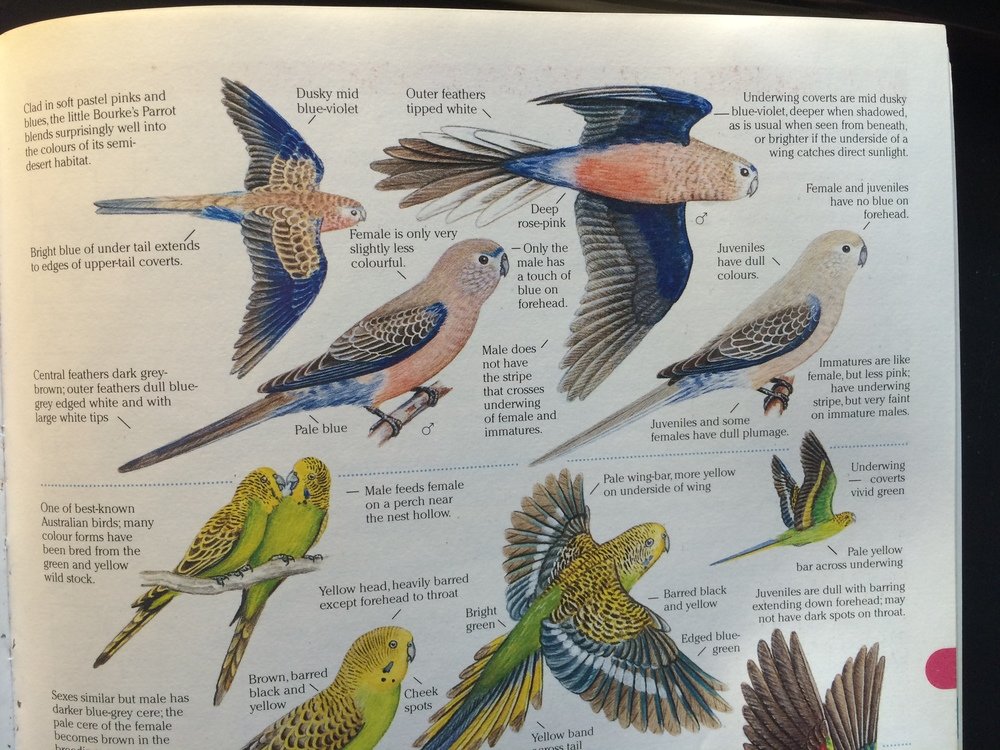
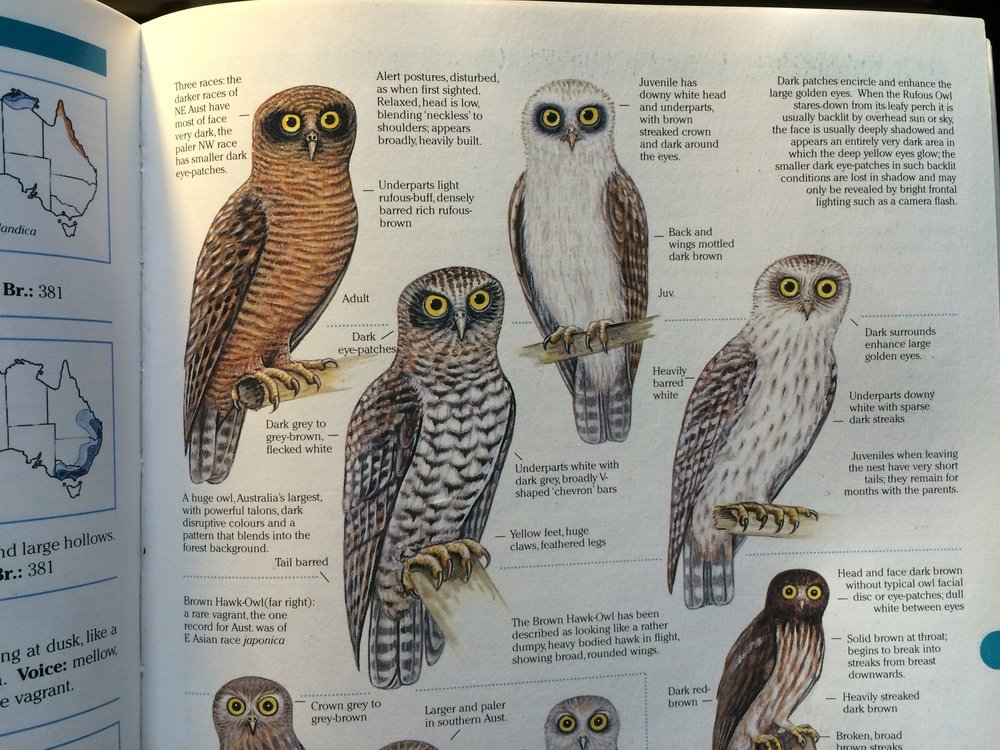
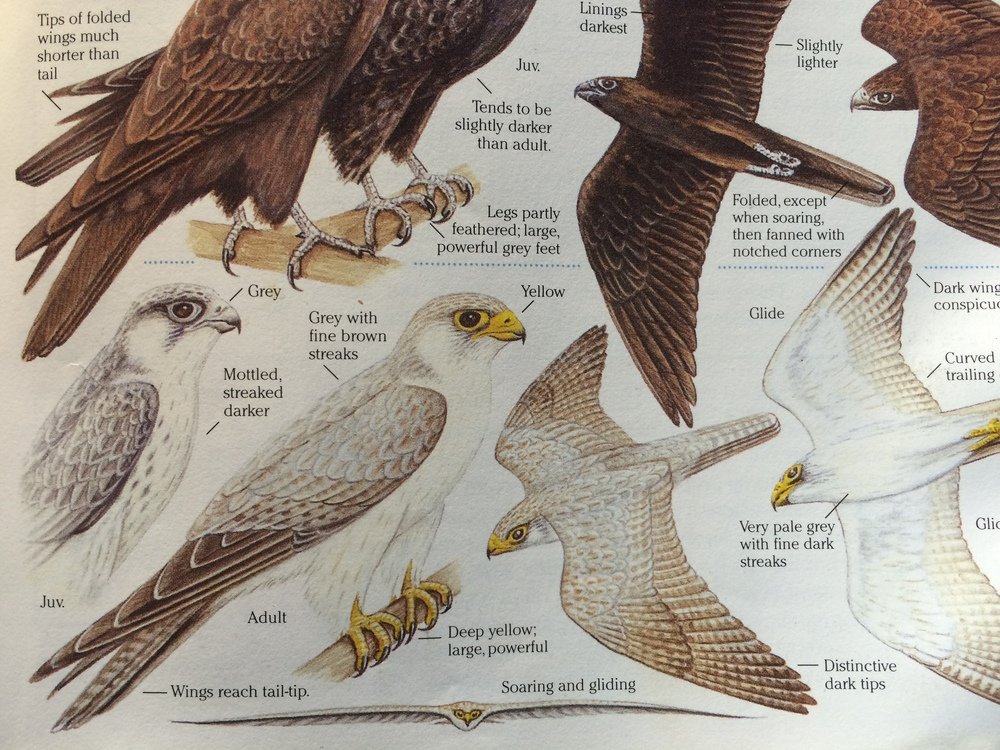
My main reservation with Morcombe is the artwork. He is clearly a talented artist and many of the birds are depicted adequately but occasionally it seems like he got to some species at the end of a long day at the drawing board. Some drawings definitely seem to have received less careful attention than others. Look at the Grey Falcon, Bourke’s Parrot and Powerful Owl (below) as just a few examples: body proportions are all squiffy or colours are just plain wrong. To be fair, none of these are so bad that they might cause any danger of misidentification, but they’re just a lot less accurate than other artwork available. Again, as the sole author and artist of such a comprehensive work I’m sure we can all forgive Morcombe a few dud daubs.

Morcombe was also the first Australian field guide to become available as a smart phone app and this is still the one that I use the most – the functionality of the call recordings alone make it worth the asking price. It also comes in a cut-down pocket-sized version which makes it similar in scale to the Slater field guide. This contains most of what the full-sized edition contains minus the nesting information and bit of other text. It can’t be that bad as my copy was pilfered by a light-fingered birdwatcher on a tour bus many years ago.

The upside is… The best maps and subspecies information of any of the guides. Good amount of text for each species account. Nests and eggs supplement. Smartphone app and cut-down pocket-sized edition available.

However… Probably the weakest artwork of all the guides. At the heavier end of the scale.

Buy any of these guides from Andrew Isles:

Collins Bird Guide

Simpson & Day

Pizzey & Knight

Slater

Campbell, Woods & Leseberg

Morcombe 

Review: The Complete Guide to Finding the Mammals of Australia by David Andrew

ReviewChris Watson

“Many of Australia’s unique and beautiful mammals are not easy to find in the wild. Most of them are nocturnal and extremely wary of humans.” – Barbara Triggs, in the introduction to her superb Tracks, Scats And Other Traces: A Field Guide to Australian Mammals.

We could add to Barbara Triggs’ introduction, that many of our mammals are also rare and range across massive areas of remote and challenging country. Throw in our disastrous record on mammal extinction and you might be forgiven for not ever starting a mammal list and sticking to watching the birds.

But then again, would anyone really bother looking for Grey Honeyeaters if they weren’t so bloody hard to find? The thrill of the treasure hunt and the pursuit of rarities is a big part of the allure of birding so there’s no reason to think that the difficulty of finding mammals would have any less appeal. Mammal watching has always lagged somewhere behind birding, at least in popularity but certainly not the ardour of its devotees. But lately it seems to have been gaining ground and this book comes along at an interesting time.

Literally just weeks before the release of Finding the Mammals of Australia we saw the creation of the first dedicated Facebook group for serious Australian mammal watchers. This group rapidly grew to over 200 members and we’ve had hints that the first semi-official Australian mammal big year attempts are already underway. Then, following on the heels of Finding the Mammals of Australia, we’ve had news of another forthcoming release from CSIRO publishing, Australian Wildlife After Dark, also with plenty of relevance to mammal watchers, due in April.

Common Ringtail Possum Pseudocheirus peregrinus, often the first tick on many suburbanites' mammal list.

To give you the executive summary: Finding the Mammals of Australia is an astonishing achievement. It’s thoroughly worth owning if you have any interest in our mammal fauna and if you don’t already have it, eventually, you almost certainly should. David Andrew has done a colossal amount of work here and deserves endless kudos for delivering a long-overdue book.

Moreover, it’s astonishing and reassuring that publishers like CSIRO are continuing to support such releases. Hats off all round. The easy assumption to make is that the technologically adept can these days access all the relevant knowledge they need with a visit to one or more online fora and the magical letters R-F-I. Request For Information.

These three dread initials, I was sure, would snuff the interest in, and relevance of, guide books like this in a matter of a few years. They have already ensured that professional wildlife guiding will never be much more than a boutique industry, in this country at least. Go to any birdwatching forum or Facebook group and it’s quickly apparent that a good portion of posts are preceded by the scurrilous three letter initialism. I’m off to FNQ – where to see this mammal or that bird? It’s my first time in Perth – where do all the critters hide out?

Prefix your subject line with RFI and there is no end to the lengths that any number of friendly and generous souls will be prepared to go to, in order to make available the collected knowledge that they have spent years accumulating through long hours scouring the bush (not to mention the literature) and hundreds of thousands of kilometres behind the wheel. If I come across as at all bitter on this matter, it's only because I know precisely how hard many professional guides work for their site knowledge only to have it broadcast on such public channels, or to have their professionalism usurped entirely and rendered cruelly redundant by well-meaning local amateurs or enterprises like Birding Pal.

But I needn’t be so pessimistic. The same generosity of spirit and genuine love for our fauna has ensured that there is an enduring market for books like this and that seems set to remain the case. My revised appraisal of species-seekers in Australia is that despite having access to endless free information online, most still see the value in having an expert like David Andrew assemble the sum of that web-based colloquy, adding a comprehensive survey of the scientific literature, analysing it all through their own research and expertise and binding it all in a single volume. That, in a convenient nutshell I guess, is the appeal of reference books for most of us.

And of course international visitors without time for thorough research, not to mention Australian mammal listers with particularly recalcitrant bogey-beasts, are still just as likely to desire the services of a wildlife professional. So I should dismount my high horse (still a tickable plastic if you know where to look) and return to Andrews’ achievement.

Finding the Mammals of Australia is set out in a very similar format to CSIRO’s 2011 updated edition of Richard and Sarah Thomas’ Finding the Birds of Australia with Alan McBride and David Andrew as co-authors. This book looks pretty similar to that book, is similarly comprehensive in its geographic treatment and at 419 pages is just a few pages smaller than its birdy sister publication. Navigating it will feel familiar to users of Finding the Birds of Australia; after the introductory sections it goes through sites state by state then follows this with a complete annotated list of the mammals, a glossary and an index. The introductory passages deal in some detail with the notorious difficulties of observing mammals in the wild and the differences in observation techniques between bird-watching and mammal-watching.

Fat-tailed Dunnart Sminthopsis crassicaudata - a tiny marsupial carnivore. A lot harder to get to than a back yard ringtail possum but, happily, still pretty common if you look in the right places.

 The coverage of species is complete enough, although it follows the older mammal taxonomy set out by John Woinarski et al in the 2012 Action Plan for Australian Mammals, rather than the more up to date 2015 taxonomy by Jackson and Groves. The latter splits a few more species here and there (the feathertail gliders and greater gliders come to mind) and is being used by most mammal listers, but this won’t be any sort of impediment to accuracy for the most part.

So if it was the advent of good, cheap binoculars and the fledgling conservation movement that finally transformed the old pursuit of bird shooting into the worldwide phenomenon of modern birding, then perhaps digital photography, LED torches and social media may be doing the same for mammal listing.

If that’s the case, a book like this for the Australian mammal fauna might very well herald the opening of the floodgates.


BUY IT FROM ANDREW ISLES


On The Island Of Borneo

birding, TourismChris Watson

In May 2015, the Sabah Tourist Board invited me to visit the island of Borneo. Their purpose was to expose me to all of the best wildlife lodges in Sabah, including some new lodges that have only recently started operating, and to meet and work with local guides and operators to develop itineraries for birders and photographers that will offer the best possible wildlife experiences.

Somewhere in the canopy of a Bornean rainforest - birding paradise.

Borneo is one of those place names that comes packed with a panoply of images and emotions. The name wafts connotations of deep remoteness, isolation, impenetrable dark jungle, bizarre and little-known creatures, and intrepid explorers the likes of Alfred Russel-Wallace and Redmond O’Hanlon.

When O’Hanlon and poet James Fenton first set foot on Borneo in 1983 they were intent on travelling to the centre of the island in search of the Sumatran Rhinoceros, Dicerorhinus sumatrensis. By the time I first visited the island in May 2015, they had recently been declared extirpated from the province of Sabah and classified as Critically Endangered with as few as 80 remaining worldwide. But despite Borneo’s vanishing rhino population, not to mention orangutans and Sun Bears that are faring only slightly better, it has retained a magnetic pull for travellers seeking a glimpse of its unique fauna. Birding ecotourism in particular, has supported the development of a string of wildlife lodges and guiding enterprises across Sabah, and interest in the region’s diverse avifauna and other wildlife has never been more intense.

The geography of the place remains elusive to many. Ask people to identify it on a map and most will stab a finger vaguely between the Indonesian Archipelago and Southeast Asia. For such a large landmass, it seems to slip through the cracks of our collective imagination. It exists, almost literally, in parentheses dwarfed by the charisma of neighbouring Indonesia and Malaysia who, since the uneasy resolution of the Indonesian-Malaysian Confrontation 1963-1966, share custodianship of most of the island. The southern three quarters comprise the five provinces of The Republic of Indonesia, collectively known as Kalimantan (in fact the name Kalimantan in Indonesian refers to the entire island of Borneo). The northern quarter is split roughly in half between the two Malaysian states of Sabah in the east and Sarawak in the west, which surrounds the tiny sovereign state of Brunei, which constitutes just 1% of the island’s total land area.

Adding to our murky perception of the place, for many Australians, Borneo may also be prominent in the memory for its role in the Pacific Theatre during World War 2. The name Sandakan, located on the eastern coast of Sabah, is irretrievably infused with infamy as the site of the eponymous death marches. Lest we forget, of the 2,345 allied prisoners forced to march that route from Sandakan to Ranau, only six survived, all Australians, and only because they were the only ones who escaped. This is the first among numerous military associations with the place.

At one point during my visit, a local, realising I was Australian, enquired whether I knew about the Australian who had been killed by an elephant on the island. At this I had to dip my lid. This was a piece of Australian military trivia that I was certain was known only to myself, a few nerdier graduates of RMC Duntroon, and David Horner, author of SAS, Phantoms of the Jungle: A history of the Australian Special Air Service.

“Lance Corporal Paul Denehey”, I said immediately.

“No… Australian girl….” came the puzzled response.

Paul Denehey was charged by a bull elephant during a patrol along the Selimulan River (modern day Kalimantan) on the 2nd of June 1965 while conducting “Claret” operations during Konfrontasi. He died before he could be evacuated, giving him the dubious distinction of being the first Australian SAS fatality on active service. Unknown to me he was not the last Australian killed by an elephant on the island of Borneo. In December 2011, Jenna O’Grady Donley, a 26 year old veterinarian from Sydney, was charged and killed by an elephant on the Tabin Wildlife Reserve of Sabah, in Malaysian Borneo.

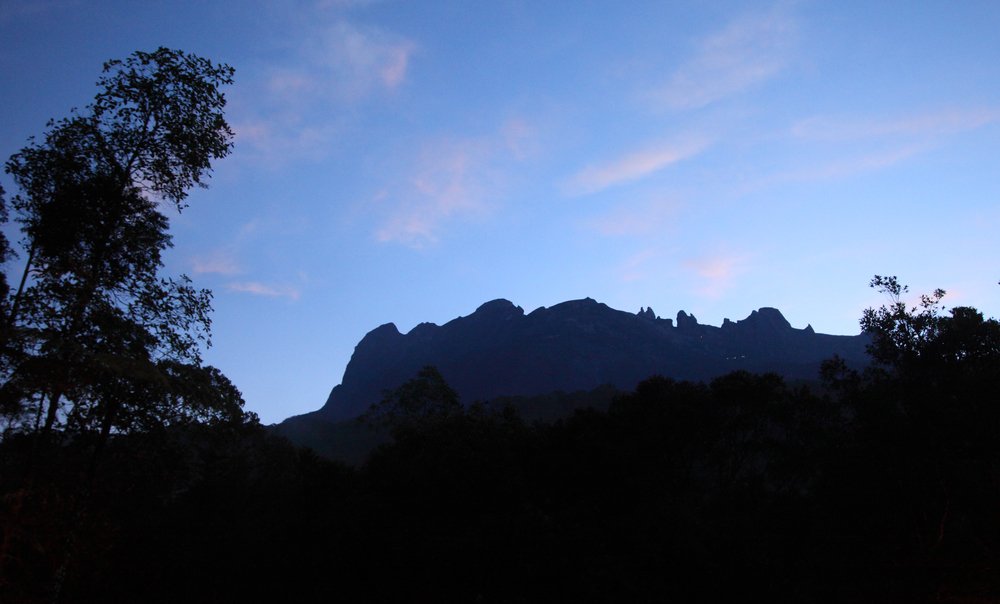
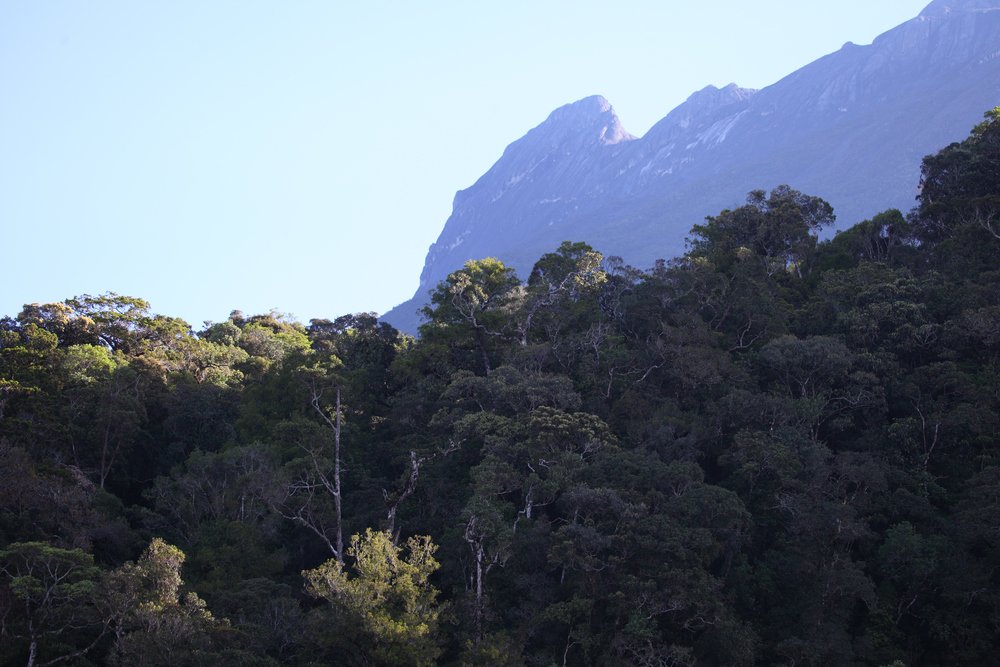
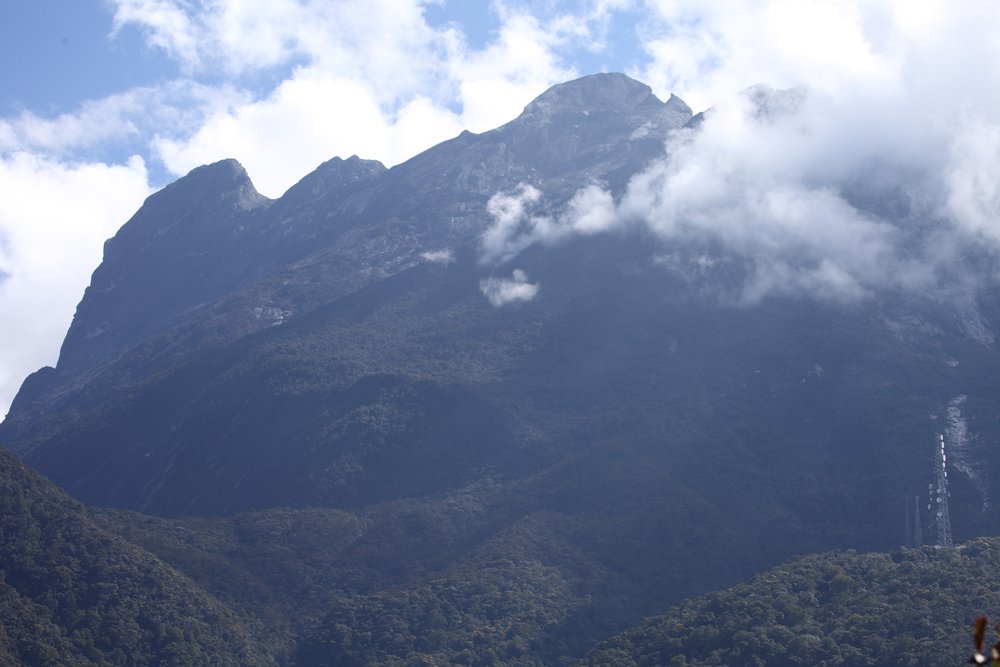
My first visit to Borneo was of only 11 days and I spent all of that in the Malaysian province of Sabah. Often referred to as The Land Below the Winds, an old maritime reference to the fact that the region lies below the typhoon belt, this state takes up the northern end of the island. Flying into the capital city Kota Kinabalu (KK), you get the feeling of a small (pop. ~450,000) but bustling Asian city perched on the edge of a vast forested interior. The Crocker Range rises a short distance inland culminating in the World Heritage-listed Kinabalu Park including Mount Kinabalu at 4,096m above sea level, the highest peak in the Malay Archipelago.  

In order to experience as much of the region’s staggering biodiversity as possible, the folks at the Sabah Tourism Board had arranged a busy itinerary. The route would take me across to the east coast to explore the lowland dipterocarp forest, swamps, rivers, oxbow lakes and coastal regions before travelling overland to Kinabalu Park for some higher altitude birding among the misty montane forests on Mount Kinabalu’s slopes.

TABIN

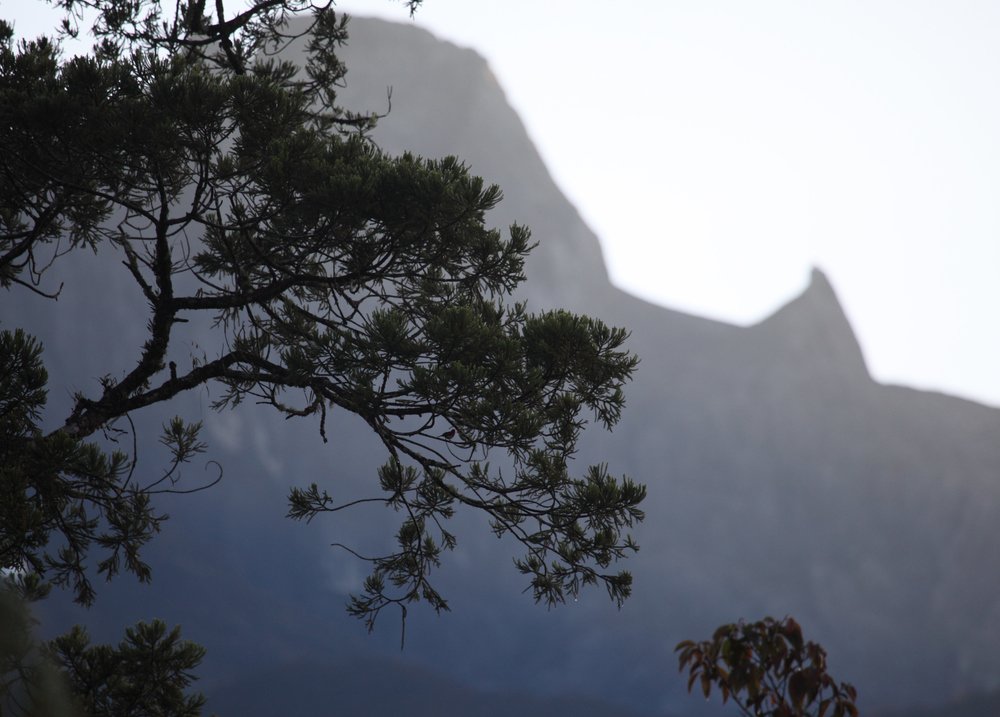
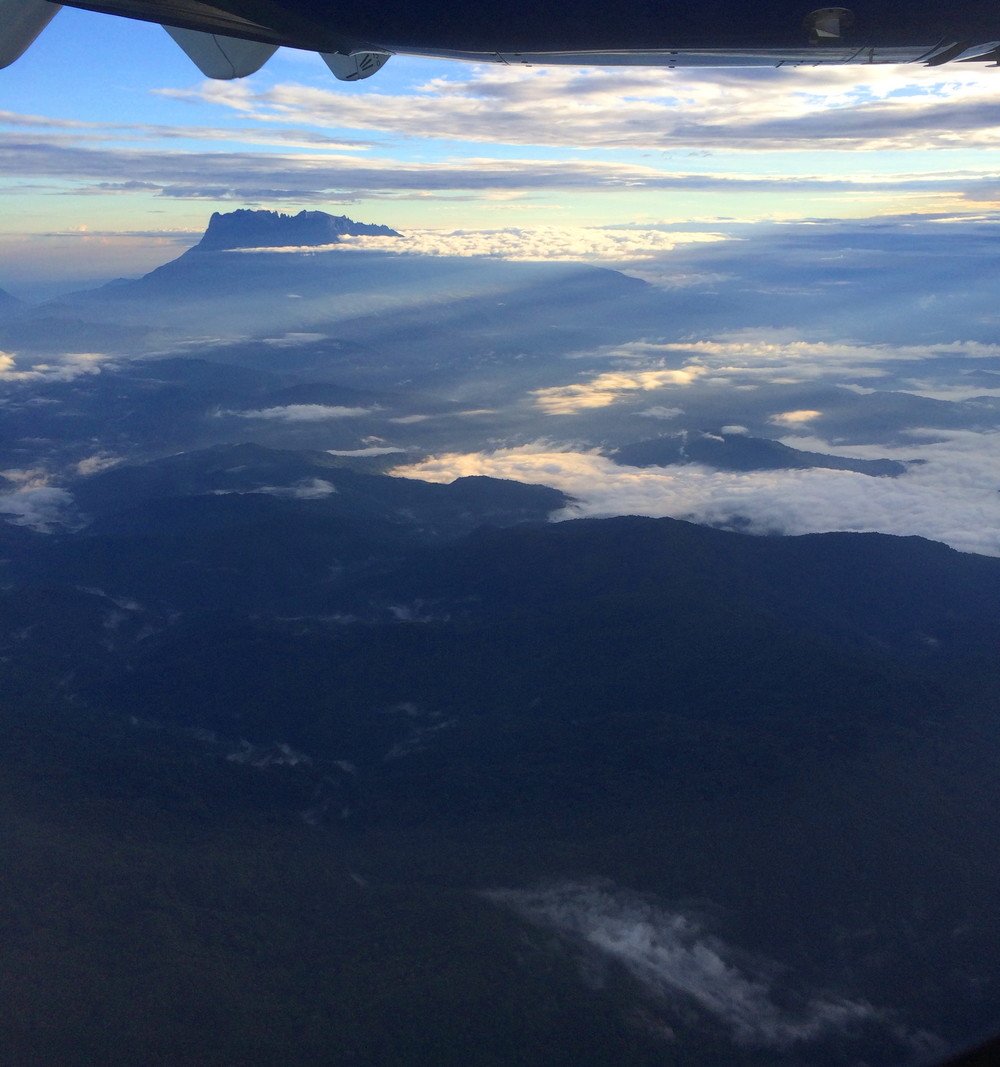
Following an overnight stop in KK, the fun began with a pre-dawn flight across the top of the island to get to Lahad Datu (pop. ~200,000), a port town shipping palm oil, cocoa and rainforest timber. Flying into the sunrise as its first rays hit the misty crags of Mount Kinabalu was as impressive a spectacle as anyone could imagine.

Touching down in Lahad Datu there were the usual airstrip birds along with a few Zebra Doves Geopelia striata, interesting for me as a split with Australia’s Peaceful Dove G. placida, a few years back – the first lifer for the trip.

Tabin Wildlife Resort was to be my first stop just 45 kilometres northeast of Lahad Datu. Moppers had stayed here with a friend of hers en route to Birdfair 2014 and had been enthusing about it ever since. The resort is a tourist facility within the massive Tabin Wildlife Reserve, which covers 122,539 ha of lowland dipterocarp forest. It’s probably best known as the last place to have had wild Sumatran Rhinoceros in Sabah. They now have a small captive breeding program but the species is gone from the wild in Sabah. The reserve also has a small population of Bornean Elephant Elephas maximus borneensis, often referred to as Bornean Pygmy Elephant despite the subspecies being no different in size to populations of Asian Elephant on Peninsular Malaysia. Seven of Borneo’s eight primates can be found here and it has a bird list somewhere in excess of 260 species.
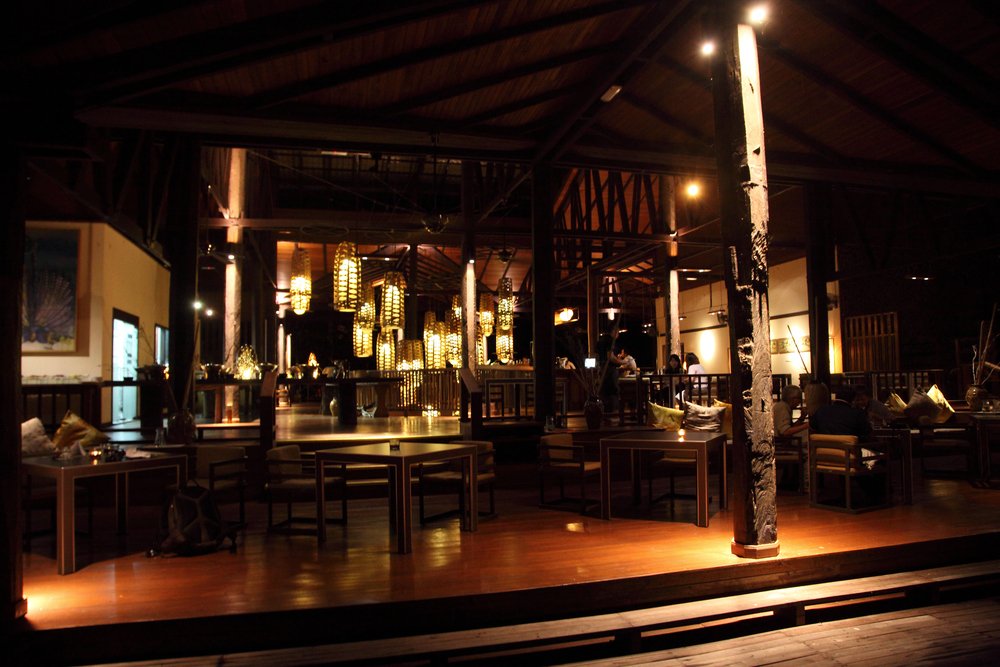
Tabin after dark - an extraordinary Escher-like tangle of stairs through the jungle. Like living in an Ewok village.

As an introduction to a Bornean wildlife lodge, you couldn’t be given a better first impression. A pair of White-crowned Hornbills were foraging at eye level in the reception garden and perching on the railings of nearby accommodation while a family of Bornean Gibbons swung directly overhead ululating rapturously. In the feeding table garden beside the dining room, Eastern Crimson Sunbirds and Orange-bellied Flowerpeckers displayed their colours at close range. A troop of Long-tailed Macaques quarrelled atop a nearby roof. Before I could even check in, a Grey-tailed Racer slid past just centimetres from my foot. The hornbills were particularly exciting as they offered the very real prospect of a clean sweep – the chance to see all eight species in the book – a field guide full house. This is a rare feat on any birding trip but apparently quite achievable in Sabah. We’d seen Asian Black Hornbill and Wrinkled Hornbill on the road in so this was hornbill number three. Clearly, this place was going to be fun.

Oriental Pied Hornbill keeping cool below the canopy.

The resort guides have access to extensive jungle trails but perhaps the prize wildlife spotting location in the reserve is the mud volcano. Mineral rich mud bubbles to the surface in this forest clearing, attracting a variety of animals. It’s known as a place to see elephants and we followed in the unmistakeable tracks of one of these beasts on the trail into the clearing although we never clapped eyes on it. A Blue-eared Barbet gave us a good show on the way in but it was the richness of sounds reaching my ears that was most arresting.

Blue-eared Barbet along the trail to the mud volcano.

We stood atop a small mound of coagulated mud and my guide, Raphel, proceeded to breakdown and have what I can only describe as some sort of nervous fit. It began with a craning of the neck and the release of a very loud, staccato, slightly strangled, hoot.

“OOH!!”

My first thought was that somebody had kicked a monkey in the bollocks. He followed this with a half dozen or so more hoots, emitting them at ever decreasing intervals in a slow wind up reminiscent of the call of a Spotted Nightjar. As the frequency of these great hoots became so that they almost overlapped into a single constant tone, he abruptly leaned back and threw out a maniacal cackle something like a bad impression of a Laughing Kookaburra.

“GA-GA-GA-GA-GA-GA-GA-ga-ga-ga-ga-ga!!”

The entire performance, for that’s what this was, took fully ten to twelve seconds to run its course. At its conclusion my guide, a renowned master of Bornean bird calls slumped slightly, quite out of breath. His impromptu seizure had taken me by surprise and I let him regain his composure for a few seconds before I enquired after his health. Before I got the words out though, another local gentleman, apparently at the very top of a distant tree, began suffering similar paroxysms. Raphel beamed a satisfied smile.

“Helmeted Hornbill”.

Hornbill number four.

The largest, rarest, and becoming rarer every day due to the rise in the red ivory trade, of Borneo’s eight hornbill species. Raphel issued his impeccable imitation a couple more times, but the massive bird was not budging from its treetop vantage point. It would be nice to have seen it as close as the White-crowned Hornbills but we could see it well enough through our binoculars. Besides, there was plenty to busy ourselves ogling around the clearing. Long-tailed Parakeets and Blue-crowned Hanging Parrots busied the airspace in typical fast, flat parrot-flight and a Crested Serpent Eagle patrolled high along the edge of the clearing.
The mud beneath our feet too had a lot to reveal. Having spent ten years in Australia’s deserts developing my tracking skills in the fine red sand (surely one of the best tracking substrates it's possible to encounter) I'm confident enough in the mediocrity of my skills to identify only the most obvious and perfect of animal signs. But if fine red sand was a good tracking substrate, moist mud is perfect. It leaves a cast of an animal’s passage. Elephants were obvious – less like an animal print and more like the passage of some industrial machinery. But in and around the pachyderm pads were dense signs of mammal activity. Leopard Cat, Sambar, Lesser Mouse Deer, a few different species of civet, Bearded Pig, and Sunda Clouded Leopard had all visited since the last rain and it rains almost daily there. It’s the sort of large mammal diversity that Australian arid zone ecologists simply are not accustomed to.

An afternoon downpour brought the birding at the mud volcano to a close. After dinner back at the resort, we headed out in an open-topped truck to spotlight along the road dividing the reserve from neighbouring oil palm plantation. Such habitat ‘edges’ often provide the best opportunities to observe wildlife using the clear ground to ease their passage between foraging or hunting patches. Civets were the most commonly seen along with a few large rats of indeterminable species. Slumbering passerines were illuminated in the lower branches of trees along with a large Water Monitor that remained oblivious to our presence. But when spotlighting, we all know what we’re most interested in seeing – owls. For most birders there is something ineffably rewarding about seeing night birds. I find it electrifying. Seeking owls is the pinnacle of birding.
As such, it was a moment of pure magic when the guide swung his beam around to shine on a tree right beside the truck to reveal a Buffy Fish Owl, Bubo ketupu, in the centre of the spot.

Buffy Fish Owl - a captivating animal.

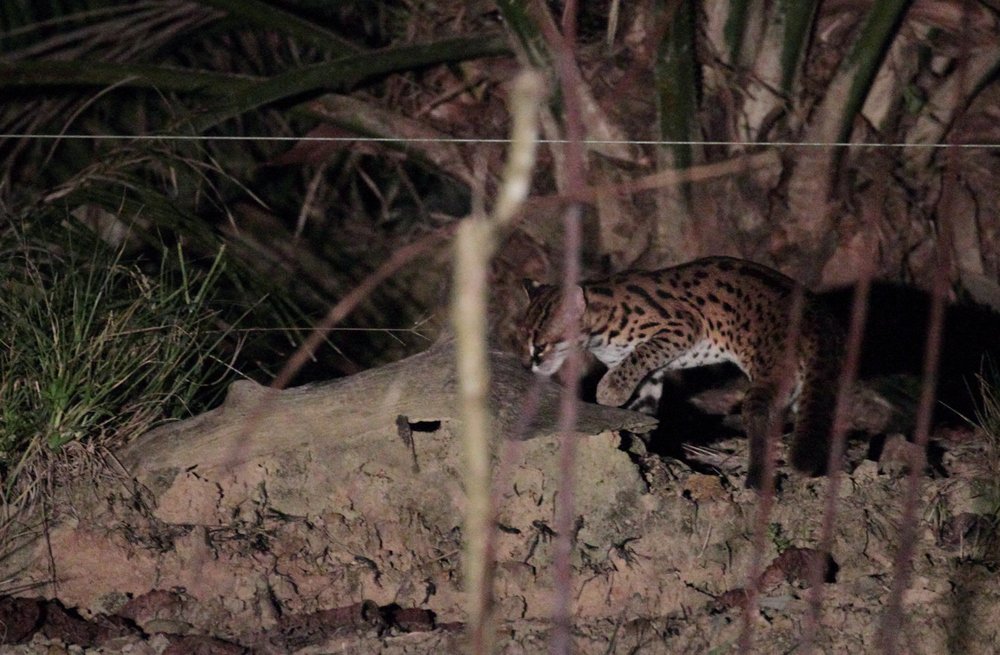
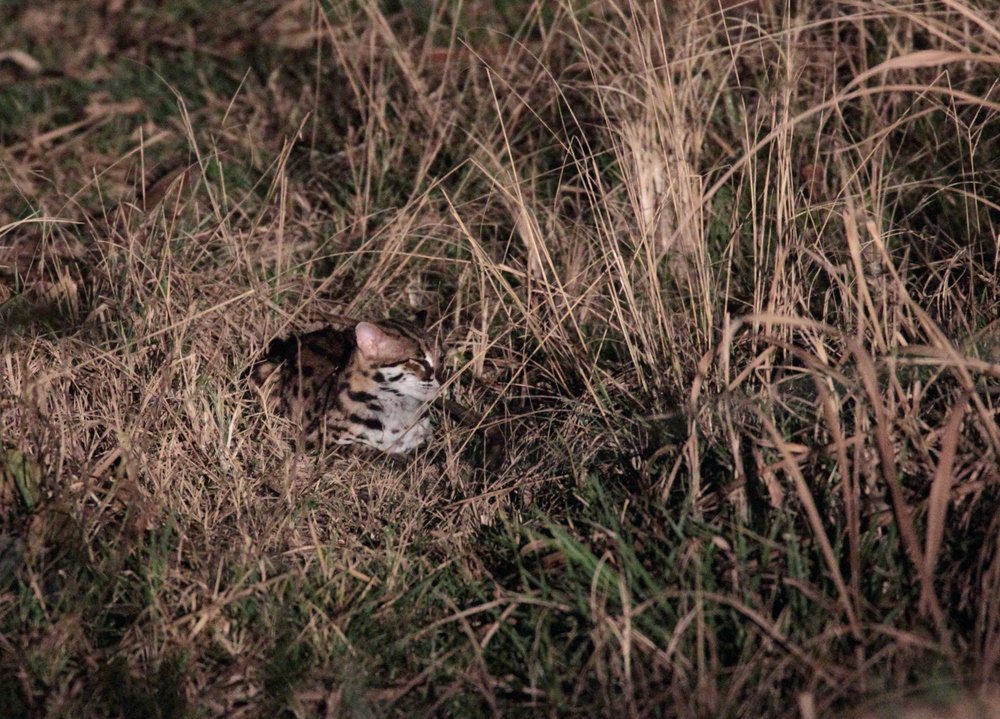
It is the smallest of the four fish owls, but this is a group that contains the world’s largest owl (Blakiston’s Fish Owl) and Buffy Fish Owl is still a very large bird with adults sometimes weighing more than 4.5 kilograms. It had the intensely-focused stare typical of most owls. This bird was so captivating that we almost missed another highlight of the evening as a Leopard Cat Prionailurus bengalensis, slunk across the road just out of the beam of the spotlight. Another sharp-eyed guide saw the movement and trained a light on it in time for us to watch it pause briefly in roadside scrub before vanishing into the forest. This brief encounter was not sufficient to allow any photographs but Moppers was lucky enough to encounter this beautiful cat during her visit as well and has permitted me to use her photographs below.

The following morning there was just time for a foray along one of the forest trails from the resort. We set out in search of one of the pitta species that call the region home. Pitta, of any variety, are never particularly easy to track down and some species are notoriously difficult. This would prove to be the case on this morning as during 2 hours of stalking the forest floor we heard Blue-headed Pitta a few times but never close and certainly never within sight.

DANUM VALLEY

My time at Tabin was over and we had to leave the forest and get back on the road. As the reserve shrank in the rear-view mirror I had to remind myself that I’d only been in-country a day and a half – it already felt like a week.

Next stop – Danum Valley. If Tabin was Sabah’s version of leading with a strong hand then Borneo Rainforest Lodge in Danum Valley was them pulling out all the stops. After transferring back through Lahad Datu it was a further 2 hours of driving through secondary and primary rainforest to get to the lodge. The unsealed road wound through steep gullies and immediately gave me the impression of the green and mountainous Borneo that I had imagined before my visit. It’s a Borneo that is encapsulated for me in another military anecdote from Australian journalist, Tim Bowden. In his 1987 biography of friend and combat photographer Neil Davis, Bowden relates Davis’ telling of a conversation he overheard in Borneo during the Indonesian-Malaysian Confrontation in 1964. A group of Gurkhas, from the famously hardy Nepalese regiments of the British Army, had uncharacteristically rejected a suggestion that they be inserted into combat against Indonesian forces by jumping from planes. They rejected the proposal due to not being trained as paratroopers. Davis’ account continues:

“The Gurkhas usually agreed to anything, but on this particular day they provisionally rejected the plan. But the next day one of their NCOs sought out the British officer who had made the request and said they had discussed it further and would be prepared to jump under certain conditions.
‘What are they?’ the British officer queried.
The Gurkhas told him they would jump if the land was marshy or reasonably soft with no rocky outcrops, because they were inexperienced in falling. The officer considered this and noted that the drop zone would almost certainly be over the jungle. No rocky outcrops there. So, they would be all right. Anything else?
‘Actually, yes,’ answered the Gurkha. They wanted the plane to fly as slowly as possible and no more than a hundred feet high. At that point, the British officer explained that the planes always did fly as slowly as possible when dropping troops, but to jump from 100 feet was just impossible. The parachutes would not open in time from that height.
‘Oh,’ the Gurkha replied, ‘it’s OK then. We’ll jump with parachutes anywhere. You didn’t mention parachutes before.”
[from One Crowded Hour by Tim Bowden]

This is a well-known anecdote in military circles and entirely in keeping with the Gurkha Regiments’ fearsome reputation. This is a unit whose members have been awarded more Victoria Crosses per capita than any other unit in history. Seeing this landscape with my own eyes for the first time almost made the Gurkhas’ willingness to jump from a plane sans parachute understandable. Almost. The slopes were so steep and thickly vegetated that piling out the back of a low-flying plane and doing the old ‘tuck-and-roll’ seems momentarily plausible. If you’re a Gurkha.

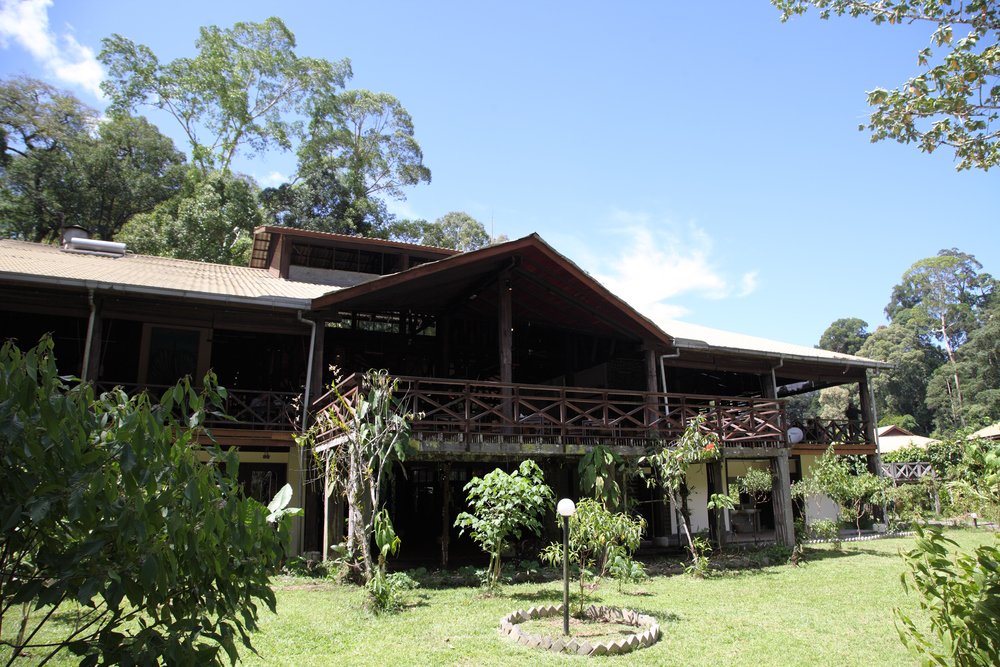
The creature comforts of Borneo Rainforest Lodge, a patch of open riverbank, then a vertical wall of green.

The Danum Valley Conservation Area (DVCA) contains 438 square kilometres of lowland dipterocarp rainforest rising to a maximum altitude of 1093 metres above sea level. A little way from Borneo Rainforest Lodge is the Danum Valley Field Centre for scientific research, which also operates as a nursery for the propagation of rainforest trees.

With so much to look at, the drive went quickly and we pulled up at a lodge that has become justly famous for rolling out the red carpet for everyone who visits. The main building of the lodge is set back a few hundred metres from the Danum River to allow for water levels to rise in the wet season. The building itself is beautiful and spacious with numerous boardwalks connecting to the detached accommodation.

Blue-throated Bee-eater - one of the common residents of the Danum Valley.

Common though they may be, the species that left the most lasting impression on me from Danum Valley was the Blue-throated Bee-eaters. The lodge has well-tended gardens and dozens of these aerobatic and colourful birds were always present hawking insects over the lawns. Perhaps what Borneo Rainforest Lodge has become most famous for though, is its canopy walkway. This immense structure is a jungle birder’s dream. After trying to identify canopy birds from the dark forest floor the relief of bursting upwards into the light and emerging at eye-level with leafbirds and flowerpeckers is difficult to overstate.

This is the same vantage point from which the mysterious Spectacled Flowerpecker Species novum, was first observed. This is a species illustrated for the first time in the Phillipps’ Field Guide to the Birds of Borneo, and the full story of its discovery at Danum Valley can be read in Birding Asia. The canopy walk traverses through 250 metres of lowland dipterocarp forest at a height varying between 30 and 50 metres above the forest floor. Viewing platforms are fixed to each tree trunk the walkway reaches, to allow for more stable viewing and for those who struggle with the dizzying height to regain their composure.

From this magical lookout, all manner of otherwise difficult birds suddenly became viewable. The minivets were a new group for me and there are 5 species of these colourful passerines present in Borneo. Numerous different flowerpeckers, leafbirds, babblers and bulbuls moved about us and a pair of Wallace’s Hawk-Eagle watched from a nearby perch. The real rock star bird here is the bizarre and ancient-looking Bornean Bristlehead, Pityriasis gymnocephala. This is another elusive canopy bird, which is monotypic and endemic to Borneo. The Danum walkway is known as one of the better places to see this species and we had three birds calling in the canopy high above our heads but only managed the briefest and most distant of glimpses.

Anyone with a smidgeon of equatorial birding experience knows how draining the conditions can be and the heat was getting intense. By mid-morning we headed back down the main road to the lodge for some relaxation before the afternoon session. A brief shower of rain was a welcome relief as we neared the lodge but before we made it all the way back the guide’s radio crackled to life. While the bird life here provides non-stop excitement, the place is so heaving with diverse fauna that there are often interesting non-feathered diversions. Best of all in a place so large, the dozens of guides employed at the lodge all carry radios so when somebody finds something, all groups that are out on the trails can be directed to the new discovery. And wildlife encounters don’t get any more special than one of the three extant great apes.

We diverted down a side road and headed toward the other guide whose group we could now make out standing in the middle of the road in the pouring rain with their heads turned skyward. Before we could reach them a ginger-haired figure shifted its weight in branches just above our heads. This was not the ginger primate we were looking for but welcome just the same. It was a family of Red Leaf Monkeys Presbytis rubicunda. It seems ginger is the favoured colour for primates here.

Red Leaf Monkey: the other ginger primate.

Once we joined the other group it didn’t take long to find what held their attention. Only about 10 metres above our heads was probably the single main reason that most people choose to come to Borneo. Of course it was a Bornean Orangutan, Pongo pygmaeus. This is an animal that is infamously imperiled by the encroachment of palm oil plantations and logging operations that are eating up their habitat at an unsettling pace. Fortunately there are still a few spots, Danum Valley being one of them, where a wild encounter with one of these apes is not too unlikely. There are a number of rehabilitation centres where orphaned or injured animals are nursed back to health for eventual release and tourists can get close to captive animals, but that will never compare with the wild experience.

A lone young adult orang, just loafing peacefully in the understorey trying to stay out of the rain, regarded us indolently. Those with cameras went into a snapping frenzy. After a couple of minutes the orang decided to move off and, with truly impressive speed, made its way through the forest. For a bulky and lethargic looking creature it had a surprisingly languid way of ‘swimming’ through the lower canopy. With grasping hands on the end of all four limbs, it made the best use of even quite thin saplings that seemed incapable of supporting its full weight. It innately understood when it had bent a trunk to its limit and reached out another dextrous limb to grab the next tree and relieve the strain on the last. It wasn’t long before the orang was at the limit of our visibility through the heavy rain and in only a few seconds more it was gone. Even the sound of its passage through the forest was undetectable over the pounding rain.

After a bit of ‘cool-down’ time back at the lodge, we headed out on the trails to try our luck on some of the tricky trogons and pittas of the area. Never easy birds to see, we nonetheless managed to get a some very good views of a Blue-headed Pitta as it dawdled out onto the track in front of us and continued to stroll along in plain view for a few minutes. A short while later the guide picked up the gentle call of Diard’s Trogon. This was an impressive feat as the call very nearly faded into the considerable mid-afternoon background noise of an equatorial rainforest. But eventually I was able to hear it and with some careful triangulation we managed to get the scope on it. Trogons’ habit of sitting quietly in dense foliage means that it is always a thrill to get eyes on one and there are few members of the family that are anything less than dazzlingly colourful.  

As darkness gathered around us on the forest floor, it signalled time to head back to the lodge again. As we made our way along the narrow jungle trail a short distance from the lodge itself, a small group of Bornean Crested Firebacks crossed in front of us. The happy surprises were just never-ending.

Whiskered Treeswift - just a yard bird here.

It was enjoyable sipping a cold drink while watching the bee-eaters and Whiskered Treeswifts hawking in the garden but my mind was already turning to the evening’s pursuits. There was another spotlighting trip pending the easing of the rain, and the frogs were already warming up their vocal chords in the garden. I was eager to get amongst it and see what I could find.

The drive would prove eventful again with captivating views of Red Giant Flying Squirrel gliding, as if driven by invisible guide-wires, between the apparitions of giant Koompassia trunks lit by searchlights. The drive was nearing the end and we had yet to see any birds. As this thought was going through my head, the guide again pulled something out of his sleeve. Just when I thought all hopes of a new owl were dashed, the guide speared the spotlight 50 metres across a clearing to illuminate a pair of preening Brown Wood Owls sitting on a branch about 5 metres above ground level. This was an owl that I had read to be fairly common in the area so it was good to get eyes on it so early in the trip. As the owls sat looking imperious, a Masked Palm Civet ambled purposefully across the open foreground. It stopped to look down its nose at us briefly before continuing on into the forest at the other side of the clearing.

The dozen or so who had joined the evening drive, piled out of the truck and headed back for drinks or an early night but I had other ideas. I split off and headed for the ornamental pond set back from the lodge along one of the nature trails at the forest edge. The sound of calling frogs emanated from every direction but it was still surprisingly difficult to get eyes on one after having my eyes tuned to spotlighting for larger quarry over the last hour or so. But as I adjusted to searching for smaller details, it seemed that frogs were on or under every single leaf I looked at. Best of all, one of the first animals I found wasn’t a frog at all but a frog predator. Sitting in a loose coil on a broad leaf was a strikingly coloured and delicately-built little snake. This one seemed to tolerate my approach impassively and I was able to get some nice photographs. Knowing very few of the snakes of the region I was not confident identifying this species and whether it was venomous enough to warrant being given a wide berth, so I decided to temper my fascination with caution. (Identified later from my photographs as a Triangle Keelback, Xenochrophis trianguligerus, a non-venomous and semi-aquatic species of colubrid snake.) There was much else to attract my interest. In the same small shrub as the snake, I identified at least 3 different species of frog: Nicobar Cricket Frog, Hylarana nicobariensis, Borneo Eared Frog, Polypedates otilophus and one of Borneo’s famous flying frogs, the Harlequin Tree Frog, Rhacophorus pardalis. Around the fringes of the pond and in the garden behind the lodge I found a further two species: Four-lined Tree Frog, Polypedates leucomystax and Rough-sided Frog, Hylarana glandulosa.

Triangle Keelback - a tiny but decorative inhabitant of the frog pond.

Following my second night at Danum Valley, there was just time for a bit of early morning birding before an early departure back up the road to Lahad Datu and out of the forest to head for the next leg of the journey – river birding.

From the balcony, as I ate my breakfast and sipped very adequate coffee, a flock of around eight large, dark birds flew along the river and settled in the gallery of foliage on the far bank. My ‘binoculars-never-out-of-arm’s-reach’ policy served me well and I trained them on a chattering group of Bushy-crested Hornbills making short work of some wild fruit.

Hornbill number five.

KINABATANGAN RIVER

The Kinabatangan near Abai.

After the drive back up out of the forest to Lahad Datu, it was on to the section of the trip that would take me through many extraordinary locations along the Kinabatangan River. This impressive waterway is over 550 kilometres long and empties into the Sulu Sea after draining through an extensive area of periodically flooded lowland forest and mangrove swamps. Having spent a lot of time in Australia’s Top End, I was interested to learn that the Kinabatangan was well-known as a sanctuary for a population of Saltwater Crocodiles. My response to the Top End mantra of being ‘croc-wise’ is reasonably straightforward: complete and total avoidance of all water. (Mick Jerram will attest to my diligent adherence to crocodile safety practices bordering on the hysterical, but that’s a story for another post.) But my own methodical caution is certainly not shared by many Top End residents and I became used to the near-suicidal sangfroid of Darwin folks wading out into coastal waterways to check their crab pots or retrieve their five dollar fishing lure. But if I thought this was taking a far too cavalier attitude towards self-preservation in the presence of an ancient and superior predator, I was about to get a lesson. The fine folks who reside along the Kinabatangan corridor personify an air of casual disregard for the infamous, fearsome, and well-deserved reputation of Salties to take anything and everything on or near the water’s edge.

To be fair, the population of crocodiles along the Kinabatangan is apparently very small and is threatened, as so many other creatures have been, by changes to the ecology of the upper Kinabatangan from logging and land clearing. Sadly, during four straight days on the river I failed to see, or even hear of anyone seeing, a single crocodile.

A minor tributary of the Kinabatangan.

But the Kinabatangan is world-renowned for a huge variety of wildlife besides its crocs. The forests here, are stalked by the spectacular and rare Sunda Clouded Leopard. Although it is rarely seen, for those of us plying the river and its small tributaries hoping to see wildlife, it has an important role to play. Many of the other animals in the forest are so shit-scared of the leopard that from dusk ‘til dawn they head for the trees closest to the water’s edge to spend the night out of reach. So an early start to a cruise along the river can be a very rewarding experience.

Probably the most famous of these animals, and another Borneo endemic, is the bizarre-looking Proboscis Monkey Nasalis larvatus. In the lower reaches of the Kinabatangan, large family groups of these intriguing primates can be seen crowding the foliage overhanging the river. Once the sun is up they go about the social business of preening and vocalising, reinforcing bonds and taking census of the family, before heading into the forest to forage during the daylight hours.

The Proboscis Monkey - easily seen along the Kinabatangan in the early morning.

From our lodge upstream of the small village of Abai, we set out early in small boats up tiny side streams and oxbow lakes and the lifers seemed to be jumping out of every tree. Wild elephants grazed along the river banks. Overhanging branches supported snakes and almost every floating stump sported a kingfisher of some kind. Water Monitors were common, loafing along the banks of the small streams. Our main target down this tributary was the endemic Bornean Ground-Cuckoo. This is a classic skulker. Even the bird guides who work in this part of the country only clap eyes on the bird a few times a year if they are lucky. We were just drifting slowly down the stream listening for the distinctive call. Before we could hear anything though, our attention was drawn to a brightly coloured bird perched in the gallery foliage beside the boat: a Black-And-Red Broadbill. One of the more common broadbill species but still an exciting bird to view so closely.

Mangrove Cat Snake Boiga dendrophila.

Further downstream, our attention was subsequently hijacked by a pale morph Changeable Hawk-Eagle, Scarlet-rumped Trogon, Stork-billed Kingfisher and a confiding Purple Heron. While I was happily being distracted by all this action, the guide had one ear ever-cocked for the ‘whooh’ call of the ground-cuckoo. Eventually he took on that unmistakeable look of someone who has heard something. His eyes narrowed.

“That’s it”, he said quietly.

The day was heating up and the jungle racket of the cooler morning had died down to a more moderate background roar. As I listened it was just possible to make out the ground-cuckoo’s call. The coxswain positioned the boat on the bank and we could hear scratching on the forest floor just a few metres in from the bank but hidden by dense foliage. Eventually a second call came. Two of the trickiest birds to see on the island of Borneo were just metres away but they may as well have been miles away. The vegetation was so thick that we stood no chance of seeing them. The coxswain brought out a paddle and silently manoeuvred us a bit further along the bank to a small break in the green wall. We had a tiny portal through which to survey the dappled light on the forest floor within. After a few minutes the guide leaned over to me, grabbed my shoulder, and pointed very slowly. His steady finger drew a direct line to a dark shape, a bit like a sleek chicken or perhaps a large coucal, scratching among leaf litter about 15 metres away. When it stepped through a patch of light it showed the most enchanting colours of turquoise, green and aqua along the neck and scapulars with the rump and tail vanishing in a deep velvety purple. The headed was hooded almost jet black with green facial parts, and the underbelly was pale with horizontal barring. This was a massive bit of luck to get such a good view of such a rare species and the guide was clearly elated – that’s about the best sign that you’ve just had a crippler. I would have been excited at seeing such a fantastic bird under any circumstances but it adds something to the experience when your guide is visibly exhilarated by the encounter as well.

It was going to be difficult to top this sighting, so we backed off from the ground-cuckoo and tied the boat up in some shade for a coffee break and to let the excitement wash over us for a few minutes. A large male Orangutan bellowed somewhere in the distance. The call resonated through the forest. An Oriental Darter stuck its head up among some lily pads before vanishing back underwater. A Blue-eared Kingfisher alighted on a branch beside the boat. As I sat sweating and sipping coffee a dangerous thought occurred to me – how was I ever going to top this experience?

Blue-eared Kingfisher - regularly encountered along the water.

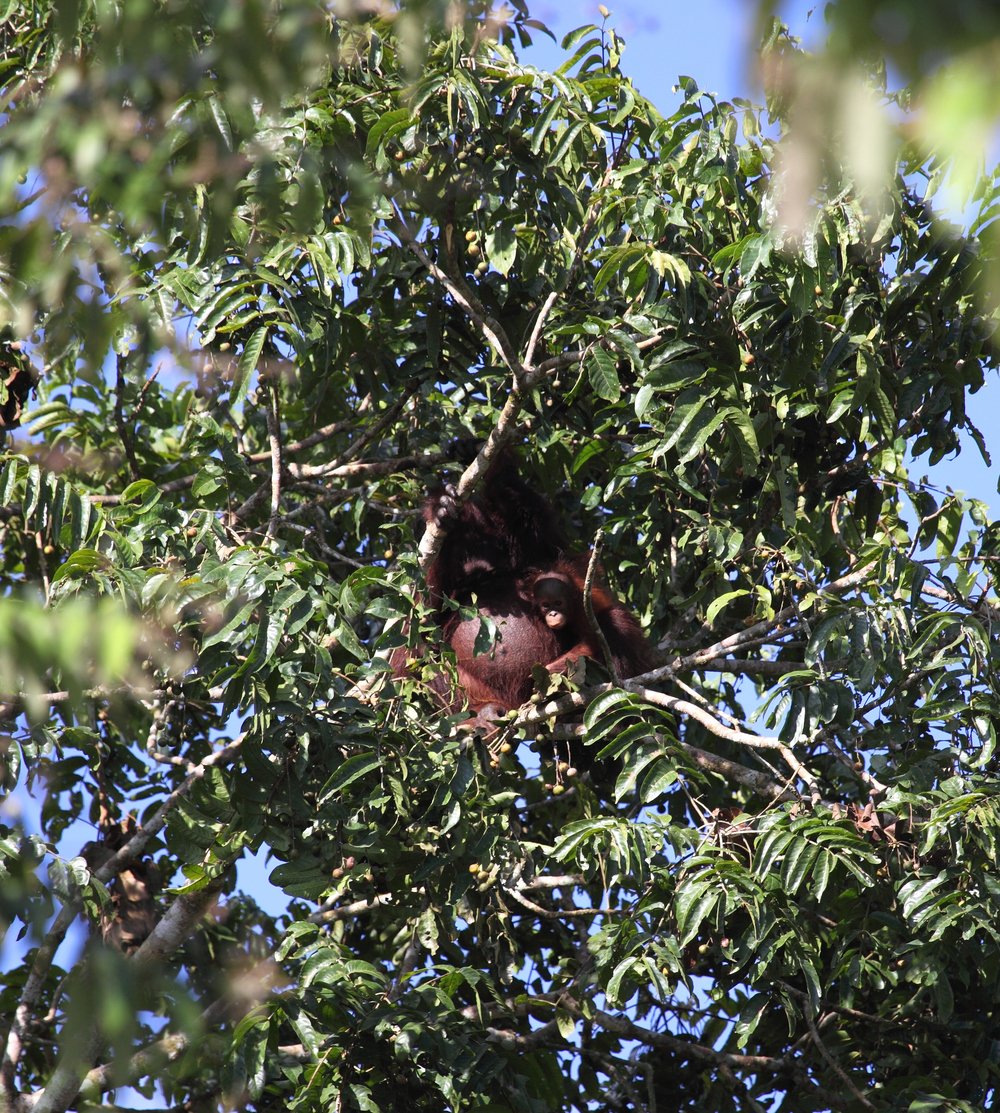
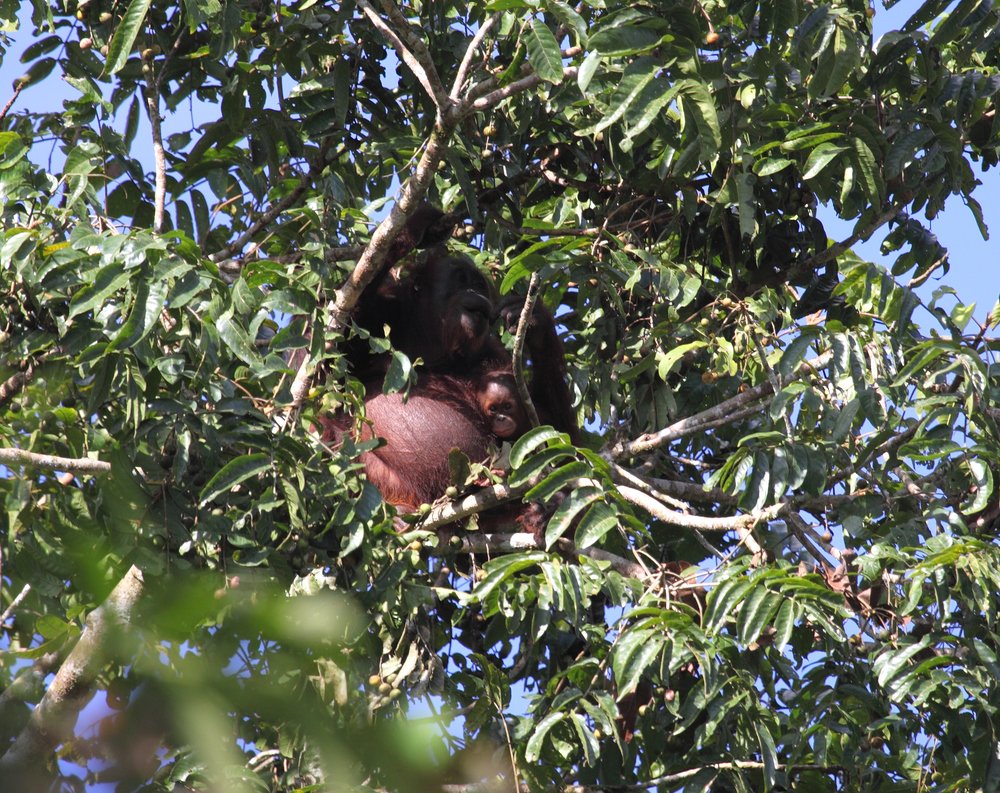
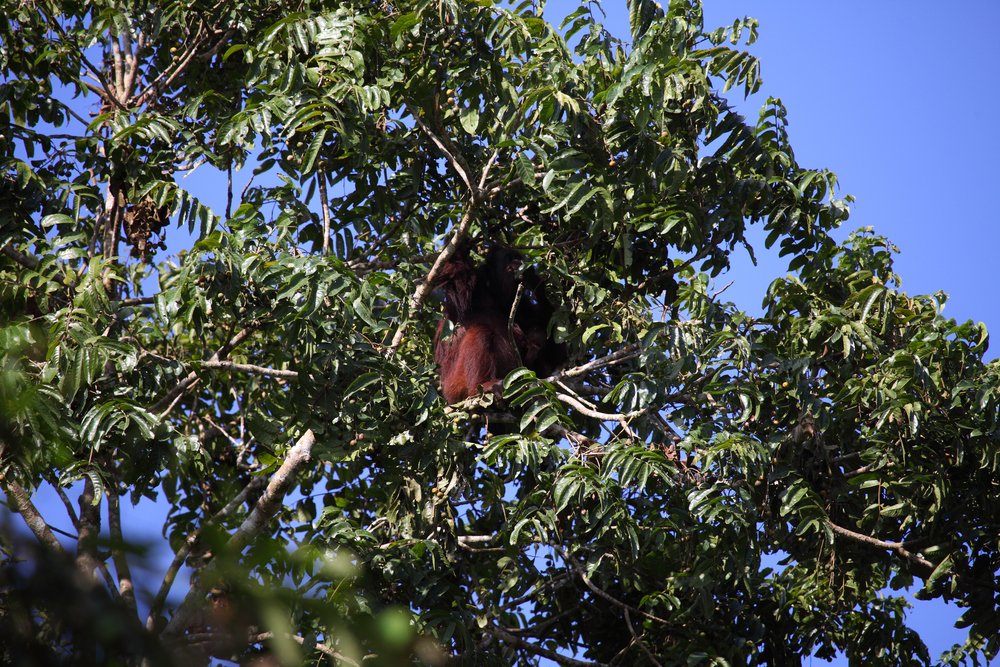
We had our afternoon all planned out ahead of us and we needed to head back to the lodge for lunch, but we made our way slowly, seeing new birds all the time. Once we were back on the Kinabatangan proper, the guide flicked a hand signal to the coxswain who immediately killed the engine and looked toward the far bank. The river was wide here – at least 250 metres across. But despite the distance, my guide had just demonstrated precisely how strongly the force flowed through him. (My guide for this section of the trip was the inimitable Mirwan – widely known as Obi-wan due to his Jedi-like ability to find wildlife. It was a fitting moniker for one so impressively attuned to his surrounds.) In the very top canopy of the trees on the far bank, a large adult Orangutan sat motionless. As we quietly motored across, it was apparent that it was a female trying her best to stay out of the sun. She sprawled, effortlessly suspended in the treetops like a huge hairy hammock for a young infant. Both the adult and infant looked directly at us. Time stopped for a bit while we just looked at each other. There was less than a 2% difference between the make-up of our genomes but this still marked an unbridgeable gulf between our differing experience of life on Earth.

The infant rested its head back on its mother’s belly and dozed off. Time resumed its usual relevance and we started back up the river to the lodge.

The rest of the afternoon would be spent in very different surroundings seeking serious raptors and cave-dwellers.

GOMANTONG CAVES

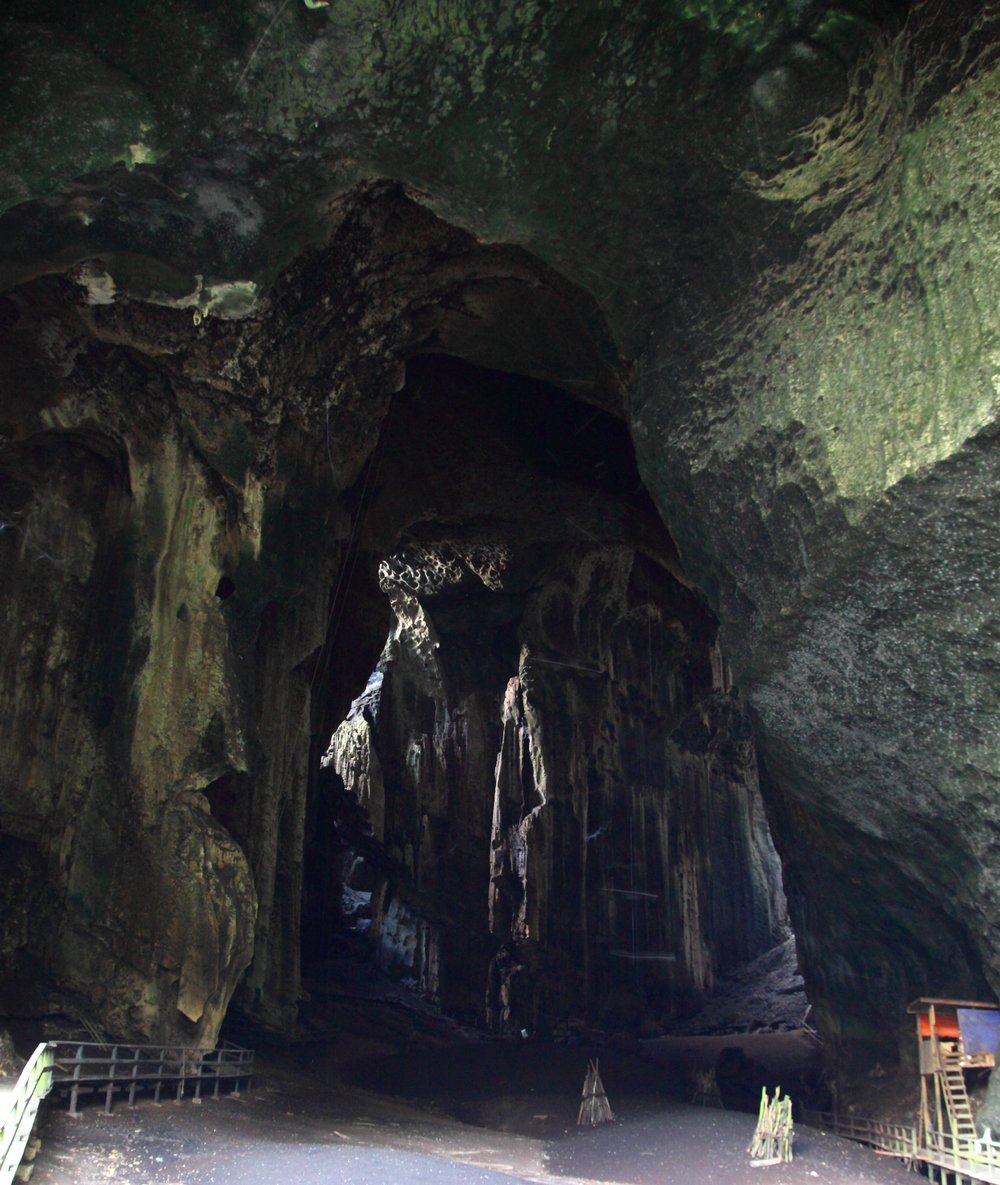
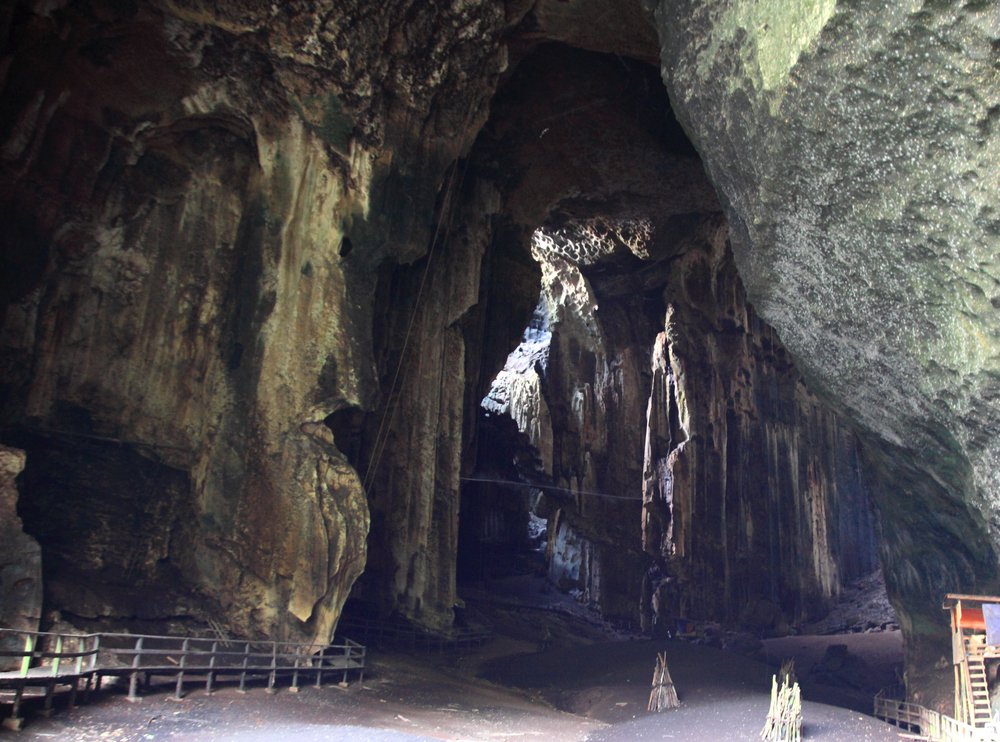
The limestone caves at Gomantong are famous, but they should be even more so. I’ll have to flag this experience, even among all the other extraordinary things I saw on Borneo, as the unchallenged highlight. Even Sir David Attenborough rates it as among his most memorable experiences. From a bloke whose list of world wildlife and travel must top everyone else's, that is surely the highest praise possible.

It was a short but very birdy drive from the banks of the Kinabatangan into the Gomantong NP where the caves are situated. On reaching the caves, we wasted no time and headed straight in.

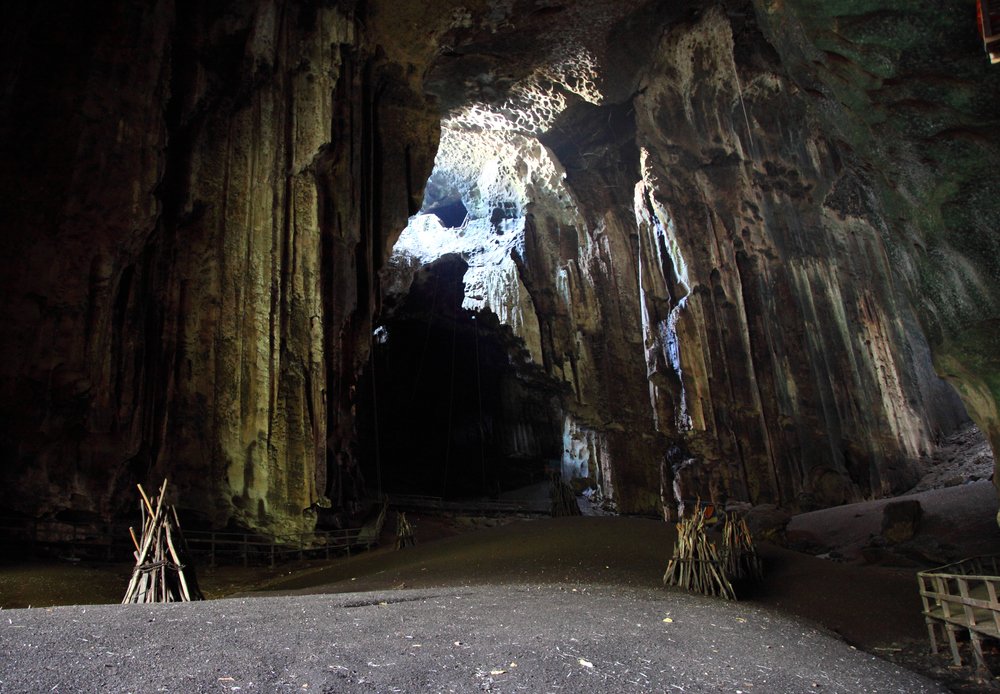
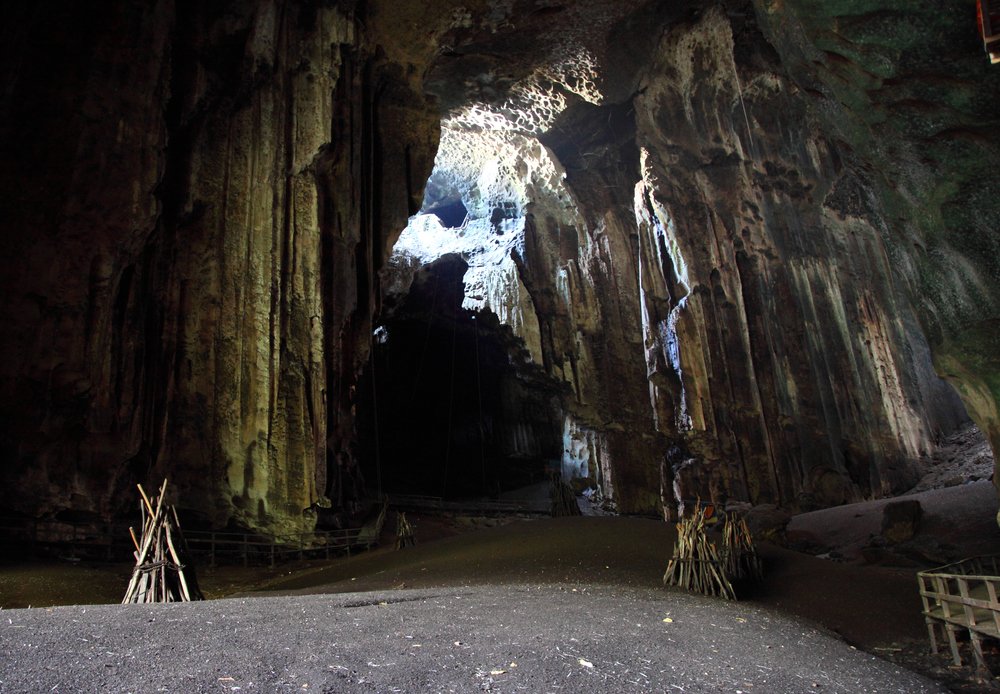
There’s no other way to describe the experience of these caves but pure sensory overload. The heat and humidity was reaching its peak in mid-afternoon. There was the constant white-noise of millions of roosting and circling bats and swiftlets. The floor of the caves were metres deep in guano giving the air a suffocating stench of ammonia, and the floor and walls were all concealed behind a moving carpet of cockroaches and various other insect life.

A boardwalk kept us mercifully clear of sinking up to my waist in the guano and took us on a walk around the internal perimeter of one of the larger caves. Here we could view all three species of swiftlets that call the caves home: White-Nest, Black-Nest and Mossy-Nest Swiftlet. The first two species are the famed ‘edible nest’ swiftlets. The saliva nest of the White-Nest Swiftlet is the more valuable, with a single 8 gram nest fetching up to $50 on the retail market for the production of bird’s nest soup. The nest of Black-Nest Swiftlet is less valuable as it is constructed not from pure saliva, but a mix of feathers and plant matter bonded with saliva. (As the name suggests, the nest of Mossy-Nest Swiftlet are made mostly of plant material and are of no commercial value.) Generations of local people have tenaciously guarded their right to harvest the nests of the swiftlets and, although this is done is a strictly regulated fashion, it seems that this practice is having a deleterious effect on swiftlet populations. Farming of edible-nest swiftlets has apparently been experimented with but none have been successful.

A mossy nest with eggs.

The three species are all capable of echolocation much like the bats that they ‘hot-bunk’ with. As dusk fell the swiftlets returned from day-shift, just as the bats roused from slumber and prepared to head out for their night of foraging.

A lonely Large-eared Horseshoe Bat. Higher up in the cave they cluster in their hundreds of thousands.

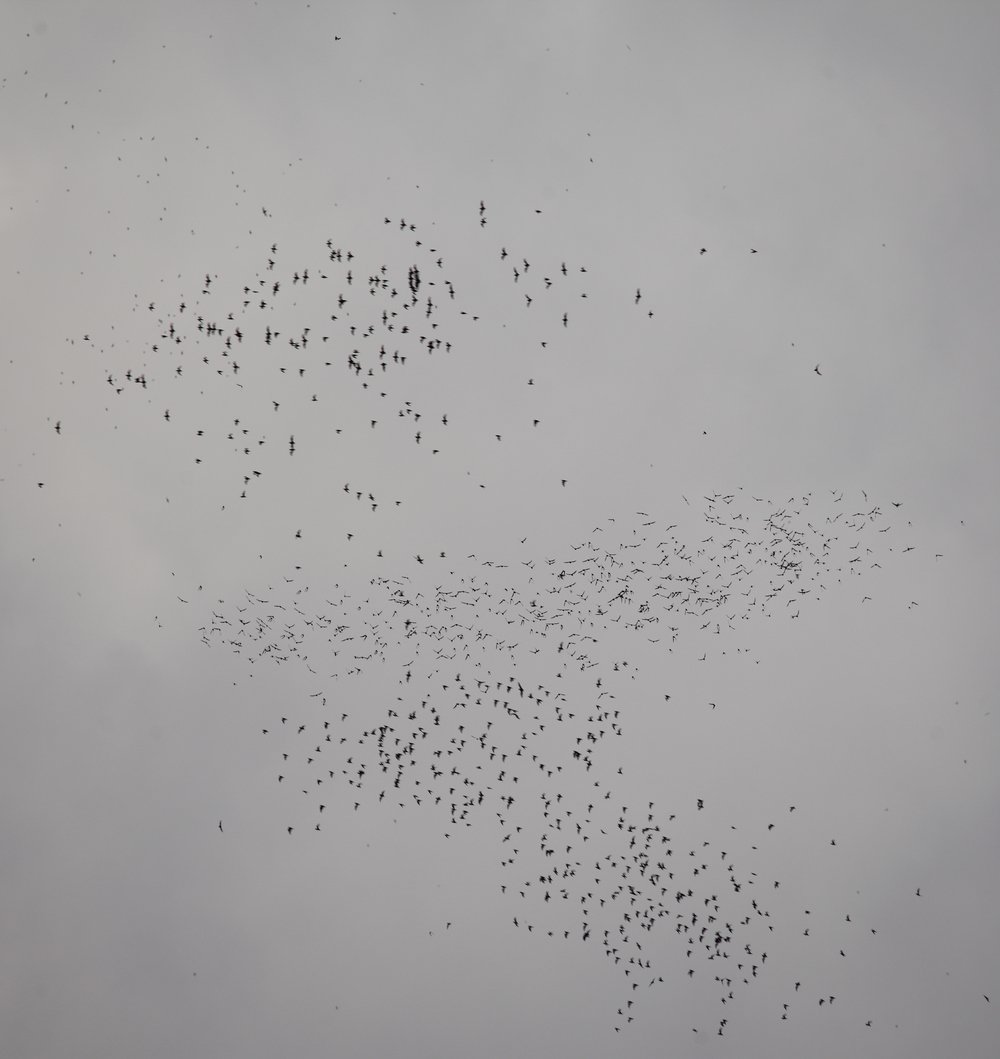
There are three main species of bats that live in the Gomantong limestone caves: Large-eared Horseshoe Bat, Rhinolophus philippinensis, Wrinkle-lipped Free-tailed Bat, Chaerephon plicatus, and Fawn Leaf-nosed Bat, Hipposideros cervinus, a species also present in Australia. All up, there are over a million of them, and when they leave the cave at dusk, you’d better believe that an exodus on that scale is going to attract some attention from hungry predators.

The superstar of the Gomantong show was the Bat Hawk, Macheiramphus alcinus. This beautiful raptor occurs in sub-Saharan Africa and in southern Asia all the way to New Guinea. It was barely dusk and we could already see a few of them circling high up. A light shower of rain had delayed the bats’ egress from the cave but had provided us with the spectacle of a double rainbow over the caves with Bat Hawks, Wallace’s Hawk-Eagles and Peregrine Falcons soaring about them.

A more surprising appearance came in the form of a large bird that I had no idea would be an opportunistic predator of bats.

Hornbill number six.

A family of Rhinoceros Hornbill perched in a palm tree above us, noisily interrogating the fruit. Apparently when there are bats in the air it is not uncommon to see the hornbills sailing through with their bills ajar to catch the tiny insectivores.

We didn’t have to rely on watching hornbills’ clumsy attempts at catching bats though as the exodus soon began and the real raptors went straight to work. The Bat Hawk was easily picked out due to its overall dark colour with prominent white patch under the throat. In a move that any reader of this blog will almost certainly have seen a hundred times on Attenborough’s documentaries, the hawk would swoop down through a cluster of bats and throw its legs forward with the talons spread wide to snare its prey. The Peregrine used a more traditional technique of stooping from high above, while Wallace’s Hawk-Eagle seemed to favour the more labour-intensive approach of separating an individual bat from its flock and pursuing it single-mindedly.

As the skies darkened it became progressively harder to pick out the bats and their persecutors, so we packed up our scopes and headed back to the river for our evening cruise back to the lodge. We would have much more time on the river tomorrow and were heading farther downstream to where the Kinabatangan sprawls out across vast coastal wetlands and mangrove swamps.

KINABATANGAN WETLANDS

Setting off early again, we drifted down past most of the country we had been exploring the previous day. The river widened steadily and the banks took on a different character. More of the shoreline was lined with rattan and here and there were people in smaller boats harvesting this giant plant for crafting into cane products. The banks were lower with more extensive inundated areas. Navigating the river itself became more risky owing to huge numbers of large logs that were floating downstream, often with a just a small amount of their bulk showing above the surface.

We visited a couple more oxbow lakes, saw a circling kettle of Lesser Adjutant, a lot more kingfishers, a pair of Black Eagle and eventually made it down to the Kinabatangan Wetlands Resort. This is a new wildlife lodge located on the edge of the huge Lower Kinabatangan Segama Wetlands. This Ramsar listed area, covers almost 790km2 of the lower Kinabatangan and the nearby coast.

We’d only travelled a couple of hours downstream but it was surprising how much of a change it made to the species composition. Long-tailed Parakeets zipped overhead and we constantly scrutinised the many pigeons that flew overhead. As well as Pink-necked Green Pigeon, Little Green Pigeon and Green Imperial Pigeon, we hoped to get eyes on one of the more hard-to-find pigeons of coastal regions: Cinnamon-headed Green Pigeon. Kinabatangan Wetlands Resort (KWR) has already developed quite a reputation as a good spot to find these smallish fig-eaters.

None of the pigeons we checked seemed to be the Cinnamon-head, but our attention was attracted to a cackling noise coming from the trees beside the river. Obi-wan barely hesitated.

“Pied Hornbill.”

Oriental Pied Hornbill to be precise.

Hornbill number seven. Eyes down for a full house!

Rounding a bend in the river, we swept around the base of an immense dead tree. The tree seemed to have a number of sizeable hollows but, having no foliage at all, I didn’t give it a second thought. My folly was demonstrated only a few seconds later when Mirwan pointed out a bird I had really been hoping to see. Perched motionless on a high branch, with its grey colour blending well with the dead timber, sat the world’s largest woodpecker species.

Fully half a metre long, the Great Slaty Woodpecker flew down as we watched and tended a hollow where another bird stuck its head out to greet it. A breeding pair of Great Slaty Woodpecker.

As we alighted at the resort’s jetty, we immediately heard the call of Brown-capped Woodpecker and shortly afterwards we got eyes on one flitting between palm trunks. At the top of the same trees there were numerous pigeons, which held our guide’s attention for a bit longer than expected. After a short pause, the call came…

“Cinnamon-head!”

Sure enough as I scanned through the many pigeons clustered on top of the palm, three that sat together in the centre had a wonderfully rich cinnamon colour, not just over their heads but down the neck, breast and a lot of the back as well. A truly stunning bird and a cracking species to get on the list after a whole day of searching.

Cinnamon-headed Green Pigeon: right on cue.

After another enjoyable afternoon on the river, I was most looking forward to getting out with the spotlight on the resort’s newly-finished boardwalk. This boardwalk is another trump card in KWR’s already strong hand and traverses several hundred metres of lowland mangrove forest. Slow Loris is regularly seen here along with Bearded Pig and Sambar. In particular, I was hoping to get a look at a special owl that this boardwalk is starting to become known as something of a hotspot for.

Setting out after dark we saw both Bearded Pig and Sambar only a short way from the main buildings of the resort. There was some motion in the trees above our heads and eventually our spotlights found a ribbon-thin snake which turned out to be a White-spotted Cat Snake Boiga drapiezii. This bizarre-looking snake looked more like a gigantic elongated tadpole than a snake. The bulbous head looked far too big for the slender body, and the body seemed so slight as to be incapable of housing all the organs that I knew it needed.

Our walk came to an end where the boardwalk finished at a cul-de-sac. It was a very still night and I strained my ears for a sound of anything moving but the only sounds were our shoes on the planks. We stayed a while just listening. There were plenty of frogs calling but none close enough to the boardwalk to identify. A while longer and it was time to head back along the way we had come. It was a disappointing end to a spotting session as we hadn’t seen a lot of wildlife and certainly no owls. Perhaps my expectations had been too high. As a tour guide, managing clients’ expectations is a big part of the job and in this instance it would seem I had failed to effectively manage my own.

But as I dawdled back along the boardwalk at the rear of the group it was consoling to have had such a blindingly good day with so many other lifers. A dud spotlighting session was hardly enough to dull the excitement from the many other wins of the day.

Then, literally as these thoughts were going through my head, there was a solid thud in the dark just a few metres to my left.

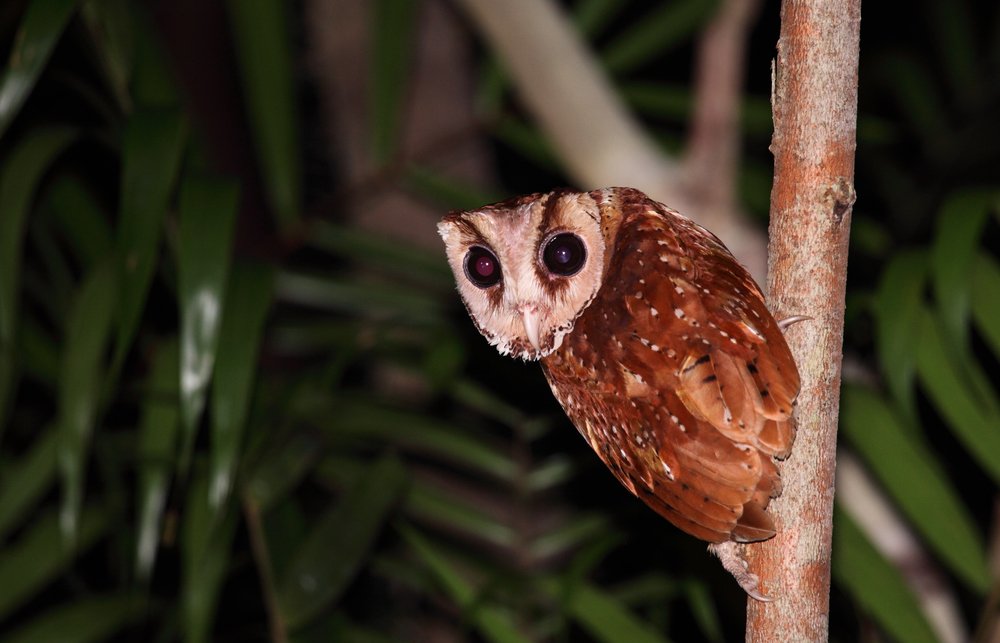
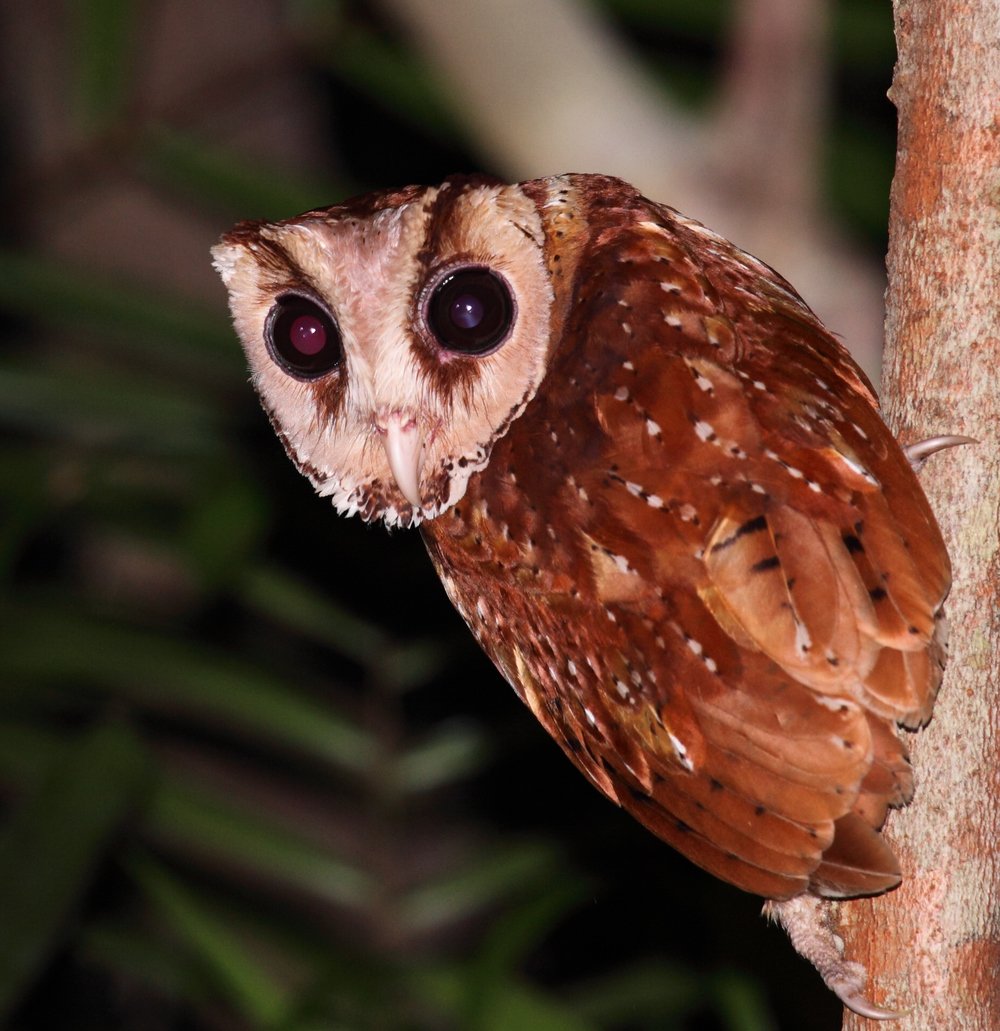
It took no skill at all, and barely any effort to train my spotlight to the left where something akin to divine providence had delivered an absolutely crippling owl sitting at eye level about 6 metres away. Nobody else had heard it, and it was shielded from view by foliage for most of the guides as I insisted they come back and stand with me. It was completely unperturbed by our presence and it allowed us to get a number of quite good photographs.

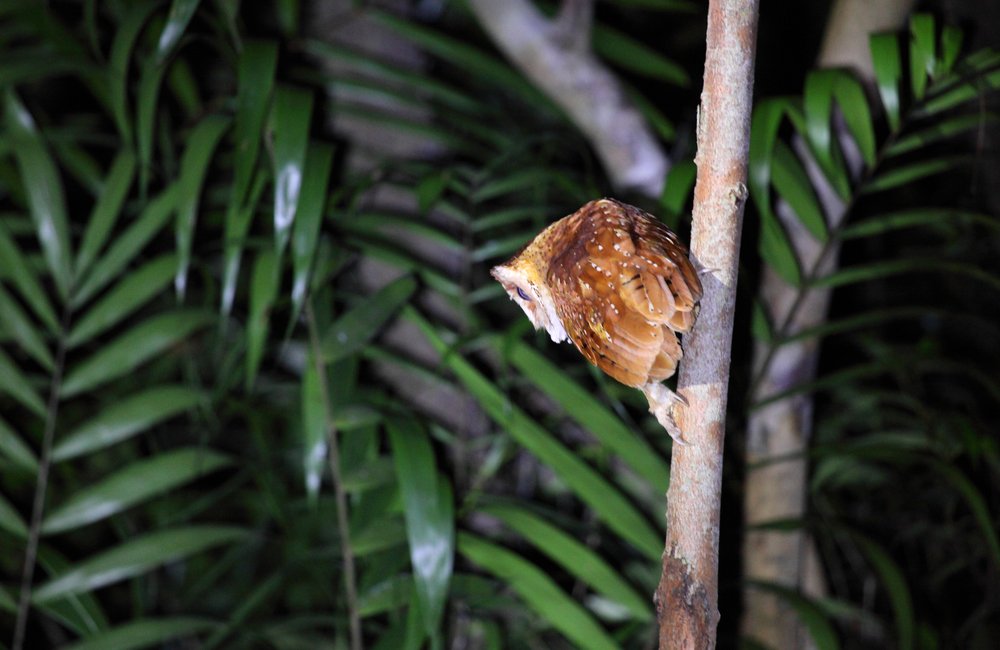
Indisputably now the bird of the trip, it was an Oriental Bay Owl – a bizarre beastie. Field guides would later tell me that this uncommon owl is usually encountered perched sideways on a vertical sapling close to the forest floor where it waits to ambush forest rats. As you can see from the photographs this is pretty much precisely how I encountered it. It slowly rotated its face toward me then ignored me completely for the next few minutes as it scoured the leaf litter for any movement that might indicate prey. We never got to see it hunting, as we retreated to give it peace, but the feeling of sharing the same pocket of time out in that dark mangrove swamp on the edge of Borneo will stay with me forever.

My time at KWR was magical but short, just an overnight stay, and much of the next day was taken up with travel. We rose early to get a couple more sunbirds around the resort grounds and then boarded the high-powered speed boat that whisked us down the last stretch of the Kinabatangan, out into the Sulu Sea and down the coast to Sandakan.

RAINFOREST DISCOVERY CENTRE

As the Kinabatangan opened out and merged with the Sulu Sea it was clear that it was a shallow and sheltered body of water. No seabirds were spotted other than a few Crested Terns. The trip around the coast to the city of Sandakan took us around 2 hours. Sandakan seemed like a thriving small city with numerous floating townships extending out over the water.

Following a short drive through the city we got to Sepilok just beyond the outskirts of Sandakan. Sepilok, perhaps most famous as the home of the Orangutan Rehabilitation Centre and the Bornean Sun Bear Conservation Centre, is rapidly building a reputation as one of the top birding destinations on the island of Borneo, largely due to the Rainforest Discovery Centre (RDC).

The RDC protects a chunk of primary rainforest on the edge of the Sepilok Forest Reserve. It has an extensive network of trails through the forest and a huge raised walkway giving views out across the top of the canopy. With viewing towers at intervals along the walkway, it has become one of the best places to find and view Bornean Bristlehead – the photographs of this stunning species by Sandakan Borneo Bird Club President, Cede Prudente, at RDC make this clear enough. Below the walkway, the dark forest floor holds Black-crowned Pitta and the creeks and ponds attract Oriental Dwarf Kingfisher. I just had time for an afternoon to dusk session here but after dark there are mammal-spotting walks taken and the centre has Slow Loris and a population of Western Tarsier.

KINABALU PARK

After an overnight stay in Sepilok we headed off early on the overland trip to Kinabalu Park on the lower slopes of Mount Kinabalu. I had come almost full circle from my start point in KK but there was still much birding to be done in my two nights at Kinabalu Park. This place held promise on a number of fronts. Aside from offering respite from the smothering humidity and high temperatures of the lowlands, many of Borneo’s endemic species live in the montane forests on this and neighbouring slopes.

Kinabalu National Park (KNP) is World Heritage listed and gets higher visitation than many of the other sites I had visited. It doesn’t attract the tourists looking for Orangutan or elephants so it’s more of a birdwatcher’s place really, but it gets a lot of muggles interested only in climbing the mountain for whatever reason. It is now a very well-worn path and described as quite an easy ascent considering the summit’s height and remoteness – they even run races up it.

But topographic conquests have never been my thing and we had too many lifers to chase to bother with walking up to the top. In particular KNP is known as a good spot to find “The Whitehead’s Trio”. These birds, each of which has graced a cover of one of the first three editions of the Phillipps’ field guide, are some of the trickiest birds to get eyes on. Named after the 19th century explorer of northern Borneo, John Whitehead, these are just three of the many animals that bear his name: Whitehead’s Spiderhunter, Whitehead’s Broadbill and Whitehead’s Trogon. None of these are easy to find but it was good to meet a number of researchers (mostly from British or US universities) who are studying the species, which at least suggests they are definitely present.

A steep and winding road makes its way up from the KNP headquarters to a spot called the Timpohon Gate. At 1866m above sea level this ornamental portal marks the beginning of the trail to the summit of Mt Kinabalu and as high as we went. For most of my first day there, it rained solidly making birding almost pointless but on subsequent visits to the Timpohon Gate and the adjacent viewing platforms, we were rewarded with great views of the forest canopy and views down through the valley all the way to distant KK on the coast.

Bornean Green Magpie - fairly frequently encountered on the mountain.

The large Mountain Imperial Pigeon was easy enough to get eyes on as they winged over the canopy in their search for fruiting trees. Also easily seen was the only hornbill species regularly seen at elevation, and the last species I needed for my full house…

“Wreathed Hornbill!” called Adrian as two of the birds zoomed in low over our heads.

The eighth and final hornbill on the island.

The curious Mountain Black-eye was another mountain forest endemic that was common enough in this area, along with Crested Yuhina, Temminck’s Sunbird, Golden-naped Barbet, Ashy Drongo, Pale-faced Bulbul, Chestnut-hooded Laughing-thrush and Bornean Treepie. With a little bit more work on surrounding trails we also managed to find Bornean Green Magpie, Mountain Wren-babbler and we stumbled into a group of Crimson-headed Partridge by absolute fluke.

On the second day, the rain eased. We started up at the Timpohon Gate and descended the slope using a few different trails through the forest. We followed a little stream in pursuit of the Bornean Forktail. In shape and behaviour, this is a bird not unlike Australia’s Willie Wagtail, but with much more bold patterns of black and white. It favours rocky mountain creeks and it didn’t take long for one of these beautiful little birds to flush from under a log across the river and forage on a gravelly sand bank in front of us.

He did not let us approach too close but it was sufficient to get a good look through the bins and a snap off couple of distant record shots. In stark contrast, shortly after our stand-offish meeting with the forktail, we had a very close encounter with a bird that you don’t often get close to at all.

The first I was aware of was some quiet bill-clapping noise. We were in fairly close vegetation beside running water, so there was enough white noise to drown out subtle sounds. The bill-clapping stopped me and I had to look surprisingly hard to see a bird that was very close – I mean arm’s reach close.

Sitting just at head height was a juvenile Brown Wood Owl. You could have knocked me over with a feather. The little bloke was just sitting there quietly staring back at us. Adrian, the guide, had walked straight past it but the gentle noises emanating from the fluff ball had been just enough to catch my attention. This was not a lifer as we had seen the pair of adult owls the other night at Danum Valley but this sort of close-up experience is a rare privilege with any sort of owl. It looked like this bloke was probably fairly recently out of the nest and perhaps in the early stages of fledging, so perhaps he’d been trying to emulate his parents’ night time peregrinations and been unable to make it back to a higher roost. I looked very carefully but I couldn’t find any adults nearby roosting watchfully. That doesn’t mean they weren’t watching us though, so I kept my distance, got a few pics of the youngster and we continued on down the path with a very large spring in our step.

A very young (and not very brown) Brown Wood Owl.

The mountain forest endemics had largely cooperated but unfortunately we didn’t manage to see any of the Whitehead’s birds. But it’s never a good thing to concentrate on the birds you miss. As we wrapped up and headed off on the drive down to KK it was good to know that there were still so much left for me to come back for.

TANJUNG ARU

Back in KK there are plenty of good birding sites but, having no transport and lots of work to do, I opted for just a bit of a morning session to look for a particular bird with a very limited range.

Blue-naped Parrot is a species that apparently used to be widespread and common in the Philippines but has now been extirpated from most areas. Tanjung Aru is a popular beach near the centre of KK that has a coastal park lined with some beautiful old casuarina trees. A population of up to 50 Blue-naped Parrots that nest in the hollows here has been the saving grace of many a birder seeking a last minute lifer before leaving Sabah – who was I to blow against the wind?

Just after dawn, the beach was abandoned with just a few remnants of litter hinting at the previous night’s revelry. More than just the parrot, I added a few more lifers here, with Pied Triller, White-breasted Waterhen and Red-headed Tailorbird all making it into my field of view for the first time.

The parrots were actually quite simple to get on to. They were fairly rowdy as is typical with many parrots and could be readily viewed in small groups as they moved from tree to tree. It was more than worth the walk though. As the sun rose somewhere behind Mount Kinabalu, I stood on the shore of the South China Sea looking at grey rollers tumbling onto the beach. The daily chaos of life in KK was just coming to life but the serenity of life as a visitor struck me for the first time.

The pace of my trip had been brisk. For most birders it was probably counter-productive to attempt cramming this much in. At the end of the day though, this was a work trip. Fun though it certainly had been, I’d been so focused on absorbing my surroundings, making contacts, taking notes and constantly scanning for wildlife that I’d really not stopped to absorb the pace of local life.

Borneo had loomed for so long in my imagination as a prime birding destination and a place inherently marked as remote and unknowable, that it was gratifying to finally have a few quiet moments to process the experiences of the last week or so and reflect on my new and very different image of Borneo.

Gone are the outdated military associations and hazy-vague projections of an impenetrable green jungle hell. Gone also is the impression of a place only seen on Attenborough documentaries: remote, inaccessible, difficult. The new Borneo is a place with a face. Many smiling, friendly faces and not all of them human.

THANKS

I’d like to extend my heartfelt thanks to Cassie Forsythe and her colleagues at the Sabah Tourism Board who invited me to come and share the truly extraordinary experiences that await wildlife tourists who decide to visit Sabah. Thanks also to the incomparable hospitality of Cede Prudente and his cronies at the Sandakan chapter of the Borneo Bird Club – may all visitors to your city feel so warmly welcomed and leave so thoroughly well-fed and watered. Hearty thanks to the staff at each of the exceptional lodges that I was privileged to stay at. I hope you all realise the importance of the work you are all doing. You are the backbone of the tourism infrastructure of your fabulous state and you have every reason to be proud of your tremendous work.

Finally, to my guides. Emraphel, Adsel, Mirwan, Adrian. However beautiful the lodge, however sumptuous the meals, you are the memory that your visitors take away with them. You are each, in your own very different ways, river gods, jungle jedis, rainforest raconteurs and monarchs of the mountains. You could always find the right name for the wildlife I challenged you to identify and you could always find a cup of coffee when I needed it most.

Thank you all a thousand times. If you ever want to visit Australia’s outback, just drop me a line.